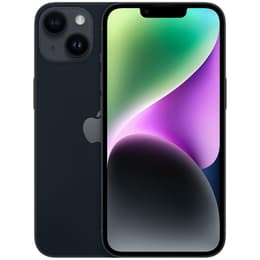
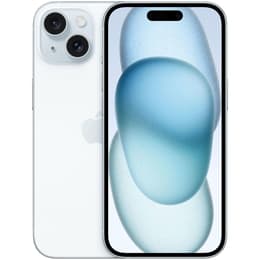

iPhone 14 • Unlocked vs iPhone 15 • Locked T-Mobile

iPhone 14 • Unlocked
Starting at

Refurbished price:$254.00

Versus $629.00 new

See options
iPhone 15 • Locked T-Mobile
Starting at

Refurbished price:$379.00

Versus $699.00 new

See options

Ratings

The iPhone 14, released in September 2022, and the iPhone 15, launched in September 2023, represent consecutive generations of Apple's standard smartphone line. While both devices share a similar design philosophy and operate on the iOS platform, the iPhone 15 introduces several key enhancements, including an updated main camera, a more efficient processor, and a notable change in its charging port. This comparison focuses on the practical differences that influence daily use and overall device experience.

Scores

Durability

When considering the practical lifespan of a smartphone, factors like release timeline, software support, and physical durability play a significant role. Both the iPhone 14 and iPhone 15 are built with robust materials and receive consistent software updates, contributing to their longevity.

  • Release Timeline: The iPhone 14 was released in September 2022, while the iPhone 15 followed in September 2023. This one-year difference means the iPhone 15 will likely receive software support for a year longer than its predecessor, extending its functional life.
  • Software Longevity: Both models benefit from Apple's long-term iOS support, typically receiving major updates for 5-6 years from their release. The iPhone 15, being newer, will continue to receive these updates further into the future, ensuring access to the latest features and security enhancements for a longer period.
  • Physical Durability: Both devices feature a Ceramic Shield front cover and are rated IP68 for splash, water, and dust resistance, indicating a high level of protection against environmental elements. The iPhone 15 also incorporates a color-infused glass back and aluminum design, which contributes to its overall resilience.

Release Year

2022

2023

Last OS Compatibility

Yes

Yes

OS

iOS

iOS

Foldable

No

No

Performance

The performance of a smartphone directly impacts how smoothly applications run, how quickly tasks are completed, and the overall responsiveness of the user interface. Both the iPhone 14 and iPhone 15 offer capable performance for everyday use, but there are distinctions in their underlying hardware.

  • Processing Capabilities: The iPhone 14 is powered by a processor that handles demanding apps and multitasking smoothly. The iPhone 15 features a more advanced processor, which was previously used in the iPhone 14 Pro models. This results in enhanced computational photography, improved graphics for games, and overall greater efficiency, contributing to a more responsive user experience.
  • Multitasking and Responsiveness: Both devices come with 6GB of RAM, allowing for efficient multitasking and smooth transitions between applications. The iPhone 15's newer processor provides a noticeable improvement in handling intensive tasks and graphically demanding applications, making it feel more fluid for power users.
  • Battery Behavior: While both phones offer all-day battery life for typical usage, the iPhone 15 generally provides slightly better endurance due to its more efficient processor and potentially optimized software. Users of the iPhone 14 have reported solid battery performance, but some iPhone 15 users have noted improvements in this area.

Memory (GB)

6 GB

6 GB

Screen quality

The display is a primary interface for smartphone interaction, and both the iPhone 14 and iPhone 15 offer high-quality viewing experiences, though the newer model introduces some notable advancements.

  • Display Technology and Clarity: Both devices feature a 6.1-inch Super Retina XDR OLED display, providing vibrant colors, deep blacks, and excellent contrast. The resolution is sharp on both, with the iPhone 15 having a slightly higher pixel count, though the pixel density remains similar, ensuring clear visuals.
  • Brightness Levels: The iPhone 14 offers a typical maximum brightness of 800 nits and a peak HDR brightness of 1200 nits, providing good visibility in various lighting conditions. The iPhone 15 significantly enhances this with a typical maximum brightness of 1000 nits, a peak HDR brightness of 1600 nits, and a peak outdoor brightness of 2000 nits, making it considerably brighter for outdoor use.
  • User Experience Features: The iPhone 15 introduces the Dynamic Island, a dynamic area around the front camera and sensors that displays alerts and Live Activities, offering a more interactive and integrated user experience compared to the notch design on the iPhone 14. Both models maintain a 60Hz refresh rate.

Resolution

1170 x 2532

1179 x 2556

Screen type

Super Retina XDR OLED

Super Retina XDR OLED

Audiovisual

For many users, the camera system is a crucial aspect of a smartphone. Both the iPhone 14 and iPhone 15 offer capable camera setups, but the iPhone 15 brings significant upgrades to its main sensor and computational photography.

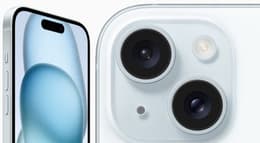
  • Main Camera System: The iPhone 14 features a dual-camera system with a 12MP main sensor and a 12MP ultrawide lens. It includes features like Photonic Engine for improved low-light performance and Cinematic Mode for video. The iPhone 15 upgrades to a 48MP main camera, which uses pixel binning to produce detailed 24MP photos by default, and also offers a 12MP ultrawide lens. This larger sensor and higher resolution allow for more detailed images and improved low-light capture.
  • Zoom and Photography Features: The iPhone 14 offers 2x optical zoom out and up to 5x digital zoom. The iPhone 15 introduces a 2x telephoto option, enabled by its quad-pixel sensor, providing a clearer zoomed-in image than digital zoom alone, alongside up to 10x digital zoom. Both models benefit from advanced computational photography features like Smart HDR and Portrait mode, with the iPhone 15 featuring Smart HDR 5 for enhanced dynamic range.
  • Video Recording and Front Camera: Both devices support 4K video recording at various frame rates and include features like Cinematic Mode and Action Mode for stabilized video. The front-facing TrueDepth camera on both is 12MP with autofocus, ensuring clear selfies and video calls.

Main camera

12 megapixels

48 megapixels

Front camera

12 megapixels

12 megapixels

Miscellaneous

Beyond core performance and display, several practical elements contribute to the daily usability and overall experience of a smartphone. The iPhone 14 and iPhone 15 differ in some key connectivity and physical aspects.

  • Connectivity and Ports: The iPhone 14 utilizes the Lightning port for charging and data transfer. The iPhone 15 transitions to a USB-C port, offering broader compatibility with other electronic devices. Both models support 5G connectivity, Wi-Fi 6, and Bluetooth 5.3 for wireless communication. However, the USB-C port on the standard iPhone 15 models supports USB 2.0 speeds, similar to Lightning, while the iPhone 15 Pro models offer faster USB 3.0 speeds.
  • Sensors and Biometrics: Both devices feature Face ID for secure authentication and include essential sensors like a gyroscope, accelerometer, proximity sensor, and ambient light sensors. They also incorporate safety features like Emergency SOS via Satellite and Crash Detection.
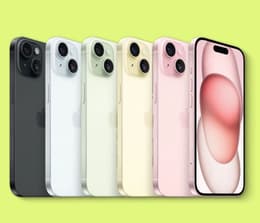
  • Design and Handling: The iPhone 14 has a glass back and aluminum design. The iPhone 15 features a color-infused glass back with a matte finish and contoured edges, which some users find more comfortable to hold. The iPhone 15 is also slightly lighter than the iPhone 14.

Weight

6 oz

171 oz

Screen size (inches)

6.1

6.1

Network

5G

5G

SIM card

eSIM

eSIM

Carrier compatibility

Unlocked

T-Mobile

Connector

Lightning

USB-C (USB 2)

The iPhone 14 and iPhone 15 both offer a robust smartphone experience, but user sentiment highlights distinct preferences and improvements. For the iPhone 14, common praise points often center on its reliable performance and capable camera system for everyday photography. Users generally found it to be a solid device, though some felt it offered incremental upgrades over its direct predecessor. Criticisms sometimes pointed to the lack of significant innovation compared to the Pro models of its generation, and some users noted a drop in satisfaction compared to earlier iPhone models.

The iPhone 15, on the other hand, has garnered positive feedback for its substantial camera upgrade, particularly the 48MP main sensor, and the introduction of the Dynamic Island, which enhances the user interface. The switch to USB-C has also been a welcome change for many, improving connectivity with other devices. Some common concerns for the iPhone 15 have included occasional reports of the device getting warm during intensive use and the standard models retaining USB 2.0 transfer speeds despite the USB-C port.

Users prioritizing a device with a proven track record for performance and a slightly lower entry point may find the iPhone 14 well-suited to their needs. It remains a capable smartphone for general use, photography, and app performance. However, users who value the latest camera technology, a more interactive display experience with the Dynamic Island, and the universal compatibility of a USB-C port will likely lean toward the iPhone 15. The iPhone 15 also offers a slightly more efficient processor and improved outdoor screen brightness. For those looking for an eco-friendly alternative, both models are available as quality-assured refurbished options, providing a sustainable choice for acquiring these devices.


See all articles

Our recent comparisons