
Compare models

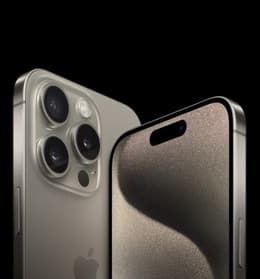
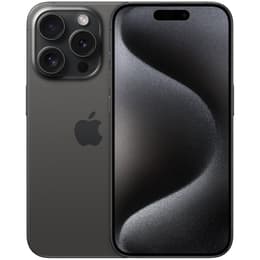
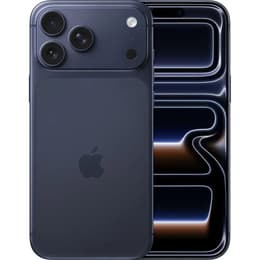
iPhone 15 Pro • Unlocked vs iPhone 17 Pro Max • Unlocked

  • 1-year warranty
  • Free standard shipping
  • Free 30-day returns
iPhone 15 Pro • Unlocked
Starting at

Refurbished price:$546.00

Versus $999.00 new

See options
iPhone 17 Pro Max • Unlocked
Starting at

Refurbished price:$1,221.00

Versus $1,199.00 new

See options

Differences at a glance

The iPhone 15 Pro (2023) and the iPhone 17 Pro Max (2025) are high-end smartphones from Apple that cater to distinct preferences in size, capability, and generation. While both run on iOS and offer premium build quality, they differ significantly in scale, internal capabilities, and screen workspace. Choosing between them depends on whether you prefer a compact, pocket-friendly device or an expansive display paired with maximum longevity.

Available Models

Color

Storage (GB)

Scores

Durability

Both devices are built for long-term daily use, but they occupy different points in their software support lifecycles due to their release years.

  • Software support duration: The iPhone 17 Pro Max benefits from a later release date, offering an extended timeline of operating system updates compared to the earlier iPhone 15 Pro.
  • Repairability and durability: Both models feature robust titanium-infused builds and IP68 water resistance, though newer iterations incorporate advanced protective glass coatings designed to resist daily wear.
  • Expected practical lifespan: Users selecting the newer model gain additional headroom for future software demands, while the iPhone 15 Pro remains a reliable choice supported by quality-assured refurbished options for eco-conscious buyers.

Release Year

2023

2025

Last OS Compatibility

Yes

Yes

OS

iOS

iOS

Foldable

No

No

Performance

System responsiveness and everyday multitasking differ notably due to generational advances in internal memory and processing efficiency.

  • Multitasking and memory: The iPhone 17 Pro Max features increased random access memory (RAM), allowing complex applications and browser tabs to remain active in the background more smoothly than the iPhone 15 Pro.
  • Battery behavior: The larger physical footprint of the Pro Max allows for a substantially larger battery capacity, easily lasting through heavy daily use, whereas the compact iPhone 15 Pro may require a top-up during long days away from a charger.
  • App execution: Both handle demanding tasks and graphics smoothly, though the newer model provides extra processing headroom for intensive mobile gaming and complex productivity tools.

Screen quality

Display characteristics vary primarily in physical dimensions and peak illumination capabilities, shaping how media and text are experienced outdoors.

  • Display size and immersion: The iPhone 17 Pro Max provides a much larger 6.9-inch screen workspace, whereas the iPhone 15 Pro utilizes a compact 6.1-inch panel that is easier to operate with one hand.
  • Outdoor visibility: Both utilize adaptive refresh rate OLED technology for smooth scrolling, but the newer model achieves higher peak outdoor brightness levels for improved clarity under direct sunlight.
  • Visual sharpness: Both screens deliver deep blacks and vibrant colors, though the expansive canvas of the Pro Max suits users who frequently watch videos or review documents on the go.

Resolution

1179 x 2556

2868x1320

Screen type

LTPO Super Retina XDR OLED

Super Retina XDR

Audiovisual

Photography and video recording suites vary significantly in zoom reach and sensor capabilities, influencing versatility across different shooting scenarios.

  • Zoom flexibility: The iPhone 17 Pro Max features an upgraded telephoto lens system with extended optical zoom range, whereas the iPhone 15 Pro relies on a shorter fixed optical reach.
  • Low-light and video performance: Both devices capture detailed 4K footage and sharp low-light stills, but the newer model adds advanced professional video formats and higher-resolution auxiliary sensors.
  • Audio and media output: Stereo speakers on both units deliver clear sound for calls and media playback, supported by multi-microphone arrays for spatial audio recording.

Main camera

48 megapixels

48 megapixels

Front camera

12 megapixels

18 megapixels

Miscellaneous

Practical everyday features, physical dimensions, and connectivity standards reflect the generational gap between the two releases.

  • Connectivity standards: The iPhone 17 Pro Max incorporates updated wireless networking hardware for faster data transfer speeds and improved signal reliability compared to the iPhone 15 Pro.
  • Physical handling: The iPhone 15 Pro is significantly lighter and more compact, making it comfortable for single-handed use, while the heavier Pro Max requires a two-handed grip for extended tasks.
  • Ports and security: Both models utilize standard USB-C connection ports and secure face recognition authentication for unlocking and authorization.

Weight

187 oz

185 oz

Screen size (inches)

6.1

6.9

Network

5G

5G

SIM card

eSIM

eSIM

Carrier compatibility

Unlocked

Unlocked

Connector

USB-C (USB 3)

USB-C

What the community thinks

User feedback from online communities highlights distinct preferences for each device. Owners of the iPhone 15 Pro frequently praise its lightweight, pocket-friendly form factor and reliable everyday performance, though some heavy users note that battery life requires mid-day recharging. Conversely, users of the iPhone 17 Pro Max highlight its exceptional battery endurance and expansive screen workspace as major advantages, though a segment of users finds the larger physical dimensions heavy and cumbersome for single-handed pockets.

Users prioritizing a compact design, effortless one-handed use, and everyday efficiency will find the iPhone 15 Pro well-suited to their needs. On the other hand, users prioritizing maximum battery endurance, an expansive viewing area, and advanced camera zoom capabilities will lean toward the iPhone 17 Pro Max. For consumers seeking a sustainable choice, opting for a quality-assured refurbished model provides an eco-friendly alternative that aligns with both environmental and practical goals.

Our recent comparisons