
iPhone 16 • Unlocked vs iPhone SE (2022) • Locked Verizon

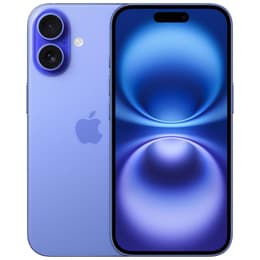
iPhone 16 • Unlocked
Starting at

Refurbished price:$516.00

Versus $729.00 new

See options
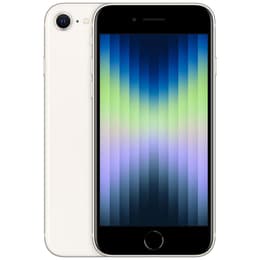
iPhone SE (2022) • Locked Verizon
Starting at

Refurbished price:$124.00

Versus $429.00 new

See options

Ratings

The iPhone 16, released in September 2024, represents Apple's latest mainstream smartphone offering, while the iPhone SE (2022), launched in March 2022, provides a more compact and traditional iPhone experience. These two devices cater to different user preferences, primarily differing in their design philosophy, display technology, and advanced camera capabilities. Both operate on Apple's iOS ecosystem, ensuring a consistent software experience, though the iPhone 16 benefits from a newer operating system version and longer future support.

Scores

Durability

The practical lifespan of a smartphone is influenced by its physical durability and the duration of software support it receives. The iPhone 16, being a more recent release, is expected to receive software updates for a longer period compared to the iPhone SE (2022).

  • Software Longevity: The iPhone 16 launched with iOS 18 and is guaranteed to receive software support for at least five years from its release, with potential for up to seven years of updates. The iPhone SE (2022) launched with iOS 15.4 and is upgradeable to iOS 17.2 or 17.3, with an estimated support window extending until around 2027-2029. This means the iPhone 16 will likely receive major iOS updates for several years beyond the SE (2022).
  • Physical Durability: The iPhone 16 features Ceramic Shield protection on its display, which is designed to offer enhanced resistance against drops. Both models offer water and dust resistance, with the iPhone SE (2022) rated IP67, capable of withstanding immersion in up to 1 meter of water for up to 30 minutes. The iPhone 16 is expected to have a similar or improved IP rating, contributing to its overall resilience.
  • Repairability: Both devices, as Apple products, generally have repairability considerations that vary depending on the specific component. The availability of parts and service for both models is expected to be consistent with Apple's support policies for several years.

Release Year

2024

2022

Last OS Compatibility

Yes

Yes

Foldable

No

No

Performance

Performance is a key differentiator, with the iPhone 16 featuring a newer processor designed for demanding tasks and enhanced efficiency, while the iPhone SE (2022) still offers robust performance for everyday use.

  • Processing Power: The iPhone 16 is equipped with the Apple A18 chip, which is optimized for generative artificial intelligence tasks and features a Neural Engine that is twice as fast as the A16 chip. This translates to a CPU that is approximately 30 percent faster and a GPU that is about 40 percent faster than the A16 Bionic chip found in the iPhone SE (2022).
  • Real-world Responsiveness: For users, this means the iPhone 16 handles demanding applications, complex multitasking, and graphically intensive games with greater fluidity and speed. The iPhone SE (2022), powered by the A15 Bionic chip, still provides a very capable experience for most daily activities, app usage, and moderate gaming, offering flagship-level performance from its release year.
  • Memory and Storage: The iPhone 16 base models come with 8GB of RAM, supporting more intensive multitasking and future software demands. The iPhone SE (2022) features 4GB of RAM. Both devices offer various storage options, with the iPhone 16 starting at 128GB and going up to 512GB, and the iPhone SE (2022) available in 64GB, 128GB, and 256GB configurations.

Memory (GB)

8 GB

4 GB

Screen quality

The visual experience differs significantly between these two models, primarily due to advancements in display technology and design.

  • Display Technology and Clarity: The iPhone 16 features a Super Retina XDR OLED display, offering deep blacks, high contrast, and vibrant colors. The iPhone SE (2022) utilizes a 4.7-inch Retina HD LCD display, which provides good color accuracy and brightness for an LCD panel.
  • Size and Viewing Experience: The iPhone 16 comes with a larger 6.1-inch display, providing a more expansive viewing area for media consumption and productivity. The iPhone SE (2022) has a more compact 4.7-inch screen, which some users prefer for one-handed use and pocketability.
  • Brightness and Refresh Rate: The iPhone 16's OLED display offers higher typical and peak brightness levels, making it more visible in bright outdoor conditions. The iPhone SE (2022) has a typical maximum brightness of 625 nits. Both models feature a standard 60Hz refresh rate, meaning content scrolls and animates smoothly, but without the enhanced fluidity of higher refresh rate displays found in some other devices. The iPhone 16 also benefits from a more modern, edge-to-edge display design with thinner bezels, enhancing the immersive experience.

Resolution

1179 x 2556

750 x 1334

Screen type

Super Retina XDR OLED

Retina IPS LCD

Audiovisual

The camera systems on the iPhone 16 and iPhone SE (2022) reflect different generations of Apple's imaging technology, with the newer model offering more advanced features and versatility.

  • Rear Camera System: The iPhone 16 features a dual-lens vertical camera array, including an updated 48-megapixel main camera and a 12-megapixel ultrawide lens. The ultrawide lens has a wider aperture, improving low-light performance, and the system supports macro photography and spatial video capture. The iPhone SE (2022) has a single 12-megapixel wide rear camera with optical image stabilization. While capable in good lighting, it lacks an ultrawide lens and advanced features like Night Mode.
  • Photography Features: The iPhone 16 benefits from the A18 chip's advanced computational photography, offering improved image processing, Smart HDR, and Photographic Styles. The iPhone SE (2022) also leverages its A15 Bionic chip for features like Deep Fusion and Smart HDR 4, enhancing photo quality.
  • Video Recording: Both devices are capable of recording 4K video at up to 60 frames per second, providing clear and detailed footage. The iPhone 16's ability to capture spatial video offers an immersive viewing experience on compatible devices.
  • Front Camera: The iPhone 16 features an updated front camera, likely with higher resolution and improved low-light performance for selfies and video calls. The iPhone SE (2022) has a 7-megapixel front camera that performs well in good lighting conditions.

Main camera

48 megapixels

12 megapixels

Front camera

12 megapixels

7 megapixels

Miscellaneous

Beyond core performance and camera, several practical elements distinguish the user experience between these two iPhone models.

  • Connectivity: The iPhone 16 supports Wi-Fi 7, offering faster wireless speeds and improved network efficiency, alongside 5G cellular connectivity. The iPhone SE (2022) supports Wi-Fi 6 and 5G (sub-6 GHz), providing fast and reliable wireless connections for most users.
  • Ports and Biometrics: The iPhone 16 features a USB-C port for charging and data transfer, aligning with modern universal standards. The iPhone SE (2022) retains the Lightning port. For security and convenience, the iPhone 16 utilizes Face ID for biometric authentication, while the iPhone SE (2022) features the classic Touch ID fingerprint sensor integrated into its home button.
  • Design and Handling: The iPhone 16 adopts a modern design with an all-screen front and a more contemporary aesthetic. It also introduces new physical controls like the Action Button and a dedicated Capture Button for camera functions. The iPhone SE (2022) maintains the familiar design of older iPhone models, characterized by its physical home button and more compact dimensions (138.4 x 67.3 x 7.3mm, 144g). This makes the SE (2022) particularly appealing to users who prefer a smaller, lighter device.

Weight

6000 oz

3 oz

Screen size (inches)

6.1

4.7

Network

5G

5G

SIM card

eSIM

Physical SIM + eSIM

Carrier compatibility

Unlocked

Verizon

Connector

USB-C (USB 2)

Lightning

The iPhone 16 and iPhone SE (2022) cater to distinct user needs, reflecting different priorities in smartphone design and technology. The iPhone 16, as the newer device, offers a more advanced and feature-rich experience, particularly in terms of its display, processing power, and camera capabilities. Users often praise the iPhone 16 for its vibrant OLED screen, enhanced performance for demanding applications, and versatile camera system with features like spatial video and improved low-light photography. Its modern design and longer software support timeline are also frequently highlighted as significant advantages.

Conversely, the iPhone SE (2022) is often lauded for its compact form factor, which appeals to users who prefer a smaller device that is easy to handle with one hand. Its continued inclusion of Touch ID is a positive for those who prefer fingerprint authentication over facial recognition. While its camera is considered capable for everyday photos in good lighting, a common criticism is the absence of features like Night Mode and an ultrawide lens. Its traditional design, with larger bezels, is also a point of distinction for users accustomed to or preferring that aesthetic. The iPhone SE (2022) is recognized for delivering strong performance for its class, thanks to its efficient processor.

Users prioritizing a cutting-edge display, advanced photographic tools, and the latest performance for future-proofing may find the iPhone 16 better suited to their needs. Those who value a compact design, the familiarity of Touch ID, and solid everyday performance in a more traditional form factor may lean towards the iPhone SE (2022). Both devices offer access to the extensive Apple ecosystem. For those considering either model, exploring quality-assured refurbished options can provide an eco-friendly alternative, extending the life cycle of these devices and offering a sustainable choice.
See all articles

Our recent comparisons