
Compare models
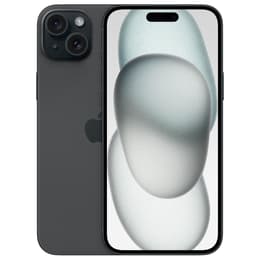
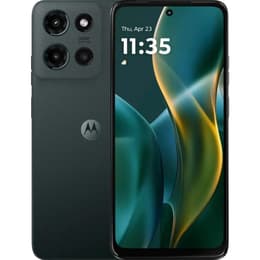
iPhone 15 Plus • Unlocked vs Motorola Moto G (2025) • Unlocked
- 1-year warranty
- Free standard shipping
- Free 30-day returns
Differences at a glance
The iPhone 15 Plus (2023) and the Motorola Moto G (2025) represent two distinct approaches to the modern large-screen smartphone. While the iPhone 15 Plus runs on Apple's iOS ecosystem with a focus on streamlined integration, the Motorola Moto G operates on Android 15, offering a different software interface. They cater to varied user preferences through contrasting design philosophies and internal configurations.
Available Models
Color
Storage (GB)
Scores
Durability
The iPhone 15 Plus and the Motorola Moto G (2025) differ significantly in release timelines, hardware build quality, and expected software support longevity.
- Software longevity: The iPhone 15 Plus benefits from Apple's extended update cycles spanning several years, whereas the Motorola Moto G (2025) typically receives a standard window of major Android version updates.
- Build and protection: The iPhone 15 Plus incorporates a glass-and-aluminum body with specialized front glass protection and high-level water resistance, while the Motorola Moto G features an eco-leather or plastic-backed build with a water-repellent design.
- Repair practicality: Both manufacturers design their devices for standard servicing, though parts availability and structural ease of repair vary between the two operating ecosystems.
Release Year
2023
2025
OS
iOS
Android
Foldable
No
No
Performance
Daily operation and multitasking capabilities vary based on internal hardware allocations and memory sizing across both models.
- Multitasking capacity: The iPhone 15 Plus handles demanding background processes and resource-heavy software smoothly with its balanced RAM allocation, while the Motorola Moto G manages everyday messaging and web browsing comfortably using its streamlined hardware configuration.
- Storage capacity: The iPhone 15 Plus provides fixed internal storage tiers starting at higher baselines, whereas the Motorola Moto G offers expandable storage support via a dedicated memory card slot.
- Battery efficiency: Both devices manage daily energy consumption reliably, with the Motorola Moto G housing a large-capacity power cell designed for extended standalone usage between charges.
Screen quality
Viewing experiences differ notably due to contrasting panel technologies, brightness capabilities, and visual refresh rates.
- Display technology: The iPhone 15 Plus utilizes an OLED panel that delivers deep black levels and high contrast ratios, while the Motorola Moto G employs an IPS LCD screen designed for clear everyday content viewing.
- Visual fluidity: The Motorola Moto G features a high refresh rate panel for smooth scrolling through menus, whereas the iPhone 15 Plus maintains a standard refresh rate optimized for power efficiency.
- Outdoor visibility: The iPhone 15 Plus reaches high peak brightness levels for clear visibility in direct sunlight, while the Motorola Moto G provides adequate illumination for typical indoor and overcast outdoor environments.
Resolution
1290 x 2796
720x1604
Screen type
Super Retina XDR OLED
IPS LCD
Audiovisual
Media capture and audio output capabilities reflect the distinct hardware and software tuning of each manufacturer.
- Camera systems: The iPhone 15 Plus features a high-resolution main sensor with advanced computational photography tools, while the Motorola Moto G offers a versatile dual-camera setup featuring a primary lens equipped with optical image stabilization.
- Video and audio recording: Both phones record clear video content with stereo sound separation, though processing pipelines differ for low-light recording and stabilization.
- Media consumption: The iPhone 15 Plus integrates stereo speakers with wide sound projection, while the Motorola Moto G includes both stereo speakers and a traditional headphone jack for wired audio accessories.
Miscellaneous
Physical dimensions and connectivity standards influence daily handling comfort and peripheral compatibility.
- Connectivity standards: Both models support current mobile network bands, Wi-Fi protocols, and Bluetooth pairing, alongside modern satellite or location tracking sensors.
- Physical interface: The iPhone 15 Plus utilizes a universal USB-C data and charging port, matching the Motorola Moto G which also adopts standard charging connections.
- Ergonomics: The iPhone 15 Plus balances a large display within an aluminum chassis, whereas the Motorola Moto G utilizes lightweight composite materials that affect overall hand balance.
Weight
201 oz
7 oz
Screen size (inches)
6.7
6.7
Network
5G
5G
SIM card
eSIM
Physical SIM + eSIM
Carrier compatibility
Unlocked
Unlocked
What the community thinks
Users prioritizing long-term software support, high-brightness OLED viewing, and deep ecosystem integration often gravitate toward the iPhone 15 Plus. Conversely, users seeking expandable storage flexibility, a high refresh rate display, and a traditional headphone jack frequently lean toward the Motorola Moto G (2025). Selecting between these two devices depends entirely on whether an individual values premium display contrast and software longevity or physical expansion options and multimedia versatility.
For those exploring eco-friendly alternatives, choosing a quality-assured refurbished option provides a sustainable way to access advanced mobile technology without purchasing newly manufactured hardware.