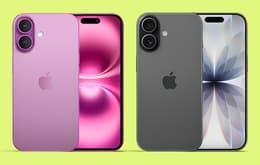
iPhone 16 • Unlocked vs Motorola Moto G Stylus 5G (2023) • Unlocked

iPhone 16 • Unlocked
Starting at

Refurbished price:$516.00

Versus $729.00 new

See options
Motorola Moto G Stylus 5G (2023) • Unlocked
Starting at

Refurbished price:$106.00

Versus $237.99 new

See options

Ratings

The iPhone 16, released in September 2024, and the Motorola Moto G Stylus 5G (2023), launched in June 2023, represent distinct approaches to smartphone design and functionality. While the iPhone operates on Apple's iOS ecosystem, the Moto G Stylus 5G runs on Android, offering users different software experiences. A key differentiator is the Moto G Stylus 5G's integrated stylus, catering to users who prefer pen input, a feature not present on the iPhone 16. These devices also vary in their display technology and long-term software support.

Scores

Durability

When considering the practical lifespan of these devices, several factors come into play, including their release timelines, software support, and ease of repair.

  • Release Timeline and OS Support: The iPhone 16, released in September 2024, benefits from Apple's extensive software support, typically receiving major iOS updates for approximately five to seven years and security updates for even longer, potentially up to seven or eight years. Apple guarantees a minimum of five years of software support from its supply date, extending to September 2029 for the iPhone 16. In contrast, the Motorola Moto G Stylus 5G (2023), released in June 2023, launched with Android 13 and is generally expected to receive one major OS update (to Android 14). Security updates for the Motorola device are typically provided for three years, meaning support would extend until June 2026.
  • Repairability: The iPhone 16 has shown significant improvements in repairability, earning an iFixit score of 7 out of 10, a notable increase from its predecessor. This is attributed to design changes that make components more modular and battery replacement easier. The Motorola Moto G Stylus 5G (2023) received an iFixit repairability score of 5 out of 10, indicating a more moderate ease of repair, partly due to the absence of battery pull tabs and the need for heat to access internal components.
  • Expected Practical Lifespan: Users can anticipate a longer period of up-to-date software and security features with the iPhone 16, which contributes to a longer practical lifespan before the device might feel outdated or unsupported. The Motorola device, while functional, will see its official software support end sooner.

Release Year

2024

2023

Last OS Compatibility

Yes

Yes

Foldable

No

No

Performance

The performance of a smartphone is crucial for daily tasks, app usage, and multitasking. Both devices offer capable performance for their respective ecosystems, though with different underlying hardware.

  • Processor Capabilities and Responsiveness: The iPhone 16 is equipped with a current-generation processor, which contributes to its swift performance, smooth app loading, and efficient multitasking. Users can expect a highly responsive experience, even with demanding applications and graphics-intensive games. The Motorola Moto G Stylus 5G (2023) features a processor that provides solid performance for everyday use, feeling snappy and responsive during general navigation and handling moderate gaming at medium settings.
  • Storage and RAM: The iPhone 16 offers internal storage options of 128GB, 256GB, and 512GB, paired with 8GB of RAM, which supports smooth multitasking and app management. The Motorola Moto G Stylus 5G (2023) comes with either 128GB or 256GB of internal storage and 4GB or 6GB of RAM. A notable advantage for the Motorola device is its expandable storage via a microSD card, allowing users to increase storage capacity significantly.
  • Battery Behavior: Both phones offer good battery longevity. The iPhone 16 is reported to have excellent battery life, capable of lasting through a full day of heavy use and potentially up to two days with moderate usage. The Motorola Moto G Stylus 5G (2023) also boasts strong battery performance, with its larger capacity often providing a full day or even two days of use for many users.

Memory (GB)

8 GB

6 GB

Screen quality

The display is a primary interface for any smartphone, and these two models offer different visual experiences.

  • Display Technology and Clarity: The iPhone 16 features a 6.1-inch Super Retina XDR OLED display, known for its deep blacks, vibrant colors, and high contrast. It offers a resolution of 2556x1179 pixels, resulting in sharp and clear visuals. The Motorola Moto G Stylus 5G (2023) comes with a larger 6.6-inch IPS LCD display, providing a resolution of 2400x1080 pixels. While LCD technology offers good color reproduction, it typically does not achieve the same level of contrast or true blacks as OLED.
  • Brightness and Refresh Rate: The iPhone 16's display can reach high brightness levels, with typical brightness at 1000 nits and a peak of 2000 nits for High Brightness Mode (HBM), making it suitable for outdoor visibility. Its refresh rate is 60Hz. The Motorola Moto G Stylus 5G (2023) features a 120Hz refresh rate, which contributes to smoother scrolling and a more fluid visual experience. However, its screen brightness may not be as high as the iPhone 16, potentially making it less ideal for bright outdoor conditions.
  • Screen Size and Viewing Experience: The Motorola's larger 6.6-inch screen offers more screen real estate for media consumption and productivity tasks, especially when utilizing its stylus. The iPhone 16's 6.1-inch display provides a more compact form factor, which some users may find easier for one-handed use.

Resolution

1179 x 2556

1080 x 2400

Screen type

Super Retina XDR OLED

IPS LCD

Audiovisual

Both smartphones offer camera systems designed to capture everyday moments, but they differ in their capabilities and features.

  • Rear Camera Systems: The iPhone 16 features a dual-camera setup on the rear, including a 48MP main camera with sensor-shift optical image stabilization (OIS) and a 12MP ultrawide camera with a 120-degree field of view and autofocus. It supports improved Photographic Styles and macro shooting. The Motorola Moto G Stylus 5G (2023) also has a dual rear camera system, with a 50MP main sensor that uses Quad Pixel technology to combine pixels for better light capture, typically outputting 12.5MP images, and an 8MP ultrawide camera that also functions as a macro and depth sensor.
  • Photography Performance: The iPhone 16's main camera performs well across various lighting conditions, including low-light scenarios, producing sharp and detailed images. Its ultrawide camera also sees improvements for dimmer environments. The Motorola Moto G Stylus 5G (2023) takes clean and crisp photos in good lighting, but its performance in dim light is less consistent. User reviews suggest its cameras are respectable for its category but may not compete with higher-end devices.
  • Video Recording and Audio: The iPhone 16 can record video up to 4K at 60 frames per second (fps) with Dolby Vision HDR, and its vertical lens alignment enables spatial video capture. It also offers good microphone quality for recordings. The Motorola Moto G Stylus 5G (2023) supports video recording up to 4K at 30fps. Both devices feature stereo speakers, with the Motorola offering Dolby Atmos support for an enhanced audio experience.

Main camera

48 megapixels

50 megapixels

Front camera

12 megapixels

16 megapixels

Miscellaneous

Beyond core features, several practical elements contribute to the overall user experience of a smartphone.

  • Connectivity and Ports: The iPhone 16 supports 5G connectivity, Wi-Fi 7, and Bluetooth 5.3, ensuring fast and modern wireless communication. It features a USB Type-C 2.0 port for charging and data transfer, but it does not include a 3.5mm headphone jack. The Motorola Moto G Stylus 5G (2023) also offers 5G connectivity, along with Wi-Fi and Bluetooth (older standards than the iPhone 16). It includes a USB Type-C port and retains the traditional 3.5mm headphone jack, which can be a convenience for users with wired audio accessories.
  • Sensors and Unique Features: The iPhone 16 incorporates Face ID for secure authentication, along with an accelerometer, gyroscope, proximity sensor, compass, barometer, and Ultra Wideband (UWB) support. It also introduces an Action Button and a dedicated Camera Control button for quick access to functions. The Motorola Moto G Stylus 5G (2023) features a side-mounted fingerprint sensor for biometric security, as well as light, proximity, accelerometer, compass, and gyroscope sensors. Its standout feature is the integrated stylus, which allows for note-taking, drawing, and precise navigation.
  • Build Materials and Dimensions: The iPhone 16 is constructed with a glass front (featuring Ceramic Shield for enhanced durability), a glass back, and an aluminum frame, offering IP68 dust and water resistance. It measures 147.6 x 71.6 x 7.8 mm and weighs 170g. The Motorola Moto G Stylus 5G (2023) has a plastic back and is splash-proof. Its dimensions are 162.8 x 73.8 x 9.2 mm, and it weighs 202g.

Weight

6000 oz

202 oz

Screen size (inches)

6.1

6.8

Network

5G

5G

SIM card

eSIM

Physical SIM

Carrier compatibility

Unlocked

Unlocked

Connector

USB-C (USB 2)

USB-C

User sentiment for the iPhone 16 generally highlights its swift performance, improved camera capabilities, and extended battery life as significant advantages. The enhanced repairability and the addition of the Action Button and Camera Control button are also frequently praised. However, some users express disappointment with the continued 60Hz refresh rate of the display and the absence of an always-on display, features common in many competing devices.

For the Motorola Moto G Stylus 5G (2023), common praise points include its excellent battery life, the utility of the integrated stylus, and the smooth experience provided by its 120Hz display. Users also appreciate the expandable storage and the presence of a 3.5mm headphone jack. Criticisms often revolve around its camera performance in low light and the relatively shorter software update commitment compared to some competitors.

Users prioritizing a long-term software support, a highly responsive operating system, and advanced camera features, along with a more compact and premium build, may find the iPhone 16 well-suited to their needs. Conversely, users who value a larger, smoother display, the unique functionality of an integrated stylus, expandable storage, and a traditional headphone jack, while accepting a shorter software support window, may lean toward the Motorola Moto G Stylus 5G (2023).

Both devices offer distinct advantages, and considering a quality-assured refurbished option for either model can be an eco-friendly alternative for making an informed choice.
See all articles

Our recent comparisons