

Motorola Moto G (2024) • Unlocked vs OnePlus 10 Pro • Unlocked

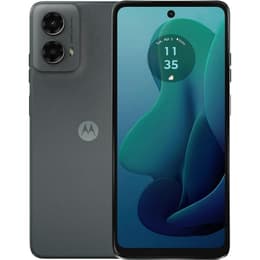
Motorola Moto G (2024) • Unlocked
Starting at

Refurbished price:$107.00

Versus $186.99 new

See options
OnePlus 10 Pro • Unlocked
Starting at

Refurbished price:$369.00

Versus $999.00 new

See options

Ratings

The Motorola Moto G 2024 and the OnePlus 10 Pro are distinct smartphones designed for different user priorities. Released in March 2024, the Moto G 2024 operates on Android 14 and focuses on essential smartphone functions with a large display and robust battery. In contrast, the OnePlus 10 Pro, launched globally in April 2022, arrived with Android 12 and offers a more advanced experience with a high-resolution display, powerful internal components, and a versatile camera system. The primary differentiators lie in their performance capabilities, display quality, and camera sophistication.

Scores

Durability

The expected practical lifespan of a smartphone is influenced by its release timeline, software support, and physical durability.

  • Release Timeline and Software Support: The Motorola Moto G 2024, being a newer device released in March 2024, starts with Android 14. While Motorola's update policy for its G-series can vary, it typically receives one to two major Android OS updates and approximately three years of security updates. Some users of the Moto G 5G 2024 have reported receiving Android 15 as a final major OS update. [29, 34, 35] The OnePlus 10 Pro, released in early 2022, launched with Android 12 and has since received updates up to Android 16, completing its cycle of major OS upgrades. [15, 20, 26] It is expected to receive security updates until March 2026. [32]
  • Software Longevity Expectations: Users prioritizing the latest Android features for the longest possible duration from the point of purchase might find the Moto G 2024 offers a slightly longer runway for future Android versions, given its more recent release. However, the OnePlus 10 Pro has already demonstrated a strong update history, having received four major Android versions.
  • Physical Durability: The Moto G 2024 features a glass front, a silicone polymer (eco-leather) back, and a plastic frame, along with a water-repellent design for protection against splashes. [2, 18, 19] The OnePlus 10 Pro boasts a more premium construction with Gorilla Glass on both the front and back, encased in an aluminum frame. [16] While some versions of the OnePlus 10 Pro, particularly those from specific carriers, offered an IP68 water resistance rating, this was not universal across all models. [13, 16]

Release Year

2024

2022

Last OS Compatibility

Yes

Yes

OS

Android

Android

Foldable

No

No

Performance

The performance of these two devices caters to different usage patterns, primarily due to their internal components and available memory configurations.

  • Processor Capabilities: The Motorola Moto G 2024 is equipped with a processor designed for everyday tasks, handling typical applications and general browsing smoothly. [17, 23] However, for more demanding applications or intensive multitasking, users may experience occasional delays. [14] The OnePlus 10 Pro features a high-performance processor from its release year, enabling it to manage demanding applications, graphic-intensive games, and extensive multitasking with greater responsiveness and efficiency. [16, 21, 27]
  • RAM and Storage: The Moto G 2024 comes with 4 GB of RAM and 128 GB of internal storage, which is expandable via a microSD card up to 1 TB. [2, 17, 23] This configuration is suitable for users with moderate app usage and a need for expandable storage for media. The OnePlus 10 Pro offers configurations with 8 GB or 12 GB of RAM and 128 GB or 256 GB of faster internal storage, without microSD expansion. [1, 9, 10] The larger RAM capacity on the OnePlus 10 Pro allows for more applications to run simultaneously without performance degradation, benefiting power users and those who frequently switch between apps.
  • Overall System Responsiveness: Users will find the OnePlus 10 Pro to offer a consistently fluid and responsive experience across the operating system and applications, even under heavy load. The Moto G 2024 provides a capable experience for its segment, but its performance is more aligned with general daily use rather than high-intensity tasks.

Memory (GB)

4 GB

12 GB

Screen quality

The visual experience offered by these two smartphones differs significantly, primarily due to their display technologies and specifications.

  • Display Technology and Resolution: The Motorola Moto G 2024 features a 6.6-inch IPS LCD display with an HD+ resolution (720 x 1612 pixels). [2, 14] This provides clear visuals for general content consumption and daily interactions. The OnePlus 10 Pro, on the other hand, boasts a 6.7-inch Fluid AMOLED display with a QHD+ resolution (1440 x 3216 pixels). [1, 10, 11] This results in significantly sharper images, deeper blacks, and more vibrant colors, enhancing the viewing experience for high-definition media and detailed content.
  • Refresh Rate and Brightness: Both devices offer a 120Hz refresh rate, contributing to smoother scrolling and more fluid animations. [2, 11, 16] However, the OnePlus 10 Pro's display utilizes LTPO technology, allowing its refresh rate to adapt dynamically between 1Hz and 120Hz, which can contribute to power efficiency. [4, 11, 25] In terms of brightness, the Moto G 2024 reaches approximately 430 nits, which can be challenging for outdoor visibility in direct sunlight. [14] The OnePlus 10 Pro offers a peak brightness of up to 1300 nits, ensuring excellent visibility even in bright outdoor conditions. [10, 21]
  • Viewing Experience: The OnePlus 10 Pro's AMOLED panel and higher resolution provide a more immersive and detailed viewing experience, particularly for multimedia content and gaming. The Moto G 2024's LCD screen offers a good experience for its class, but with less contrast and vibrancy compared to the AMOLED technology.

Resolution

720 x 1612

1440 x 3216

Screen type

IPS LCD

LTPO2 Fluid AMOLED

Audiovisual

The camera systems of the Motorola Moto G 2024 and the OnePlus 10 Pro are designed with different photographic capabilities and user expectations in mind.

  • Rear Camera Systems: The Motorola Moto G 2024 is equipped with a dual-camera setup on the rear, featuring a 50 MP wide-angle main sensor and a 2 MP macro lens. [2, 7, 18] This configuration is suitable for capturing everyday photos and close-up shots. The OnePlus 10 Pro offers a more comprehensive triple-camera system, developed in collaboration with Hasselblad. It includes a 48 MP wide-angle primary camera, a 50 MP ultra-wide-angle camera, and an 8 MP telephoto lens with 3.3x optical zoom. [1, 9, 13, 15] This provides greater versatility for various photographic scenarios, from expansive landscapes to distant subjects.
  • Photography Performance: For general daytime photography, the Moto G 2024 produces acceptable images, though some reviews note uneven results and challenges in certain lighting conditions. [14, 22] The OnePlus 10 Pro's main camera generally captures well-exposed images with good color balance in adequate lighting. Its ultra-wide lens is also capable, and the telephoto lens offers useful optical zoom. However, its low-light performance and zoom capabilities are sometimes noted as not matching the very best in its class. [13, 16, 21]
  • Video Recording and Front Camera: The Moto G 2024 records video at 1080p resolution at 30 frames per second and features an 8 MP front-facing camera. [18, 22] The OnePlus 10 Pro supports video recording up to 8K resolution at 24 frames per second and 4K at up to 120 frames per second, offering more advanced video capabilities. [1, 25] Its front camera is a 32 MP sensor, providing higher resolution for selfies and video calls. [25]

Main camera

50 megapixels

48 megapixels

Front camera

8 megapixels

32 megapixels

Miscellaneous

Beyond core specifications, several practical elements contribute to the overall user experience of these devices.

  • Connectivity and Ports: Both smartphones support 5G connectivity, enabling faster mobile data speeds. [8, 11] They also include Wi-Fi (Moto G 2024 with Wi-Fi 5, OnePlus 10 Pro with Wi-Fi 6) and Bluetooth (Moto G 2024 with 5.1, OnePlus 10 Pro with 5.2). [7, 8, 11, 18] Both devices feature NFC for contactless payments. [8, 18, 24] The Moto G 2024 retains a 3.5mm headphone jack and uses a USB Type-C 2.0 port. [7, 18, 24] The OnePlus 10 Pro uses a USB Type-C port with USB 3.1 Gen1 support, but it does not include a headphone jack. [1, 11]
  • Biometric Security and Sensors: The Moto G 2024 incorporates a side-mounted fingerprint sensor. [2, 7] The OnePlus 10 Pro features an in-display optical fingerprint sensor. [15] Both devices include standard sensors like accelerometers, gyroscopes, and proximity sensors. [2, 7, 15]
  • Design and Handling: The Moto G 2024 has dimensions of 164.4 x 75 x 8.2 mm and weighs 194g, featuring a silicone polymer (eco-leather) back that offers a distinct tactile feel and fingerprint resistance. [2, 7, 18, 19] The OnePlus 10 Pro measures 163 x 73.9 x 8.55 mm and weighs 200g, with a glass back that can be frosted for a pleasant feel and reduced fingerprint smudges. [1, 12, 16] The curved display of the OnePlus 10 Pro also contributes to its in-hand feel.

Weight

7 oz

7 oz

Screen size (inches)

6.6

6.7

Network

5G

5G

SIM card

Physical SIM

Physical SIM

Carrier compatibility

Unlocked

Unlocked

The Motorola Moto G 2024 and the OnePlus 10 Pro cater to different segments of the smartphone market, each with distinct strengths and considerations for potential users.

Users frequently praise the Motorola Moto G 2024 for its long battery life, often lasting a day and a half with moderate use. [14, 22] Its 120Hz display provides smooth scrolling, and the inclusion of NFC for mobile payments is a welcome feature. [22, 24] However, common criticisms include its lower-resolution and dimmer display, which can impact outdoor visibility, and its camera performance, which is often described as uneven or poor, particularly in challenging conditions. [14, 22, 24] The device's performance for demanding applications can also be sluggish, and its software update policy is generally more limited compared to other brands. [14, 24]

The OnePlus 10 Pro is often lauded for its powerful performance, vibrant and high-resolution AMOLED display, and excellent battery life that can easily last a full day, sometimes even two with lighter usage. [13, 16, 21, 27] Its fast wired and wireless charging capabilities are also frequently highlighted as significant advantages. [13, 21] On the other hand, some users have noted that its camera, while capable, may not consistently match the performance of top-tier flagships in low-light or zoom scenarios. [13, 16, 21] The lack of an official water resistance rating on all models was also a point of discussion at its release. [13, 16]

Users prioritizing a device for essential daily communication, web browsing, and media consumption, with a focus on extended battery life and expandable storage, may find the Motorola Moto G 2024 well-suited to their needs. Its newer release date also means it starts on a more current Android version. Conversely, individuals who demand high performance for gaming and demanding applications, a superior visual experience from a vibrant, high-resolution display, and a more versatile camera system will likely lean towards the OnePlus 10 Pro. While the OnePlus 10 Pro is nearing the end of its major software update cycle, it has received a substantial number of updates, ensuring a modern Android experience. For those considering either device, exploring quality-assured refurbished options can provide an eco-friendly alternative to extend the life cycle of these products.
See all articles

Our recent comparisons