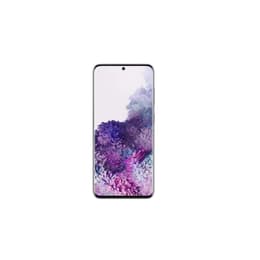
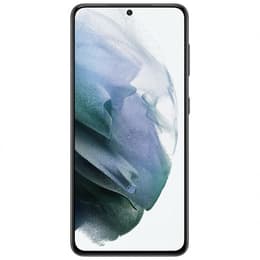

Galaxy S20 • Unlocked vs Galaxy S21 5G • Unlocked

Galaxy S20 • Unlocked
Starting at

Refurbished price:$175.00

Versus $999.00 new

See options
Galaxy S21 5G • Unlocked
Starting at

Refurbished price:$140.00

Versus $799.00 new

See options

Ratings

The Samsung Galaxy S20, released in March 2020, and the Samsung Galaxy S21 5G, launched in January 2021, are both flagship Android smartphones from Samsung. While they share a similar design philosophy and core functionalities, the Galaxy S21 5G introduces a newer generation processor and extended software support. In contrast, the Galaxy S20 offers a higher display resolution option and expandable storage. Both devices run on the Android operating system, providing a familiar user experience.

Scores

Durability

When considering the longevity of these devices, their release timelines and software support are key differentiators.

  • Software Updates: The Galaxy S20, released in 2020, typically received three major Android OS updates, concluding around Android 13, with security updates extending into 2024 and officially ending in April 2025. The Galaxy S21 5G, from 2021, benefits from Samsung's extended support policy, receiving four major OS updates (up to Android 15) and security updates until 2026.
  • Build Materials and Protection: The Galaxy S20 features a glass back, while the Galaxy S21 5G utilizes a plastic back, though both have a robust aluminum frame and Gorilla Glass on the front. The S20 uses Corning Gorilla Glass 6 for screen protection, whereas the S21 5G features the more advanced Corning Gorilla Glass Victus. Both models carry an IP68 rating for dust and water resistance, contributing to their overall durability.
  • Repairability: The standard Galaxy S20 has a repairability score of 7.0 out of 10, with accessible battery and screen cables, though adhesive is used for the back cover and battery. However, some models in the S20 series, like the S20 Ultra and S20+, received lower scores of 3 out of 10 due to strong adhesive and difficult battery and display repairs. The Galaxy S21 5G has been noted to be relatively easy to disassemble and put back together, with one assessment giving it a 7.5/10 repairability score, citing modular construction and a larger fingerprint scanner. Another assessment, however, gave it a 4/10, noting the battery is difficult to remove due to strong adhesive.

Release Year

2020

2021

Last OS Compatibility

No

Yes

OS

Android

Android

Foldable

No

No

Performance

The performance of these smartphones is largely driven by their internal components, impacting daily responsiveness and handling of demanding applications.

  • Processor Capabilities: The Galaxy S20 is powered by a previous generation processor, which capably handles everyday tasks, multitasking, and most applications. The Galaxy S21 5G features a newer generation processor, offering improved performance, including a notable uplift in CPU and GPU capabilities for graphics and gaming. This results in a boost in overall performance for the S21 5G.
  • RAM and Storage: The Galaxy S20 typically comes with 12GB of RAM, providing ample capacity for multitasking, and includes a microSD card slot for expandable storage. The Galaxy S21 5G generally offers 8GB of RAM, which is still sufficient for smooth operation, but notably lacks a microSD card slot for storage expansion. Both devices offer 128GB internal storage options, with the S21 5G also available in a 256GB configuration.
  • Battery Behavior: Both devices house a 4000 mAh battery. However, the Galaxy S21 5G's more efficient processor often translates to slightly better battery endurance in typical use cases, despite the same capacity.

Memory

8 GB

8 GB

Screen quality

Both devices offer high-quality displays, but there are subtle differences in resolution and refresh rate implementation.

  • Display Technology and Size: Both the Galaxy S20 and Galaxy S21 5G feature a 6.2-inch Dynamic AMOLED 2X display, known for vibrant colors, deep blacks, and excellent contrast, with HDR10+ support. The S20's display has curved sides, while the S21 5G features a flat screen.
  • Resolution and Clarity: The Galaxy S20 offers a higher 1440p (3200x1440) WQHD+ resolution, resulting in a pixel density of 563 ppi, making text and images appear very detailed. The Galaxy S21 5G, on the other hand, is limited to a 1080p (2400x1080) FHD+ resolution, with a pixel density of 421 ppi.
  • Refresh Rate and Brightness: Both phones feature a 120Hz refresh rate for smooth scrolling and animations. However, the S20's 120Hz mode is only available at FHD+ resolution, while the S21 5G features an adaptive 120Hz refresh rate (ranging from 48Hz to 120Hz) that can dynamically adjust to save power. The S21 5G can achieve peak brightness of up to 1300 nits, providing clear visibility even in bright outdoor conditions.

Resolution

1440 x 3200

1080 x 2400

Screen type

Dynamic AMOLED 2X

Dynamic AMOLED 2X

Audiovisual

Both devices feature capable camera systems, offering a range of features for photography and videography.

  • Camera Hardware: Both the Galaxy S20 and Galaxy S21 5G come with a triple-lens rear camera setup. This typically includes a 12MP wide-angle lens, a 64MP telephoto lens with 3x hybrid optical zoom, and a 12MP ultrawide lens. For selfies, both phones feature a 10MP front-facing camera.
  • Photography Performance: The Galaxy S20's main camera captures excellent photos with low noise and wide dynamic range, performing well in low-light conditions. Its ultrawide camera also performs well in low light, and the phone includes a night mode. The Galaxy S21 5G offers excellent overall camera performance with improved focus and subject tracking. It also excels in low-light photography, producing bright and detailed snaps in auto mode, with a sharper and brighter night mode. Some users, however, have expressed disappointment with the S21's camera compared to other devices.
  • Video Recording: The S20 supports 8K video recording at 24 frames per second and offers 4K video with good dynamic range and Super Steady stabilization. The S21 5G also supports 8K video and introduces features like Director's View, which allows switching between cameras while filming (though limited to HD quality for this feature). Its Pro Video mode offers extensive control for 4K and 8K recording, and overall video quality is considered excellent and consistent across its lenses.

Main camera

12 megapixels

12 megapixels

Front camera

10 megapixels

10 megapixels

Miscellaneous

Beyond the core features, several practical elements differentiate these two devices in daily use.

  • Connectivity: Both the Galaxy S20 and Galaxy S21 5G offer 5G network connectivity, ensuring access to faster mobile data speeds where available. The S21 5G also supports Wi-Fi 6 and Bluetooth 5.0.
  • Ports and Biometrics: Both devices utilize a USB-C port for charging and data transfer, and neither includes a traditional 3.5mm headphone jack. For secure unlocking, both phones feature an ultrasonic in-display fingerprint sensor and face recognition. The Galaxy S21 5G incorporates a larger fingerprint scanner, which can offer improved responsiveness.
  • Design and Handling: The Galaxy S20 measures 151.7 x 69.1 x 7.9 mm and weighs 163g. The Galaxy S21 5G is slightly wider and heavier at 151.7 x 71.2 x 7.9 mm and 169g. The S21 5G features a redesigned camera bump that integrates more smoothly with the phone's frame.

Weight

6 oz

6 oz

Screen size (inches)

6.2

6.2

Network

LTE

5G

SIM card

Physical SIM + eSIM

Physical SIM + eSIM

Carrier compatibility

Unlocked

Unlocked

Connector

USB-C

USB-C

User feedback for the Galaxy S20 often praises its high-resolution display and the inclusion of a microSD card slot, which offers flexibility for storage. However, a common criticism, particularly for the S20 Ultra and S20+, was its lower repairability score due to extensive use of adhesive. The S20 series has also reached the end of its official software update cycle, which is a consideration for users prioritizing long-term software support.

The Galaxy S21 5G is frequently lauded for its improved overall performance, especially in handling demanding applications, and its extended software support timeline. Its adaptive refresh rate display and enhanced video recording capabilities are also often highlighted as strong points. Some users have noted the shift to a plastic back as a design change, and the absence of a microSD card slot is a frequent point of discussion. While its camera generally performs well, some users have found it to be a subjective experience compared to other devices.

Users prioritizing a higher display resolution and the flexibility of expandable storage may find the Galaxy S20 to be a suitable option. Conversely, those who value longer software support, a newer processor for enhanced performance, an adaptive display refresh rate, and slightly improved repairability will likely lean towards the Galaxy S21 5G. Both devices offer a robust Android experience, and choosing between them often comes down to these specific priorities. For those seeking a quality-assured refurbished option, both models are available, offering a sustainable choice for consumers.
See all articles

Our recent comparisons