'%3e%3cpath%20d='M36.0017%200H0.0020752V24H36.0017V0Z'%20fill='%23F0F0F0'/%3e%3cpath%20d='M36.0017%200H0.0020752V1.88998H36.0017V0Z'%20fill='%23D80027'/%3e%3cpath%20d='M36.0017%203.59996H0.0020752V5.48994H36.0017V3.59996Z'%20fill='%23D80027'/%3e%3cpath%20d='M0.0020752%207.19992H36.0017V9.0899H0.0020752V7.19992Z'%20fill='%23D80027'/%3e%3cpath%20d='M36.0017%2011.0249H0.0020752V12.9149H36.0017V11.0249Z'%20fill='%23D80027'/%3e%3cpath%20d='M0.0020752%2014.6248H36.0017V16.5148H0.0020752V14.6248Z'%20fill='%23D80027'/%3e%3cpath%20d='M36.0017%2018.2248H0.0020752V20.1148H36.0017V18.2248Z'%20fill='%23D80027'/%3e%3cpath%20d='M0.0020752%2022.0498H36.0017V23.9397H0.0020752V22.0498Z'%20fill='%23D80027'/%3e%3cpath%20d='M18.0019%200H0.0020752V12.9231H18.0019V0Z'%20fill='%232E52B2'/%3e%3cpath%20d='M1.41772%200.940515L1.57716%200.449995L1.73636%200.940515H2.25205L1.83477%201.24353L1.9942%201.73397L1.57716%201.43096L1.15987%201.73397L1.31927%201.24353L0.902065%200.940515H1.41772Z'%20fill='%23F0F0F0'/%3e%3cpath%20d='M4.27225%200.940515L4.43169%200.449995L4.59089%200.940515H5.10658L4.6893%201.24353L4.84874%201.73397L4.43169%201.43096L4.01441%201.73397L4.1738%201.24353L3.7566%200.940515H4.27225Z'%20fill='%23F0F0F0'/%3e%3cpath%20d='M7.28622%200.449995L7.12679%200.940515H6.61113L7.02834%201.24353L6.86894%201.73397L7.28622%201.43096L7.70327%201.73397L7.54384%201.24353L7.96112%200.940515H7.44542L7.28622%200.449995Z'%20fill='%23F0F0F0'/%3e%3cpath%20d='M9.98133%200.940515L10.1408%200.449995L10.3%200.940515H10.8157L10.3984%201.24353L10.5578%201.73397L10.1408%201.43096L9.72349%201.73397L9.88288%201.24353L9.46568%200.940515H9.98133Z'%20fill='%23F0F0F0'/%3e%3cpath%20d='M13.277%200.449995L13.1176%200.940515H12.6019L13.0191%201.24353L12.8597%201.73397L13.277%201.43096L13.6941%201.73397L13.5346%201.24353L13.9519%200.940515H13.4362L13.277%200.449995Z'%20fill='%23F0F0F0'/%3e%3cpath%20d='M16.2676%200.940515L16.427%200.449995L16.5862%200.940515H17.1019L16.6846%201.24353L16.844%201.73397L16.427%201.43096L16.0097%201.73397L16.1691%201.24353L15.7519%200.940515H16.2676Z'%20fill='%23F0F0F0'/%3e%3cpath%20d='M1.57716%203.12895L1.41772%203.61947H0.902065L1.31927%203.92249L1.15987%204.41293L1.57716%204.10992L1.9942%204.41293L1.83477%203.92249L2.25205%203.61947H1.73636L1.57716%203.12895Z'%20fill='%23F0F0F0'/%3e%3cpath%20d='M4.27225%203.61947L4.43169%203.12895L4.59089%203.61947H5.10658L4.6893%203.92249L4.84874%204.41293L4.43169%204.10992L4.01441%204.41293L4.1738%203.92249L3.7566%203.61947H4.27225Z'%20fill='%23F0F0F0'/%3e%3cpath%20d='M7.28622%203.12895L7.12679%203.61947H6.61113L7.02834%203.92249L6.86894%204.41293L7.28622%204.10992L7.70327%204.41293L7.54384%203.92249L7.96112%203.61947H7.44542L7.28622%203.12895Z'%20fill='%23F0F0F0'/%3e%3cpath%20d='M9.98133%203.61947L10.1408%203.12895L10.3%203.61947H10.8157L10.3984%203.92249L10.5578%204.41293L10.1408%204.10992L9.72349%204.41293L9.88288%203.92249L9.46568%203.61947H9.98133Z'%20fill='%23F0F0F0'/%3e%3cpath%20d='M13.277%203.12895L13.1176%203.61947H12.6019L13.0191%203.92249L12.8597%204.41293L13.277%204.10992L13.6941%204.41293L13.5346%203.92249L13.9519%203.61947H13.4362L13.277%203.12895Z'%20fill='%23F0F0F0'/%3e%3cpath%20d='M16.2676%203.61947L16.427%203.12895L16.5862%203.61947H17.1019L16.6846%203.92249L16.844%204.41293L16.427%204.10992L16.0097%204.41293L16.1691%203.92249L15.7519%203.61947H16.2676Z'%20fill='%23F0F0F0'/%3e%3cpath%20d='M1.57716%205.80791L1.41772%206.29843H0.902065L1.31927%206.60145L1.15987%207.09189L1.57716%206.78888L1.9942%207.09189L1.83477%206.60145L2.25205%206.29843H1.73636L1.57716%205.80791Z'%20fill='%23F0F0F0'/%3e%3cpath%20d='M4.27225%206.29843L4.43169%205.80791L4.59089%206.29843H5.10658L4.6893%206.60145L4.84874%207.09189L4.43169%206.78888L4.01441%207.09189L4.1738%206.60145L3.7566%206.29843H4.27225Z'%20fill='%23F0F0F0'/%3e%3cpath%20d='M7.28622%205.80791L7.12679%206.29843H6.61113L7.02834%206.60145L6.86894%207.09189L7.28622%206.78888L7.70327%207.09189L7.54384%206.60145L7.96112%206.29843H7.44542L7.28622%205.80791Z'%20fill='%23F0F0F0'/%3e%3cpath%20d='M9.98133%206.29843L10.1408%205.80791L10.3%206.29843H10.8157L10.3984%206.60145L10.5578%207.09189L10.1408%206.78888L9.72349%207.09189L9.88288%206.60145L9.46568%206.29843H9.98133Z'%20fill='%23F0F0F0'/%3e%3cpath%20d='M13.277%205.80791L13.1176%206.29843H12.6019L13.0191%206.60145L12.8597%207.09189L13.277%206.78888L13.6941%207.09189L13.5346%206.60145L13.9519%206.29843H13.4362L13.277%205.80791Z'%20fill='%23F0F0F0'/%3e%3cpath%20d='M16.2676%206.29843L16.427%205.80791L16.5862%206.29843H17.1019L16.6846%206.60145L16.844%207.09189L16.427%206.78888L16.0097%207.09189L16.1691%206.60145L15.7519%206.29843H16.2676Z'%20fill='%23F0F0F0'/%3e%3cpath%20d='M1.57716%208.48687L1.41772%208.97739H0.902065L1.31927%209.28041L1.15987%209.77085L1.57716%209.46784L1.9942%209.77085L1.83477%209.28041L2.25205%208.97739H1.73636L1.57716%208.48687Z'%20fill='%23F0F0F0'/%3e%3cpath%20d='M4.27225%208.97739L4.43169%208.48687L4.59089%208.97739H5.10658L4.6893%209.28041L4.84874%209.77085L4.43169%209.46784L4.01441%209.77085L4.1738%209.28041L3.7566%208.97739H4.27225Z'%20fill='%23F0F0F0'/%3e%3cpath%20d='M7.28622%208.48687L7.12679%208.97739H6.61113L7.02834%209.28041L6.86894%209.77085L7.28622%209.46784L7.70327%209.77085L7.54384%209.28041L7.96112%208.97739H7.44542L7.28622%208.48687Z'%20fill='%23F0F0F0'/%3e%3cpath%20d='M9.98133%208.97739L10.1408%208.48687L10.3%208.97739H10.8157L10.3984%209.28041L10.5578%209.77085L10.1408%209.46784L9.72349%209.77085L9.88288%209.28041L9.46568%208.97739H9.98133Z'%20fill='%23F0F0F0'/%3e%3cpath%20d='M13.277%208.48687L13.1176%208.97739H12.6019L13.0191%209.28041L12.8597%209.77085L13.277%209.46784L13.6941%209.77085L13.5346%209.28041L13.9519%208.97739H13.4362L13.277%208.48687Z'%20fill='%23F0F0F0'/%3e%3cpath%20d='M16.2676%208.97739L16.427%208.48687L16.5862%208.97739H17.1019L16.6846%209.28041L16.844%209.77085L16.427%209.46784L16.0097%209.77085L16.1691%209.28041L15.7519%208.97739H16.2676Z'%20fill='%23F0F0F0'/%3e%3cpath%20d='M1.57716%2011.1658L1.41772%2011.6564H0.902065L1.31927%2011.9594L1.15987%2012.4498L1.57716%2012.1468L1.9942%2012.4498L1.83477%2011.9594L2.25205%2011.6564H1.73636L1.57716%2011.1658Z'%20fill='%23F0F0F0'/%3e%3cpath%20d='M4.27225%2011.6564L4.43169%2011.1658L4.59089%2011.6564H5.10658L4.6893%2011.9594L4.84874%2012.4498L4.43169%2012.1468L4.01441%2012.4498L4.1738%2011.9594L3.7566%2011.6564H4.27225Z'%20fill='%23F0F0F0'/%3e%3cpath%20d='M7.28622%2011.1658L7.12679%2011.6564H6.61113L7.02834%2011.9594L6.86894%2012.4498L7.28622%2012.1468L7.70327%2012.4498L7.54384%2011.9594L7.96112%2011.6564H7.44542L7.28622%2011.1658Z'%20fill='%23F0F0F0'/%3e%3cpath%20d='M9.98133%2011.6564L10.1408%2011.1658L10.3%2011.6564H10.8157L10.3984%2011.9594L10.5578%2012.4498L10.1408%2012.1468L9.72349%2012.4498L9.88288%2011.9594L9.46568%2011.6564H9.98133Z'%20fill='%23F0F0F0'/%3e%3cpath%20d='M13.277%2011.1658L13.1176%2011.6564H12.6019L13.0191%2011.9594L12.8597%2012.4498L13.277%2012.1468L13.6941%2012.4498L13.5346%2011.9594L13.9519%2011.6564H13.4362L13.277%2011.1658Z'%20fill='%23F0F0F0'/%3e%3cpath%20d='M16.2676%2011.6564L16.427%2011.1658L16.5862%2011.6564H17.1019L16.6846%2011.9594L16.844%2012.4498L16.427%2012.1468L16.0097%2012.4498L16.1691%2011.9594L15.7519%2011.6564H16.2676Z'%20fill='%23F0F0F0'/%3e%3cpath%20d='M2.92714%207.19992L2.76771%207.69044H2.25205L2.66925%207.99345L2.50986%208.4839L2.92714%208.18088L3.34419%208.4839L3.18476%207.99345L3.60204%207.69044H3.08634L2.92714%207.19992Z'%20fill='%23F0F0F0'/%3e%3cpath%20d='M5.62224%207.69044L5.78167%207.19992L5.94088%207.69044H6.45657L6.03929%207.99345L6.19872%208.4839L5.78167%208.18088L5.36439%208.4839L5.52379%207.99345L5.10658%207.69044H5.62224Z'%20fill='%23F0F0F0'/%3e%3cpath%20d='M8.63621%207.19992L8.47677%207.69044H7.96112L8.37832%207.99345L8.21893%208.4839L8.63621%208.18088L9.05326%208.4839L8.89382%207.99345L9.3111%207.69044H8.79541L8.63621%207.19992Z'%20fill='%23F0F0F0'/%3e%3cpath%20d='M11.3313%207.69044L11.4908%207.19992L11.65%207.69044H12.1656L11.7484%207.99345L11.9078%208.4839L11.4908%208.18088L11.0735%208.4839L11.2329%207.99345L10.8157%207.69044H11.3313Z'%20fill='%23F0F0F0'/%3e%3cpath%20d='M14.627%207.19992L14.4676%207.69044H13.9519L14.3691%207.99345L14.2097%208.4839L14.627%208.18088L15.0441%208.4839L14.8846%207.99345L15.3019%207.69044H14.7862L14.627%207.19992Z'%20fill='%23F0F0F0'/%3e%3cpath%20d='M2.76771%2010.3904L2.92714%209.89989L3.08634%2010.3904H3.60204L3.18476%2010.6934L3.34419%2011.1839L2.92714%2010.8809L2.50986%2011.1839L2.66925%2010.6934L2.25205%2010.3904H2.76771Z'%20fill='%23F0F0F0'/%3e%3cpath%20d='M5.78167%209.89989L5.62224%2010.3904H5.10658L5.52379%2010.6934L5.36439%2011.1839L5.78167%2010.8809L6.19872%2011.1839L6.03929%2010.6934L6.45657%2010.3904H5.94088L5.78167%209.89989Z'%20fill='%23F0F0F0'/%3e%3cpath%20d='M8.47677%2010.3904L8.63621%209.89989L8.79541%2010.3904H9.3111L8.89382%2010.6934L9.05326%2011.1839L8.63621%2010.8809L8.21893%2011.1839L8.37832%2010.6934L7.96112%2010.3904H8.47677Z'%20fill='%23F0F0F0'/%3e%3cpath%20d='M11.4908%209.89989L11.3313%2010.3904H10.8157L11.2329%2010.6934L11.0735%2011.1839L11.4908%2010.8809L11.9078%2011.1839L11.7484%2010.6934L12.1656%2010.3904H11.65L11.4908%209.89989Z'%20fill='%23F0F0F0'/%3e%3cpath%20d='M14.4676%2010.3904L14.627%209.89989L14.7862%2010.3904H15.3019L14.8846%2010.6934L15.0441%2011.1839L14.627%2010.8809L14.2097%2011.1839L14.3691%2010.6934L13.9519%2010.3904H14.4676Z'%20fill='%23F0F0F0'/%3e%3cpath%20d='M2.92714%204.49995L2.76771%204.99047H2.25205L2.66925%205.29348L2.50986%205.78393L2.92714%205.48091L3.34419%205.78393L3.18476%205.29348L3.60204%204.99047H3.08634L2.92714%204.49995Z'%20fill='%23F0F0F0'/%3e%3cpath%20d='M5.62224%204.99047L5.78167%204.49995L5.94088%204.99047H6.45657L6.03929%205.29348L6.19872%205.78393L5.78167%205.48091L5.36439%205.78393L5.52379%205.29348L5.10658%204.99047H5.62224Z'%20fill='%23F0F0F0'/%3e%3cpath%20d='M8.63621%204.49995L8.47677%204.99047H7.96112L8.37832%205.29348L8.21893%205.78393L8.63621%205.48091L9.05326%205.78393L8.89382%205.29348L9.3111%204.99047H8.79541L8.63621%204.49995Z'%20fill='%23F0F0F0'/%3e%3cpath%20d='M11.3313%204.99047L11.4908%204.49995L11.65%204.99047H12.1656L11.7484%205.29348L11.9078%205.78393L11.4908%205.48091L11.0735%205.78393L11.2329%205.29348L10.8157%204.99047H11.3313Z'%20fill='%23F0F0F0'/%3e%3cpath%20d='M14.627%204.49995L14.4676%204.99047H13.9519L14.3691%205.29348L14.2097%205.78393L14.627%205.48091L15.0441%205.78393L14.8846%205.29348L15.3019%204.99047H14.7862L14.627%204.49995Z'%20fill='%23F0F0F0'/%3e%3cpath%20d='M2.76771%202.2905L2.92714%201.79998L3.08634%202.2905H3.60204L3.18476%202.59351L3.34419%203.08395L2.92714%202.78094L2.50986%203.08395L2.66925%202.59351L2.25205%202.2905H2.76771Z'%20fill='%23F0F0F0'/%3e%3cpath%20d='M5.78167%201.79998L5.62224%202.2905H5.10658L5.52379%202.59351L5.36439%203.08395L5.78167%202.78094L6.19872%203.08395L6.03929%202.59351L6.45657%202.2905H5.94088L5.78167%201.79998Z'%20fill='%23F0F0F0'/%3e%3cpath%20d='M8.47677%202.2905L8.63621%201.79998L8.79541%202.2905H9.3111L8.89382%202.59351L9.05326%203.08395L8.63621%202.78094L8.21893%203.08395L8.37832%202.59351L7.96112%202.2905H8.47677Z'%20fill='%23F0F0F0'/%3e%3cpath%20d='M11.4908%201.79998L11.3313%202.2905H10.8157L11.2329%202.59351L11.0735%203.08395L11.4908%202.78094L11.9078%203.08395L11.7484%202.59351L12.1656%202.2905H11.65L11.4908%201.79998Z'%20fill='%23F0F0F0'/%3e%3cpath%20d='M14.4676%202.2905L14.627%201.79998L14.7862%202.2905H15.3019L14.8846%202.59351L15.0441%203.08395L14.627%202.78094L14.2097%203.08395L14.3691%202.59351L13.9519%202.2905H14.4676Z'%20fill='%23F0F0F0'/%3e%3c/g%3e%3cdefs%3e%3cclipPath%20id='clip0_1_286'%3e%3crect%20x='0.0020752'%20width='35.9996'%20height='24'%20rx='2'%20fill='white'/%3e%3c/clipPath%3e%3c/defs%3e%3c/svg%3e)
'%3e%3cpath%20d='M36.0028%200H0.0020752V24H36.0028V0Z'%20fill='%23F0F0F0'/%3e%3cpath%20d='M36.0028%200H0.0020752V7.99998H36.0028V0Z'%20fill='%23D80027'/%3e%3cpath%20d='M36.0028%2016.0002H0.0020752V24H36.0028V16.0002Z'%20fill='%23D80027'/%3e%3c/g%3e%3cdefs%3e%3cclipPath%20id='clip0_1_316'%3e%3crect%20x='0.0020752'%20width='36.0008'%20height='24'%20rx='2'%20fill='white'/%3e%3c/clipPath%3e%3c/defs%3e%3c/svg%3e)
'%3e%3cpath%20d='M0.0020752%200H36.0021V24H0.0020752V0Z'%20fill='%2310338C'/%3e%3cpath%20d='M8.91102%2015.2721L9.68145%2016.9171L11.4114%2016.5076L10.641%2018.1455L12.0348%2019.2805L10.2978%2019.6827L10.3048%2021.5073L8.91102%2020.3652L7.52425%2021.5073L7.53125%2019.6827L5.79429%2019.2805L7.18806%2018.1455L6.41063%2016.5076L8.14759%2016.9171L8.91102%2015.2721ZM27.1141%2018.4687L27.4783%2019.2517L28.3048%2019.0578L27.9336%2019.8408L28.599%2020.3795L27.7725%2020.5663V21.4427L27.1141%2020.8967L26.4488%2021.4427L26.4558%2020.5663L25.6293%2020.3795L26.2947%2019.8408L25.9235%2019.0578L26.7499%2019.2517L27.1141%2018.4687ZM22.5896%208.98653L22.9538%209.76953L23.7803%209.57557L23.4091%2010.3586L24.0744%2010.8973L23.248%2011.0913V11.9605L22.5896%2011.4145L21.9242%2011.9605L21.9312%2011.0913L21.0978%2010.8973L21.7632%2010.3586L21.392%209.57557L22.2184%209.76953L22.5896%208.98653ZM27.1141%202.50703L27.4783%203.29003L28.3048%203.09608L27.9336%203.87908L28.599%204.41784L27.7725%204.61179V5.48099L27.1141%204.93505L26.4488%205.48099L26.4558%204.61179L25.6293%204.41784L26.2947%203.87908L25.9235%203.09608L26.7499%203.29003L27.1141%202.50703ZM31.2114%207.22658L31.5756%208.00957L32.4021%207.81562L32.0309%208.59862L32.6962%209.13738L31.8698%209.32415V10.2005L31.2114%209.65459L30.546%2010.2005V9.32415L29.7196%209.13738L30.3849%208.59862L30.0137%207.81562L30.8402%208.00957L31.2114%207.22658ZM28.592%2011.9605L28.8791%2012.8728H29.8106L29.0542%2013.4331L29.3484%2014.3454L28.592%2013.7779L27.8355%2014.3454L28.1227%2013.4331L27.3733%2012.8728H28.3048L28.592%2011.9605Z'%20fill='white'/%3e%3cpath%20d='M17.932%200V2.19814L14.7733%204.0012H17.932V8.261H13.7927L17.932%2010.6172V12.2622H16.062L10.9141%209.32415V12.2622H7.01997V8.77103L0.898573%2012.2622H0.0020752V10.0641L3.16783%208.261H0.0020752V4.0012H4.14137L0.0020752%201.63783V0H1.87211L7.01997%202.93086V0H10.9141V3.49117L17.0425%200H17.932Z'%20fill='white'/%3e%3cpath%20d='M10.0877%200H7.84643V4.97815H0.0020752V7.27686H7.84643V12.2622H10.0877V7.27686H17.932V4.97815H10.0877V0Z'%20fill='%23D80027'/%3e%3cpath%20d='M10.9141%208.261L17.932%2012.2622L17.932%2011.1272L12.9032%208.261H10.9141Z'%20fill='%230052B4'/%3e%3cpath%20d='M10.9141%208.261L17.932%2012.2622L17.932%2011.1272L12.9032%208.261H10.9141Z'%20fill='white'/%3e%3cpath%20d='M10.9141%208.261L17.932%2012.2622L17.932%2011.1272L12.9032%208.261H10.9141ZM5.03787%208.261L0.0020752%2011.1272V12.2622L7.01997%208.261H5.03787Z'%20fill='%23D80027'/%3e%3cpath%20d='M7.01997%204.0012L0.0020752%200V1.12781L5.03787%204.0012H7.01997Z'%20fill='%230052B4'/%3e%3cpath%20d='M7.01997%204.0012L0.0020752%200V1.12781L5.03787%204.0012H7.01997Z'%20fill='white'/%3e%3cpath%20d='M7.01997%204.0012L0.0020752%200V1.12781L5.03787%204.0012H7.01997ZM12.9032%204.0012L17.932%201.12781V0L10.9141%204.0012H12.9032Z'%20fill='%23D80027'/%3e%3c/g%3e%3cdefs%3e%3cclipPath%20id='clip0_515_180'%3e%3crect%20x='0.0020752'%20width='36'%20height='24'%20rx='2'%20fill='white'/%3e%3c/clipPath%3e%3c/defs%3e%3c/svg%3e)
'%3e%3cpath%20d='M36.0017%200H0.0020752V23.9992H36.0017V0Z'%20fill='%23FFDA44'/%3e%3cpath%20d='M12.0017%200H0.0020752V23.9992L12.0017%2024V0Z'%20fill='black'/%3e%3cpath%20d='M36.0017%200H24.002V24L36.0017%2023.9992V0Z'%20fill='%23D80027'/%3e%3c/g%3e%3cdefs%3e%3cclipPath%20id='clip0_1_310'%3e%3crect%20x='0.0020752'%20width='35.9996'%20height='24'%20rx='2'%20fill='white'/%3e%3c/clipPath%3e%3c/defs%3e%3c/svg%3e)
'%3e%3cpath%20d='M36.0017%200H0.0020752V24H36.0017V0Z'%20fill='%23D80027'/%3e%3cpath%20d='M36.0017%200H0.0020752V7.99973H36.0017V0Z'%20fill='black'/%3e%3cpath%20d='M36.0017%2015.9995H0.0020752V24H36.0017V15.9995Z'%20fill='%23FFDA44'/%3e%3c/g%3e%3cdefs%3e%3cclipPath%20id='clip0_1_226'%3e%3crect%20x='0.0020752'%20width='35.9996'%20height='24'%20rx='2'%20fill='white'/%3e%3c/clipPath%3e%3c/defs%3e%3c/svg%3e)
'%3e%3cpath%20d='M36.0017%200H0.0020752V24H36.0017V0Z'%20fill='%23FFDA44'/%3e%3cpath%20d='M36.0017%200H0.0020752V7.99973H36.0017V0Z'%20fill='%23D80027'/%3e%3cpath%20d='M36.0017%2015.9995H0.0020752V24H36.0017V15.9995Z'%20fill='%23D80027'/%3e%3c/g%3e%3cdefs%3e%3cclipPath%20id='clip0_1_118'%3e%3crect%20x='0.0020752'%20width='35.9996'%20height='24'%20rx='2'%20fill='white'/%3e%3c/clipPath%3e%3c/defs%3e%3c/svg%3e)
'%3e%3cpath%20d='M36.001%200.000446307H0.0020752V24H36.001V0.000446307Z'%20fill='%23F0F0F0'/%3e%3cpath%20d='M36.001%2010.5V13.4996H12.9147V23.9996H9.9143V13.4996H0.0020752V10.5H9.9143V0H12.9147V10.5H36.001Z'%20fill='%232E52B2'/%3e%3c/g%3e%3cdefs%3e%3cclipPath%20id='clip0_1_238'%3e%3crect%20x='0.0020752'%20width='35.9989'%20height='24'%20rx='2'%20fill='white'/%3e%3c/clipPath%3e%3c/defs%3e%3c/svg%3e)
'%3e%3cpath%20d='M36.0017%200H0.0020752V24H36.0017V0Z'%20fill='%23F0F0F0'/%3e%3cpath%20d='M12.0017%200H0.0020752V24H12.0017V0Z'%20fill='%230052B4'/%3e%3cpath%20d='M36.0017%200H24.0021V24H36.0017V0Z'%20fill='%23D80027'/%3e%3c/g%3e%3cdefs%3e%3cclipPath%20id='clip0_1_232'%3e%3crect%20x='0.0020752'%20width='35.9996'%20height='24'%20rx='2'%20fill='white'/%3e%3c/clipPath%3e%3c/defs%3e%3c/svg%3e)
'%3e%3cpath%20d='M36.0013%200.000267786H0.0020752V24H36.0013V0.000267786Z'%20fill='%23F0F0F0'/%3e%3cpath%20d='M20.2516%200H15.7517V9.74974H0.0020752V14.2496H15.7517V23.9994H20.2516V14.2496H36.0013V9.74974H20.2516V0Z'%20fill='%23D80027'/%3e%3cpath%20d='M27.6898%2016.1732L36.0016%2020.791V16.1732H27.6898Z'%20fill='%230052B4'/%3e%3cpath%20d='M21.9148%2016.1732L36.0013%2024L36.0014%2021.7861L25.8982%2016.1732H21.9148Z'%20fill='%230052B4'/%3e%3cpath%20d='M32.2492%2023.9994L21.9148%2018.2575V23.9994H32.2492Z'%20fill='%230052B4'/%3e%3cpath%20d='M21.9148%2016.1732L36.0013%2024L36.0014%2021.7861L25.8982%2016.1732H21.9148Z'%20fill='%23F0F0F0'/%3e%3cpath%20d='M21.9148%2016.1732L36.0013%2024L36.0014%2021.7861L25.8982%2016.1732H21.9148Z'%20fill='%23D80027'/%3e%3cpath%20d='M6.35404%2016.173L0.0020752%2019.7019V16.173H6.35404Z'%20fill='%230052B4'/%3e%3cpath%20d='M14.0888%2017.168V23.9988H1.7944L14.0888%2017.168Z'%20fill='%230052B4'/%3e%3cpath%20d='M10.1053%2016.1732L0.0020752%2021.7861V24L14.0887%2016.1732H10.1053Z'%20fill='%23D80027'/%3e%3cpath%20d='M8.31388%207.82594L0.0020752%203.2082V7.82594H8.31388Z'%20fill='%230052B4'/%3e%3cpath%20d='M14.0887%207.82589L0.0020752%200.000267786V2.21297L10.1053%207.82589H14.0887Z'%20fill='%230052B4'/%3e%3cpath%20d='M3.75432%200L14.0888%205.74187V0H3.75432Z'%20fill='%230052B4'/%3e%3cpath%20d='M14.0887%207.82589L0.0020752%200.000267786V2.21297L10.1053%207.82589H14.0887Z'%20fill='%23F0F0F0'/%3e%3cpath%20d='M14.0887%207.82589L0.0020752%200.000267786V2.21297L10.1053%207.82589H14.0887Z'%20fill='%23D80027'/%3e%3cpath%20d='M29.6496%207.82585L36.0015%204.29695V7.82585H29.6496Z'%20fill='%230052B4'/%3e%3cpath%20d='M21.9148%206.83086V8.9262e-05H34.2091L21.9148%206.83086Z'%20fill='%230052B4'/%3e%3cpath%20d='M25.8982%207.82589L36.0014%202.21297L36.0013%200.000267786L21.9148%207.82589H25.8982Z'%20fill='%23D80027'/%3e%3c/g%3e%3cdefs%3e%3cclipPath%20id='clip0_1_94'%3e%3crect%20x='0.0020752'%20width='35.9995'%20height='24'%20rx='2'%20fill='white'/%3e%3c/clipPath%3e%3c/defs%3e%3c/svg%3e)
'%3e%3cpath%20fill-rule='evenodd'%20clip-rule='evenodd'%20d='M8.06608%200H5.40207V0.00281456H0.0020752V5.33853H5.40207V0.00281456H8.06608V5.33853H13.5021V8.00189L8.06608%208.00188V13.3346H36.0021V10.6682H13.5021V8.00189H36.0021V5.33553H13.5021V2.66918H36.0021V0.00281456H8.06608V0ZM36.0021%2016.0009H0.0020752V18.6673H36.0021V16.0009ZM36.0021%2021.3337H0.0020752V24H36.0021V21.3337ZM0.0020752%2013.3346H5.40207V8.00188H0.0020752V13.3346Z'%20fill='%23338AF3'/%3e%3cpath%20d='M36.0021%202.66918H13.5021V5.33553H36.0021V2.66918Z'%20fill='%23F0F0F0'/%3e%3cpath%20d='M36.0021%208.00189H13.5021V10.6682H36.0021V8.00189Z'%20fill='%23F0F0F0'/%3e%3cpath%20d='M36.0021%2013.3346H0.0020752V16.0009H36.0021V13.3346Z'%20fill='%23F0F0F0'/%3e%3cpath%20d='M36.0021%2018.6673H0.0020752V21.3337H36.0021V18.6673Z'%20fill='%23F0F0F0'/%3e%3cpath%20d='M5.40207%200H8.06608V5.33853H13.5021V8.00189L8.06608%208.00188V13.3528H5.40207V8.00188H0.0020752V5.33853H5.40207V0Z'%20fill='%23F0F0F0'/%3e%3c/g%3e%3cdefs%3e%3cclipPath%20id='clip0_1_220'%3e%3crect%20x='0.0020752'%20width='36'%20height='24'%20rx='2'%20fill='white'/%3e%3c/clipPath%3e%3c/defs%3e%3c/svg%3e)
'%3e%3cpath%20d='M36.0017%200H0.0020752V23.9992H36.0017V0Z'%20fill='%23F0F0F0'/%3e%3cpath%20d='M12.0017%200H0.0020752V23.9992L12.0017%2024V0Z'%20fill='%236DA544'/%3e%3cpath%20d='M36.0017%200H24.0021V24L36.0017%2023.9992V0Z'%20fill='%23FF9811'/%3e%3c/g%3e%3cdefs%3e%3cclipPath%20id='clip0_1_208'%3e%3crect%20x='0.0020752'%20width='35.9996'%20height='24'%20rx='2'%20fill='white'/%3e%3c/clipPath%3e%3c/defs%3e%3c/svg%3e)
'%3e%3cpath%20d='M24.0022%200H12.0021H0.0020752V24H12.0021H24.0022H36.0022V0H24.0022Z'%20fill='%23F0F0F0'/%3e%3cpath%20d='M12.0021%200H0.0020752V24H12.0021V0Z'%20fill='%236DA544'/%3e%3cpath%20d='M36.0022%200H24.0022V24H36.0022V0Z'%20fill='%23D80027'/%3e%3c/g%3e%3cdefs%3e%3cclipPath%20id='clip0_1_202'%3e%3crect%20x='0.0020752'%20width='36.0002'%20height='24'%20rx='2'%20fill='white'/%3e%3c/clipPath%3e%3c/defs%3e%3c/svg%3e)
'%3e%3cpath%20fill-rule='evenodd'%20clip-rule='evenodd'%20d='M0.0020752%200H35.9976V24H0.0020752V0Z'%20fill='%23F0F0F0'/%3e%3cpath%20d='M18.4498%2019.6445C22.6742%2019.6445%2026.0988%2016.22%2026.0988%2011.9955C26.0988%207.77105%2022.6742%204.34646%2018.4498%204.34646C14.2253%204.34646%2010.8007%207.77105%2010.8007%2011.9955C10.8007%2016.22%2014.2253%2019.6445%2018.4498%2019.6445Z'%20fill='%23D80027'/%3e%3c/g%3e%3cdefs%3e%3cclipPath%20id='clip0_1_298'%3e%3crect%20x='0.0020752'%20width='35.9955'%20height='24'%20rx='2'%20fill='white'/%3e%3c/clipPath%3e%3c/defs%3e%3c/svg%3e)
'%3e%3cpath%20d='M36.0028%200H0.0020752V24H36.0028V0Z'%20fill='%23F0F0F0'/%3e%3cpath%20d='M36.0028%200H0.0020752V7.99998H36.0028V0Z'%20fill='%23A2001D'/%3e%3cpath%20d='M36.0028%2016.0002H0.0020752V24H36.0028V16.0002Z'%20fill='%230052B4'/%3e%3c/g%3e%3cdefs%3e%3cclipPath%20id='clip0_1_172'%3e%3crect%20x='0.0020752'%20width='36.0008'%20height='24'%20rx='2'%20fill='white'/%3e%3c/clipPath%3e%3c/defs%3e%3c/svg%3e)
'%3e%3cpath%20d='M36.0028%200H0.0020752V24H36.0028V0Z'%20fill='%23D80027'/%3e%3cpath%20d='M13.8287%200V24H0.0020752V0H13.8287Z'%20fill='%236DA544'/%3e%3cpath%20d='M13.8287%2016.5C16.314%2016.5%2018.3288%2014.4853%2018.3288%2011.9999C18.3288%209.5146%2016.314%207.49983%2013.8287%207.49983C11.3434%207.49983%209.32861%209.5146%209.32861%2011.9999C9.32861%2014.4853%2011.3434%2016.5%2013.8287%2016.5Z'%20fill='%23FFDA44'/%3e%3cpath%20d='M11.2972%209.74988V12.5625C11.2972%2013.9605%2012.4305%2015.0938%2013.8285%2015.0938C15.2265%2015.0938%2016.3598%2013.9605%2016.3598%2012.5625V9.74988H11.2972Z'%20fill='%23D80027'/%3e%3cpath%20d='M13.8285%2013.4062C13.3633%2013.4062%2012.9848%2013.0277%2012.9848%2012.5624V11.4374H14.6724V12.5624C14.6723%2013.0276%2014.2937%2013.4062%2013.8285%2013.4062Z'%20fill='%23F0F0F0'/%3e%3c/g%3e%3cdefs%3e%3cclipPath%20id='clip0_1_154'%3e%3crect%20x='0.0020752'%20width='36.0008'%20height='24'%20rx='2'%20fill='white'/%3e%3c/clipPath%3e%3c/defs%3e%3c/svg%3e)
'%3e%3cpath%20d='M36.0013%200.000267786H0.0020752V24H36.0013V0.000267786Z'%20fill='%230052B4'/%3e%3cpath%20d='M13.5018%200H9.00188V9.74974H0.0020752V14.2496H9.00188V23.9994H13.5018V14.2496H36.0013V9.74974H13.5018V0Z'%20fill='%23FFDA44'/%3e%3c/g%3e%3cdefs%3e%3cclipPath%20id='clip0_1_112'%3e%3crect%20x='0.0020752'%20width='35.9992'%20height='24'%20rx='2'%20fill='white'/%3e%3c/clipPath%3e%3c/defs%3e%3c/svg%3e)
'%3e%3cpath%20d='M36.0028%200H0.0020752V24H36.0028V0Z'%20fill='%23F0F0F0'/%3e%3cpath%20d='M36.0028%207.82628H0.0020752V16.1738H36.0028V7.82628Z'%20fill='%230052B4'/%3e%3cpath%20d='M36.0028%2016.1738H0.0020752V24H36.0028V16.1738Z'%20fill='%23D80027'/%3e%3cpath%20d='M9.10548%206.7827V12.7689C9.10548%2016.1742%2013.554%2017.2175%2013.554%2017.2175C13.554%2017.2175%2018.0025%2016.174%2018.0025%2012.7689V6.7827H9.10548Z'%20fill='%23F0F0F0'/%3e%3cpath%20d='M10.2768%206.95815V12.7197C10.2768%2013.1045%2010.3622%2013.4679%2010.5316%2013.8086C12.2114%2013.8086%2014.7222%2013.8086%2016.5764%2013.8086C16.7458%2013.468%2016.8312%2013.1046%2016.8312%2012.7197V6.95815H10.2768Z'%20fill='%23D80027'/%3e%3cpath%20d='M15.5626%2010.9753H14.0562V9.97103H15.0605V8.96673H14.0562V7.96237H13.0519V8.96673H12.0477V9.97103H13.0519V10.9753H11.5453V11.9797H13.0519V12.984H14.0562V11.9797H15.5626V10.9753Z'%20fill='%23F0F0F0'/%3e%3cpath%20d='M11.9015%2015.2104C12.5487%2015.617%2013.2136%2015.8533%2013.554%2015.9583C13.8945%2015.8532%2014.5594%2015.6171%2015.2065%2015.2104C15.8592%2014.8003%2016.3167%2014.3312%2016.5764%2013.8086C16.2899%2013.6058%2015.9404%2013.4862%2015.5627%2013.4862C15.4252%2013.4862%2015.2916%2013.5025%2015.1632%2013.5324C14.891%2012.9139%2014.2732%2012.4819%2013.5542%2012.4819C12.8351%2012.4819%2012.2173%2012.9139%2011.9451%2013.5324C11.8166%2013.5025%2011.683%2013.4862%2011.5456%2013.4862C11.1678%2013.4862%2010.818%2013.6059%2010.5316%2013.8086C10.7911%2014.3312%2011.2488%2014.8003%2011.9015%2015.2104Z'%20fill='%230052B4'/%3e%3c/g%3e%3cdefs%3e%3cclipPath%20id='clip0_1_130'%3e%3crect%20x='0.0020752'%20width='36.0008'%20height='24'%20rx='2'%20fill='white'/%3e%3c/clipPath%3e%3c/defs%3e%3c/svg%3e)


iPhones

Updated on July 9, 2026
July 9, 2026
29 mins read

Miguel G.
Sr. Tech Copywriter (US)
Today, both the iPhone 14 and iPhone 15 remain solid mid-range options, especially after the release of the newer iPhone 16, but they serve slightly different needs. If you’re after value, the iPhone 14 still delivers reliable performance at a lower price, while the iPhone 15 takes the lead with its USB-C upgrade, improved camera system, and more modern feel. But the real question isn’t just which one is newer; it’s which strengths actually matter for how you use your phone day to day. That’s where this comparison comes in, breaking down everything from performance to camera features to help you decide which iPhone deserves your money.
✨The iPhone 15 is the best overall choice thanks to its improved camera system, Dynamic Island, stronger chips, USB-C charging, and more modern design. Between the two, it’s also the more future-proof option in 2026. The iPhone 14 still offers strong everyday performance and good value, but it feels a step behind in key areas, such as photography and display features, especially compared to the newer iPhone 16.
At Back Market, we help millions of people buy reliable refurbished tech with confidence. Our iPhone 14 vs. iPhone 15 comparison is built on official Apple specifications, hands-on insights, and the real-world usage factors that matter most to everyday users. In this comparison, we cover performance, camera quality, battery life, design, and overall value, giving you a clear, unbiased look at how these two models stack up against each other and against the newer iPhone 16. Whether you’re looking for the iPhone with the best features or the best value, this guide will help you make an informed decision based on your needs.
The iPhone 15 comes out ahead of the iPhone 14 in this comparison, offering a noticeably more modern experience thanks to its upgraded camera system, faster processors, and refreshed design. That said, both the iPhone 14 and iPhone 15 remain solid mid-range choices in 2026, delivering smooth performance, strong cameras, and reliable battery life that still holds up for most users. The real difference comes down to refinement versus value: the iPhone 15 feels more future-proof and complete. At the same time, the iPhone 14 remains a capable option if you’re looking to save money without sacrificing core iPhone quality. If you’re deciding between the two, this guide will help you figure out the best iPhone for you, and if you’re thinking even further ahead, be sure to read our iPhone 16 review as well.
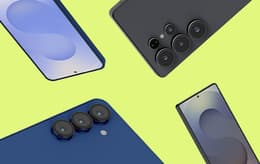
✨For most users, the iPhone 15 feels far closer to the iPhone 16 than the iPhone 14, making it the strongest value choice in the lineup.
Product specifications | |||
|---|---|---|---|
Feature | iPhone 14 | iPhone 15 | iPhone 16 |
Dimensions | 5.78 x 2.81 x 0.31 in | 5.81 x 2.82 x 0.31 in | 5.81 x 2.82 x 0.31 in |
Weight | 6.07 oz | 6.02 oz | 6.00 oz |
Materials | Glass + Aluminum | Glass + Aluminum | Glass + Aluminum |
Water- and dust-resistance rating | IP68 | IP68 | IP68 |
Display size | 6.1 in | 6.1 in | 6.1 in |
Display type | OLED 60Hz, 1,200 nitsbrightness | OLED 60Hz, 2,000 nitsbrightness | OLED 60Hz, 2,000 nitsbrightness |
Resolution | 2532x1170 px, 19.5:9 ratio, 460 PPI | 2556x1179 px, 19.5:9 ratio, 460 PPI | 2556x1179 px, 19.5:9 ratio, 461 PPI |
Protection | Ceramic Shield | Ceramic Shield | Ceramic Shield |
System chip | A15 | A16 | A18 |
Memory (RAM) | 6GB | 6GB | 8GB |
Storage | 128GB / 256GB / 512GB | 128GB / 256GB / 512GB | 128GB / 256GB / 512GB |
Charging | Fast charging Qi wireless charging MagSafe wireless charging | Fast charging Qi2 wireless charging MagSafe wireless charging | Fast charging Qi2 wireless charging Reverse wired charging MagSafe wireless charging |
Charging speed | Wired: 20W Wireless: 15W | Wired: 20W Wireless: 15W | Wired: 20W Wireless: 15W |
Main camera | 12MP | 48MP | 48MP |
Second camera | 12MP | 12MP | 12MP |
Video recording | 4K UHD (60 fps), 1080p (240 fps), 720p (30 fps) OIS, HDR, Dolby Vision HDR, Cinematic mode | 4K UHD (60 fps), 1080p (240 fps) OIS, HDR, Dolby Vision HDR, Cinematic mode | 4K UHD (60 fps), 1080p (240 fps) OIS, HDR, Dolby Vision HDR, Cinematic mode |
Front camera | 12MP | 12MP | 12MP |
Connectivity | 5G, Wi-Fi 6, Bluetooth 5.3, Ultra Widebandchip | 5G, Wi-Fi 6, Wi-Fi 6E, Bluetooth 5.3, Ultra Wideband chip | 5G, Wi-Fi 6E, Wi-Fi 7, Bluetooth 5.3, Ultra Wideband chip (Gen 2) |
USB | Lightning | USB-C | USB-C |
Colors | Midnight, Purple Starlight, (Product) RED, Blue | Black, Blue, Green, Yellow, Pink | Black, White, Pink, Teal, Ultramarine |
✨The iPhone 15 is the better overall phone thanks to its 48MP camera, Dynamic Island, brighter display, USB-C charging, and faster A16 chip, but the iPhone 14 remains the best value option for budget-conscious buyers. See how the iPhone 13 compares to these models.
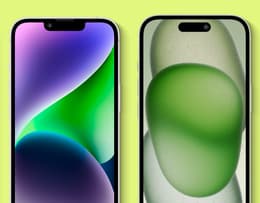
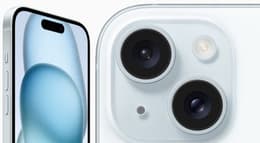
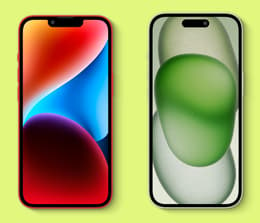
The iPhone 15 replaces the notch with Apple’s Dynamic Island.
✨ Winner: iPhone 15
At first glance, the iPhone 14 and iPhone 15 look very similar. However, Apple’s refinements make the newer model feel more modern. The iPhone 14 features a glossy back, squared aluminum edges, and a Lightning port. The iPhone 15, on the other hand, introduces a fingerprint-resistant matte glass finish, subtly contoured edges for a more comfortable grip, and USB-C charging. USB-C is a major convenience, allowing you to use the same cable for your iPhone, Mac, iPad, and many other devices. While the newer iPhone 16 adds an Action button and Camera Control, the iPhone 15 still feels remarkably capable and current in 2026.
✨ Winner: iPhone 15
Both the iPhone 14 and iPhone 15 feature a 6.1-inch Super Retina XDR OLED display with excellent color accuracy, HDR support, and sharp detail. The iPhone 15, however, gains two meaningful upgrades.
First, it replaces the traditional notch with Dynamic Island, an interactive cutout that displays alerts, music controls, navigation directions, and other live activities.
Second, outdoor brightness increases significantly, reaching up to 2,000 nits compared to the iPhone 14’s 1,200 nits, making the screen easier to see in direct sunlight. Neither phone offers the 120Hz ProMotion display found on Pro models, and even the newer iPhone 16 base model still uses a 60Hz panel.
✨ Winner: iPhone 15
Under the hood, the iPhone 14 runs on Apple’s A15 Bionic chip, while the iPhone 15 upgrades to the faster and more efficient A16 Bionic processor. In everyday use, both phones remain smooth and responsive, easily handling social media, streaming, multitasking, and gaming. However, the A16 provides a little more performance headroom for future software updates and demanding apps. The gap isn’thuge, but the iPhone 15 feels slightly more future-proof. That said, the iPhone 16’s A18 chip represents a much larger leap in power and AI capabilities than the difference between the iPhone 14 and 15.
✨ Winner: iPhone 15
Camera performance is where the biggest difference between the two models appears. The iPhone 14 uses a 12MP main camera and 12MP ultra-wide lens that still produce excellent photos with natural colors and strong low-light performance.
However, the iPhone 15 upgrades to a 48MP main camera that captures noticeably more detail and allows for a high-quality 2x telephoto crop without needing a dedicated zoom lens. Apple also improved portrait photography on the iPhone 15 with automatic depth capture, letting you convert regular photos into portrait shots after they’re taken.
While the iPhone 16 refines the formula with an upgraded 48MP Fusion camera, the iPhone 15 delivers a substantial camera upgrade over the iPhone 14. It remains one of the best value picks for mobile photography — and if you want to dig into its full capabilities, our iPhone 15 camera review covers every detail.
✨ Winner: iPhone 15
Battery performance is very similar between the iPhone 14 and iPhone 15. According to Apple, both offer up to 20 hours of video playback, and in real-world use, both comfortably last a full day for most users. Streaming, browsing, messaging, and social media usage produce nearly identical results, with many users ending the day with 20–30% battery remaining.
The biggest difference isn’t battery life itself but charging convenience. The iPhone 14 uses a Lightning cable while the iPhone 15 switches to USB-C. Charging speeds remain similar, but USB-C makes life much easier if you already use modern laptops, tablets, and other accessories.
✨The iPhone 15 Plus is the sweet spot of the Plus lineup, delivering meaningful upgrades over the 14 Plus, while the 16 Plus mainly adds extra power and future-proofing.
Product specifications | |||
|---|---|---|---|
Feature | iPhone 14 Plus | iPhone 15 Plus | iPhone 16 Plus |
Dimensions | 6.33 x 3.07 x 0.31 in | 6.33 x 3.06 x 0.31 in | 6.33 x 3.06 x 0.31 in |
Weight | 7.16 oz | 7.09 oz | 7.02 oz |
Materials | Glass + Aluminum | Glass + Aluminum | Glass + Aluminum |
Water- and dust-resistance rating | IP68 | IP68 | IP68 |
Display size | 6.7 in | 6.7 in | 6.7 in |
Display type | OLED 60Hz, 1,200 nitsbrightness | OLED 60Hz, 2,000 nitsbrightness | OLED 60Hz, 2,000 nitsbrightness |
Resolution | 2778x1284 px, 19.5:9 ratio, 458 PPI | 2796x1290 px, 19.5:9 ratio, 460 PPI | 2796x1290 px, 19.5:9 ratio, 460 PPI |
Protection | Ceramic Shield | Ceramic Shield | Ceramic Shield |
System chip | A15 | A16 | A18 |
Memory (RAM) | 6GB | 6GB | 8GB |
Storage | 128GB / 256GB / 512GB | 128GB / 256GB / 512GB | 128GB / 256GB / 512GB |
Charging | Fast charging Qi wireless charging MagSafe wireless charging | Fast charging Qi2 wireless charging MagSafe wireless charging | Fast charging Qi2 wireless charging Reverse wired charging MagSafe wireless charging |
Charging speed | Wired: 20W Wireless: 15W | Wired: 20W Wireless: 15W | Wired: 26W Wireless: 25W |
Main camera | 12MP | 48MP | 48MP |
Second camera | 12MP | 12MP | 12MP |
Video recording | 4K UHD (60 fps), 1080p (240 fps), 720p (30 fps) OIS, HDR, Dolby Vision HDR, Cinematic mode | 4K UHD (60 fps), 1080p (240 fps) OIS, HDR, Dolby Vision HDR, Cinematic mode | 4K UHD (60 fps), 1080p (240 fps) OIS, HDR, Dolby Vision HDR, Cinematic mode |
Front camera | 12MP | 12MP | 12MP |
Connectivity | 5G, Wi-Fi 6, Bluetooth 5.3, Ultra Widebandchip | 5G, Wi-Fi 6, Wi-Fi 6E, Bluetooth 5.3, Ultra Wideband chip | 5G, Wi-Fi 6E, Wi-Fi 7, Bluetooth 5.3, Ultra Wideband chip (Gen 2) |
USB | Lightning | USB-C | USB-C |
Colors | Midnight, Purple, Starlight, (Product) RED, Blue | Black, Blue, Green, Yellow, Pink | Black, White, Pink, Teal, Ultramarine |
✨The iPhone 15 Plus offers a better overall experience with its 48MP camera, Dynamic Island, brighter display, A16 chip, and USB-C, while the iPhone 14 Plus remains a great value option.
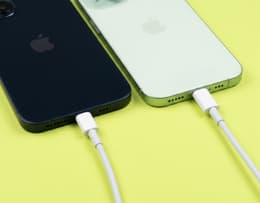
The move to USB-C is one of the biggest everyday upgrades on the iPhone 15 Plus.
✨ Winner: iPhone 15 Plus
Design-wise, the iPhone 14 Plus and iPhone 15 Plus look very similar. Both feature a large 6.7-inch design, aluminum frame, Ceramic Shield protection, and IP68 water resistance. The differences become more apparent when you pick them up. The iPhone 15 Plus, like the standard iPhone 15, introduces softer, more rounded edges that make it more comfortable to hold, along with a textured matte glass back that resists fingerprints. Apple also replaced the Lightning port with USB-C on the iPhone 15 Plus, making charging and accessory compatibility much more convenient. While both phones still feel premium, the iPhone 15 Plus has the more modern design, and its overall look remains remarkably close to the newer iPhone 16 Plus.
✨ Winner: iPhone 15 Plus
Both the iPhone 14 Plus and iPhone 15 Plus feature a roomy 6.7-inch Super Retina XDR OLED display, making them excellent for streaming, gaming, and multitasking. However, the iPhone 15 Plus gains a significant advantage with Dynamic Island, replacing the traditional notch found on the iPhone 14 Plus. Dynamic Island adds useful interactive features for music playback, timers, navigation, and live activities. The iPhone 15 Plus is also substantially brighter outdoors, reaching up to 2,000 nits of peak brightness compared to the iPhone 14 Plus’s 1,200 nits, making it easier to see in bright sunlight. Like the standard models, the Plus models also miss out on Apple’s 120Hz ProMotion technology, a feature still reserved for Pro models. This even remains absent in the iPhone 16 Plus.
✨ Winner: iPhone 15 Plus
The biggest upgrades for the iPhone 15 Plus come in the camera department. The iPhone 14 Plus uses a capable 12MP main camera and 12MP ultrawide camera. This setup produces excellent photos and videos in most situations.
The iPhone 15 Plus, however, upgrades the main camera to a 48MP sensor, delivering sharper images, improved low-light performance, and greater cropping flexibility. The higher-resolution sensor also enables a 2x zoom option that feels much closer to a dedicated telephoto lens than traditional digital zoom.
Both phones excel at video recording, but the iPhone 15 Plus offers a clear step forward for photography enthusiasts. Interestingly, the iPhone 16 Plus continues to use a similar 48MP main camera, showing just how good the iPhone 15 Plus’s camera is.
✨ Winner: iPhone 15 Plus
The iPhone 14 Plus runs on the A15 Bionic chip, while the iPhone 15 Plus uses the newer A16 Bionic chip, which debuted in the iPhone 14 Pro lineup. In everyday use, both phones feel extremely capable, handling gaming, photography, multitasking, and demanding apps with ease. However, the A16 chip delivers better efficiency, slightly faster graphics performance, and a bit more future-proofing for the iPhone 15 Plus. While the jump isn’t dramatic for casual users, buyers planning to keep their phones for several years will appreciate the extra performance headroom. The newer iPhone 16 Plus moves even further ahead with the A18 chip and support for Apple intelligence, but the A16 remains a capable processor.
✨ Winner: iPhone 15 Plus
Battery life is excellent on both devices and remains one of the biggest reasons to choose a Plus model. Apple rates both the iPhone 14 Plus and iPhone 15 Plus for up to 26 hours of video playback. However, the iPhone 15 Plus benefits from the A16 chip's efficiency improvements. Both phones can comfortably last a full day, and many users can stretch usage into a second day with moderate activity. Charging speeds are similar, but the iPhone 15 Plus gains the convenience of USB-C, while the iPhone 14 Plus remains tied to Lightning charging.
✨The iPhone 15 Pro offers the best balance of value and modern features, while the iPhone 16 Pro focuses on incremental upgrades rather than a dramatic leap forward.
Product specifications | |||
|---|---|---|---|
Feature | iPhone 14 Pro | iPhone 15 Pro | iPhone 16 Pro |
Dimensions | 5.81 x 2.81 x 0.31 in | 5.77 x 2.78 x 0.32 in | 5.89 x 2.81 x 0.32 in |
Weight | 7.27 oz | 6.60 oz | 7.02 oz |
Materials | Glass + Stainless Steel | Glass + Titanium | Glass + Titanium |
Water- and dust-resistance rating | IP68 | IP68 | IP68 |
Display size | 6.1 in | 6.1 in | 6.3 in |
Display type | OLED ProMotion, 2, 000 nits brightness | OLED ProMotion, 2,000 nits brightness | OLED ProMotion, 2,000 nits brightness |
Resolution | 2556x1179 px, 19.5:9 ratio, 460 PPI | 2556x1179 px, 19.5:9 ratio, 460 PPI | 2622x1206 px, 19.5:9 ratio, 458 PPI |
Protection | Ceramic Shield | Ceramic Shield | Ceramic Shield |
System chip | A16 | A17 Pro | A18 Pro |
Memory (RAM) | 6GB | 8GB | 8GB |
Storage | 128GB / 256GB / 512GB / 1024GB | 128GB / 256GB / 512GB / 1024GB | 128GB / 256GB / 512GB / 1024GB |
Charging | Fast charging Qi wireless charging MagSafe wireless charging | Fast charging Qi2 wireless charging MagSafe wireless charging | Fast charging Qi2 wireless charging Reverse wired charging MagSafe wireless charging |
Charging speed | Wired: 25W Wireless: 15W | Wired: 25W Wireless: 15W | Wired: 27W Wireless: 25W |
Main camera | 48MP | 48MP | 48MP |
Second camera | 12MP | 12MP | 48MP |
Third camera | 12MP | 12MP | 12MP |
Video recording | 4K UHD (60 fps), 1080p (240 fps), 720p (30 fps) OIS, HDR, 10-bit HDR, Dolby Vision HDR, ProRes, Cinematic mode | 4K UHD (60 fps), 1080p (240 fps) OIS, HDR, 10-bit HDR, Dolby Vision HDR, ProRes, Cinematic mode | 4K UHD (120 fps), 1080p (240 fps) OIS, HDR, 10-bit HDR, Dolby Vision HDR, ProRes, Cinematic mode |
Front camera | 12MP | 12MP | 12MP |
Connectivity | 5G, Wi-Fi 6, Bluetooth 5.3, Ultra Widebandchip | 5G, Wi-Fi 6, Wi-Fi 6E, Bluetooth 5.3, Ultra Wideband chip | 5G, Wi-Fi 6E, Wi-Fi 7, Bluetooth 5.3, Ultra Wideband (Gen 2) |
USB | Lightning | USB-C | USB-C |
Colors | Space Black, Silver, Gold, Deep Purple | Black Titanium, White Titanium, Blue Titanium, Natural Titanium | Black Titanium, White Titanium, Natural Titanium, Desert Titanium |
✨The iPhone 15 Pro is the better long-term choice thanks to its lighter titanium design, USB-C charging, and faster A17 Pro chip, while the iPhone 14 Pro remains an extremely capable value phone you can find at a lower price.
✨ Winner: iPhone 15 Pro
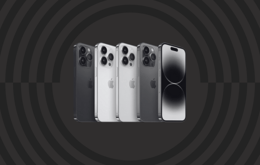
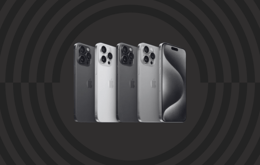
The biggest build difference between these two phones is how they feel in your hand. The iPhone 14 Pro uses a polished stainless steel frame that feels premium but is relatively heavy at 7.3 oz (206g). The iPhone 15 Pro switches to brushed titanium, reducing the weight to just 6.6 oz (187 g) while adding slightly contoured edges that make it noticeably hand-friendly.
Apple also replaced the iconic mute switch with the new Action Button on the iPhone 15 Pro, which can be customized to launch the camera, activate flashlight, start a voice memo, or trigger shortcuts. Another major upgrade for the iPhone 15 Pro is the USB-C port, replacing the Lightning port on the iPhone 14 Pro and making it easier to use the same cable across modern Apple devices.
The newer iPhone 16 Pro continues this titanium design language while adding a dedicated Camera Control button, but the jump from the 14 Pro to the 15 Pro remains one of the most noticeable design upgrades in recent years.
✨ Winner: Tie
Apple made very few changes to the display between these two generations, and that’s good news. Both the iPhone 14 Pro and iPhone 15 Pro feature a stunning 6.1-inch Super Retina XDR OLED display with ProMotion adaptive refresh rates of up to 120Hz, Dynamic Island, Always-On Display support, and excellent outdoor visibility.
The iPhone 14 Pro debuted the Dynamic Island, transforming the notch into an interactive part of the interface, while the 15 Pro refines the experience with slightly slimmer bezels. In everyday use, image quality, smoothness, and brightness feel nearly identical. The iPhone 16 Pro, on the other hand, increases the screen size to 6.3 in without dramatically increasing the phone’s footprint. But between the iPhone 14 Pro and 15 Pro, display performance is essentially a tie.
✨ Winner: iPhone 15 Pro
While the iPhone 14 Pro’s A16 Bionic chip remains incredibly fast, the iPhone 15 Pro raises the bar with Apple’s A17 Pro processor. The iPhone 15 Pro’s A17 Pro chip is built on a more advanced 3nm process and delivers faster CPU and GPU performance while also improving efficiency. The iPhone 15 Pro also increases RAM from 6GB on the iPhone 14 Pro to 8GB, helping with multitasking and demanding workloads. The extra graphics power enables console-quality gaming experiences and advanced features like hardware-accelerated ray tracing.
For everyday tasks like social media, browsing, and messaging, both phones feel exceptionally responsive. Still, power users, gamers, and anyone planning to keep their phone for many years will benefit from the 15 Pro’s additional performance headroom. The iPhone 16 Pro’s A18 Pro chip pushes things even further, though most users will notice a much larger jump going from the A16 to the A17 Pro chip than from the A17 Pro to the A18 Pro chip.
✨ Winner: iPhone 15 Pro
Both iPhones revolve around a 48MP main camera, and image quality remains excellent across the board. The iPhone 14 Pro introduced the higher-resolution sensor, delivering more detail, better low-light performance, and support for 48MP ProRAW photography. The iPhone 15 Pro builds on that foundation with improved image processing, even stronger low-light performance, and next-generation portrait photography that can automatically capture depth information without requiring Portrait Mode to be selected beforehand.
Apple also expanded the main camera's flexibility, offering selectable focal lengths of 24mm, 28mm, and 35mm. Both devices feature a 12MP ultrawide camera and a 3x telephoto lens, making zoom performance largely similar between the two.
However, the 15 Pro offers better video capabilities, including support for Log video recording and external recording through USB-C. If camera versatility is a priority, it’s worth noting that the iPhone 16 Pro introduces a 48MP ultrawide camera and a 5x telephoto lens, giving it a clear advantage over both older models.
✨ Winner: iPhone 15 Pro
Battery life is good on both phones, but the iPhone 15 Pro has a slight advantage thanks to the A17 Pro chip's efficiency improvements. Apple rates both devices for up to 23 hours of video playback, but real-world use generally favors the 15 Pro. The iPhone 14 Pro comfortably lasts a full day for most users, though heavier workloads can leave you reaching for the charger in the evening. The iPhone 15 Pro tends to finish the day with a little more battery remaining and feels more dependable under heavy use. Charging speeds are similar, with both supporting fast charging that can reach around 50% in roughly 30minutes. The main convenience difference is that the iPhone 15 Pro uses USB-C instead of Lightning.
✨The iPhone 15 Pro Max delivers the best overall value, while the iPhone 16 Pro Max mainly refines an already excellent formula.
Product specifications | |||
|---|---|---|---|
Feature | iPhone 14 Pro Max | iPhone 15 Pro Max | iPhone 16 Pro Max |
Dimensions | 6.33 x 3.05 x 0.31 in | 6.29 x 3.02 x 0.32 in | 6.42 x 3.05 x 0.33 in |
Weight | 8.47 oz | 7.80 oz | 8.01 oz |
Materials | Glass + Stainless steel | Glass + Titanium | Glass + Titanium |
Resistance | IP68 | IP68 | IP68 |
Display size | 6.7 in | 6.7 in | 6.9 in |
Display type | OLED ProMotion, 2,000 nits brightness | OLED ProMotion, 2,000 nits brightness | OLED ProMotion, 2,000 nits brightness |
Resolution | 2796x1290 px, 19.5:9 ratio, 460 PPI | 2796x1290 px, 19.5:9 ratio, 460 PPI | 2868x1320 px, 19.5:9 ratio, 458 PPI |
Protection | Ceramic Shield | Ceramic Shield | Ceramic Shield |
System chip | A16 | A17 Pro | A18 Pro |
Memory (RAM) | 6GB | 8Gb | 8GB |
Storage | 128GB / 256GB / 512GB / 1024GB | 256GB / 512GB / 1024GB | 256GB / 512GB / 1024GB |
Charging | Fast charging Qi wireless charging MagSafe wireless charging | Fast charging Qi2 wireless charging MagSafe wireless charging | Fast charging Qi2 wireless charging Reverse wired charging MagSafe wireless charging |
Charging speed | Wired: 25W Wireless: 15W | Wired: 25W Wireless: 15W | Wired: 27W Wireless: 25W |
Main camera | 48MP | 48MP | 48MP |
Second camera | 12MP | 12MP | 48MP |
Third camera | 12MP | 12MP | 12MP |
Video recording | 4K UHD (60 fps), 1080p (240 fps), 720p (30 fps) OIS, HDR, 10-bit HDR, Dolby Vision HDR, ProRes, Cinematic mode | 4K UHD (60 fps), 1080p (240 fps) OIS, HDR, 10-bit HDR, Dolby Vision HDR, ProRes, Cinematic mode | 4K UHD (120 fps), 1080p (240 fps) OIS, HDR, 10-bit HDR, Dolby Vision HDR, ProRes, Cinematic mode |
Front camera | 12MP | 12MP | 12MP |
Connectivity | 5G, Wi-Fi 6, Bluetooth 5.3, Ultra Widebandchip | 5G, Wi-Fi 6, Wi-Fi 6E, Bluetooth 5.3, Ultra Wideband chip | 5G, Wi-Fi 6E, Wi-Fi 7, Bluetooth 5.3, Ultra Wideband chip (Gen 2) |
USB | Lightning | USB-C | USB-C |
Colors | Space Black, Silver, Gold, Deep Purple | Black Titanium, White Titanium, Blue Titanium, Natural Titanium | Black Titanium, White Titanium, Natural Titanium, Desert Titanium |
✨The iPhone 15 Pro Max is the better overall choice thanks to its lighter titanium design, USB-C port, faster A17 Pro chip, and upgraded 5x zoom camera, while the iPhone 14 Pro Max remains an excellent value iPhone for power users.
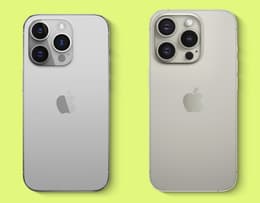
The titanium iPhone 15 Pro Max is noticeably lighter than its predecessor.
✨ Winner: iPhone 15 Pro Max
The iPhone 14 Pro Max and iPhone 15 Pro Max look very similar, but Apple introduced meaningful refinements to the newer model. The iPhone 14 Pro Max features a polished stainless steel frame that feels premium but also makes it one of the heaviest iPhones ever made, weighing in at 8.5 oz (240 g). The iPhone 15 Pro Max, though, switches to a Grade 5 titanium frame, reducing the weight to 7.8 oz (221 g) while adding slightly curved edges that make it hand-friendly.
Both phones feature the Dynamic Island, Ceramic Shield protection, IP68 water resistance, and a 6.7-inch form factor. However, the iPhone 15 Pro Max also replaces the traditional mute (Ring/Silent) switch with the customizable Action Button (similar to the 15 Pro). The Action Button functions similarly to the 15 Pro’s and can launch the camera, flashlight, shortcuts, and more. It also introduces USB-C charging, replacing the Lightning port found on the 14 Pro Max. Looking at today’s flagship lineup, the iPhone 16 Pro Max continues this titanium design language while adding a dedicated Camera Control button and an even larger 6.9-inch display.
✨ Winner: Tie
The iPhone 14 Pro Max and iPhone 15 Pro Max offer exceptional displays that remain among the best Apple has ever produced. Each features a 6.7-inch Super Retina XDR OLED panel with ProMotiontechnology, which dynamically scales the refresh rate to 120Hz for smooth scrolling and gaming. Both support Always-On Display functionality, HDR content, and Dynamic Island interactions. The iPhone 15 Pro Max gains slightly thinner bezels, making the screen feel more immersive, while outdoor visibility is marginally better thanks to improved brightness management. However, in everyday use, most people would struggle to tell the two apart. Video streaming, gaming, and social media all look fantastic on both devices. The gap becomes more noticeable compared to the iPhone 16 Pro Max, which pushes the design further with ultra-thin bezels and a larger 6.9-inch display that delivers an even more expansive viewing experience.
✨ Winner: iPhone 15 Pro Max
The performance difference between the two devices is one of the biggest reasons to choose the iPhone 15 Pro Max. The iPhone 14 Pro Max runs on Apple’s A16 Bionic chip paired with 6GB of RAM, which still delivers flagship-level speed and can comfortably handle demanding games, multitasking, and video editing.
The iPhone 15 Pro Max, on the other hand, upgrades to the 3nm A17 Pro chip and 8GB of RAM, offering faster processing, improved efficiency, and significantly stronger graphics performance. Apple also introduced hardware-accelerated ray tracing with the A17 Pro, enabling console-style gaming experiences with titles like Resident Evil 4 and Assassin’s Creed Mirage. The additional RAM helps future-proof the phone for more demanding apps and AI features, and the 15 Pro Max is also compatible with Apple Intelligence.
While the iPhone 16 Pro Max’s A18 Pro is even faster, the A17 Pro remains one of the most powerful smartphone chips available today and should stay capable for years to come.
✨ Winner: iPhone 15 Pro Max
The iPhone 14 Pro Max and iPhone 15 Pro Max share a strong photography foundation with a 48MP main camera, a 12MP ultrawide camera, and excellent image processing. The iPhone 14 Pro Max (along with the iPhone 14 Pro) was the first iPhone to move beyond a 12MP main sensor, delivering excellent detail, reliable color reproduction, and strong low-light performance.
However, the iPhone 15 Pro Max takes a meaningful step forward. The biggest upgrade is the 5x tetraprism telephoto lens that replaces the 14 Pro Max’s 3x zoom camera. This gives photographers much more flexibility when shooting distant subjects, landscapes, wildlife, and events. The 15 Pro Max also captures 24MP photos by default, allows users to select preferred focal lengths such as 24mm, 28mm, and 35mm, and offers improved portrait capabilities that let you add background blur after taking the photo. Video creators benefit from ProRes Log recording and external SSD recording via USB-C with the 15 Pro Max, as well.
While both phones have excellent camera systems, the 15 Pro Max is clearly the more versatile option. The newer iPhone 16 Pro Max further builds on this with a 48MP ultrawide camera and even stronger video features. However, the gap between the 15 Pro Max and 16 Pro Max is much smaller than the gap between the 14 Pro Max and 15 Pro Max.
✨ Winner: iPhone 15 Pro Max
Battery life is excellent on both the iPhone 14 Pro Max and the iPhone 15 Pro Max. According to Apple’s official figures, the iPhone 14 Pro Max and 15 Pro Max both deliver up to 29 hours of video playback. However, real-world efficiency improvements help the iPhone 15 Pro Max manage demanding workloads more effectively. In everyday use, both are capable all-day phones, and many users can stretch them into a second day with lighter usage. Charging speeds remain largely unchanged, with both devices reaching around 50% charge in approximately 30 minutes with a compatible charger. The major difference is the convenience upgrade in the 15 Pro Max, moving from Lightning charging to USB-C. Both iPhones provide excellent battery life, though the iPhone 16 Pro Max bests them with one of the best battery lives on the market.
✨The iPhone 15 series is the better overall choice thanks to its USB-C port, improved cameras, lighter Pro models, and greater future-proofing, while the iPhone 14 series remains an excellent value option for budget-conscious buyers.
iPhone 14 series | |
|---|---|
Pros ✅ | Cons ❌ |
Better value for money | Lightning port |
Excellent performance | Base models feel less modern |
Premium Pro models | Heavier Pro models |
Decent camera system | No Apple Intelligence support |
Excellent battery life | |
Excellent display quality |
iPhone 15 series | |
|---|---|
Pros ✅ | Cons ❌ |
USB-C charging | Base models still use 60Hz displays |
Better cameras across the lineup | Incremental upgrades for some users |
Dynamic Island on every model | |
Lighter, more comfortable Pro models | |
More future-proof |
“I ordered the iPhone 15 (256GB, Pink, Unlocked) and it arrived quickly and well packaged. The phone looks great with minimal wear and works perfectly. Everything matched the description, and activation was smooth. I’m really satisfied and would order from Back Market again.” - Marva L. Reviewed 2/8/26.
There are several ways to save money on a smartphone. You can wait for major sales events like Black Friday, take advantage of retailer and carrier promotions, or look for bundle deals. You can also hold off until a new iPhone generation launches, which often drives down the price of older models.
One of the easiest ways to get a great deal year-round, however, is to buy refurbished. At Back Market, you can save 20-50% compared to buying new while still getting a high-quality refurbished iPhone that has been professionally inspected and tested. Every purchase is backed by a 1-year warranty and a 30-day return period, so you can shop with confidence. Best of all, these savings aren’t limited to seasonal sales; they’re available anytime.
Buying a refurbished smartphone from Back Market is one of the smartest ways to get a high-quality device while saving money. Every smartphone sold on Back Market is professionally refurbished, meaning it undergoes rigorous testing, inspection, cleaning, and, when necessary, repairs, to ensure it meets strict quality standards. The result is a device that delivers reliable performance sold at a fraction of the cost of a new device. In fact, you can typically save 20-50% compared to the price of a new smartphone.
Beyond the savings, choosing refurbished is also better for the environment. Extending the life of existing devices helps reduce electronic waste and lowers the carbon emissions associated with manufacturing new products. With Back Market, you don’t just save money. You also make a more sustainable choice that’s better for both your wallet and the planet.
Upgrading your iPhone? Don’t let your old device sit in a drawer collecting dust. With Back Market’s Trade-in program, you can turn your old iPhone into cash and reduce the cost of your next purchase. Simply provide a few details about your device to receive an estimate, ship it to us for free, and get paid once it’s been inspected. It’s a quick and convenient way to earn money from a phone you no longer use while also extending its lifespan and keeping it out of the e-waste stream. Whether you’re upgrading to a new iPhone or simply decluttering, trading in your old device is a smart way to get more value from your tech.
When comparing the iPhone 14 and iPhone 15, price is a key factor in choosing the right device for your budget. The iPhone 14 offers strong value at a lower price, while the iPhone 15 offers newer features at a higher price. Buying refurbished makes both models even more affordable, helping you save significantly compared to buying new. Check out some of our best picks below, their prices, how they compare to new devices, and how much you can save by choosing Back Market.
Model | Back Market price | New price | Savings (%) |
|---|---|---|---|
$230 | $599.00 | 63% | |
$313 | $699.00 | 72.28% | |
$420 | $999.00 | 71.98% | |
$335.99 | $699.00 | 53% | |
$388 | $829.00 | 65.63% | |
$495 | $1,199.00 | 69.04% |
*Back Market prices are set by sellers and taken at the date of publication – these are subject to change. New prices reflect Apple's manufacturer's suggested retail price at date of launch.
In the end, choosing between the iPhone 14 and 15 isn’t really about which phone “wins” outright; it’s about how you want your iPhone experience to feel in 2026, especially if you’re not ready to spring for newer models like the iPhone 16. The iPhone 14 still holds its ground as a dependable, no-fuss option that covers all the essentials without stretching your budget. But the iPhone 15 feels like the more confident upgrade: cleaner design, smarter camera processing, and just enough modern touches to make everyday use feel more refined. If photography is a major factor in your decision, the gap becomes even clearer. The iPhone 15 simply gives you more flexibility and consistency across lighting conditions, making it easier to find the best iPhone camera for your needs without second-guessing your shots. Whichever way you lean, both phones deliver that familiar Apple reliability; it just comes down to whether you want “still great” or “noticeably better every day.”
Miguel is always looking for new ways to provide unique perspective on popular tech and has taken his writing to the refurbished industry to promote sustainability. Outside of creating content, you might find him travelling the globe, coaching a fitness class, or cheering on his favorite sports teams (Go Dolphins!)