iPhones

Updated on June 19, 2026
June 19, 2026
6 mins read

India van Spall
Global Brand Editor
Silly Little Plastic Cat is a new documentary about the most iconic piece of plastic pop culture ever to wash up on a French beach. Here, director Zack Grant walks us through his journey to Brittany, the power of human storytelling, and how this project changed his relationship with consumption.
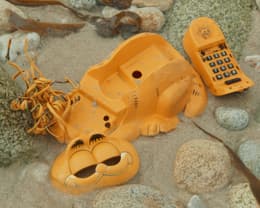
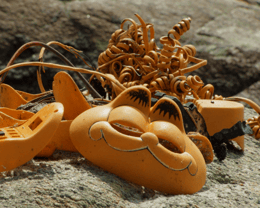
Since the 1980s, fragments of bright orange Garfield phones have been washing up on the beaches of Brittany. Originating from a shipping container lost at sea, what began as an odd maritime accident (with cute feline-shaped merch for the hottest Lasagne-guzzling cartoon cat of the 20th century) has since become a lasting environmental story.
In fact, according to news portal FranceInfo, more than 200 pieces of these devices washed ashore on the French peninsula in 2018 alone, contributing to decades of ocean pollution. And, this legacy is right at the core of Silly Little Plastic Cat, an original 12-minute documentary produced by Back Market and directed by New York-based filmmaker Zack Grant.
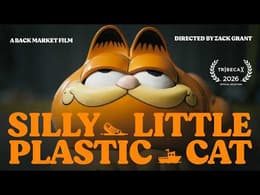

As the leading marketplace dedicated to refurbished tech, Back Market believes in making more of what already exists. Therefore, creating a film about e-waste and repairing old devices is central to our mission. For over thirty years, the community in Brittany has lived alongside the consequences of what the rest of the world has thrown away. But as the film reveals, waste doesn’t just disappear, it simply moves beyond our view.
By making the invisible visible, this film also invites audiences to think about what they throw away and how to repurpose what they already have. “It really drives home the human impact on the environment, especially in a place like Brittany, which is absolutely gorgeous,” says Grant. “It also made me think more about the things I use on a day-to-day basis; where they ultimately end up; and the impact they leave behind.”
"I hope the film encourages a greater awareness of the global consumer economy, where things come from, the labor involved, the transportation involved, and the pollution that's baked into that process." - Zack Grant
Instead of producing a typical environmental documentary, the 35-year-old approached this project as more of an investigation, really considering the human journey. As a result, the film feels slightly off-kilter and a little Wes Anderson-esque.
Using French locals to tell a human-first story, he pulls viewers into a broader conversation about consumption, waste, and the hidden journeys of the products we all buy. Ahead of the film’s release later this month, we spoke with Grant about his trip to Brittany, moments that stayed with him, and how he’s changed his consumption habits for the better.
How did The Silly Little Plastic Cat first come to life, and why did you want to help tell this story?
I remember reading a headline [in 2019, about Garfield phones washing up on the shores of Brittany] and thinking, “Oh, that’s crazy!” Outside of some very specific French media that covered the story and the initiative to find the container, I don’t think there was a distinct point of view. So when we set out, one thing that felt crucial to making the film was figuring out what the story is that continues today. This wasn’t just going to be a retrospective of everything that had happened. Through the research process, I realized that Garfield is really just one example of a much larger issue, and also a broader cultural way of life for the people of Brittany. Sustainability is ingrained in their lives in a way that, as an American, I found both unique and impressive.
From storyboarding to shooting, how long was that process in total?
Well, we started the process in October 2023 and by 2025, it was fully greenlit, so it's been over a two-year process at this point. I'm a big believer that films get made when the universe wants them to be made.
What’s a moment from your trip to Brittany that has stayed with you?
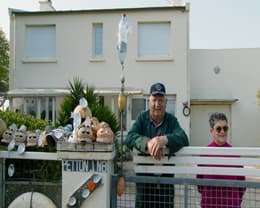
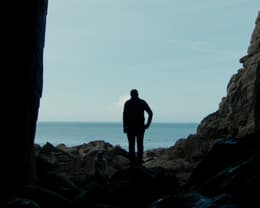
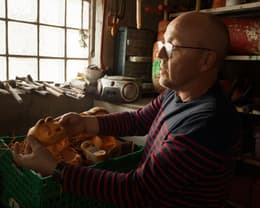
I think seeing Gilbert's garage really stayed with me. He’s a local collector of Garfield phones, and when you're there, you see the sheer mass of stuff he's collected over the years. It really drives home the human impact on the environment, especially in a place like Brittany, which is absolutely gorgeous. It also made me think more about the things I use on a day-to-day basis. Single-use items, where they ultimately end up, and the impact they have. There's always that existential question as an individual consumer: how much impact can I really have? I've certainly been cynical at times about what I can do on an individual level. But after that experience, and seeing how normalized sustainability is for the people of Brittany, I came away with renewed energy. It made me realize that things can be recycled, reused, given away, transformed, or repaired. It also made me think much more seriously about my own plastic consumption.
What do you hope people will take away from this film?
I hope people think more about where their stuff comes from. That's probably the biggest takeaway for me. The fact that a container ship (probably coming from Asia) had an accident that resulted in these consumer Garfield phones washing up on beaches and affecting the coastline for thirty years is remarkable. I don't think anyone buying those phones in the UK or Europe, where the shipment was headed, ever thought about the journey those products took to get to them.
Today, that whole system feels even more accelerated. With a few clicks, you can order something online and have it delivered to your door the next day. Very few people stop to think about the path that product took to get there. So I hope the film encourages a greater awareness of the global consumer economy we're all part of, where things come from, the labor involved, the transportation involved, and the pollution that's baked into that process.
Did anything about the people you met in Brittany challenge your assumptions about sustainability?
The people of Brittany take this philosophy to an extreme in some ways. They're very intentional about not buying things they don't absolutely need. That's admirable, and it's somewhat unique. It may not be realistic for everyone to live exactly that way, but I do think it's valuable if people take a moment to think about the things they purchase, the things they own, what's essential, and what can be repaired or have its lifespan extended rather than simply being replaced.
I think about that in my own life. I'm way overdue for a new phone, and I'm holding off for as long as I can. I don't need the latest model, I just need something with a battery that works. Those are the kinds of considerations I think about now, and I don't think it's a huge ask for people to think about them in their own lives as well. Our film couldn't just be a depressing story about how messed up the world is. It had to leave people with a sense that solutions exist.

Victoria, 31, London
"The film left me feeling heartened by the locals’ enthusiasm for collecting Garfield phones from the beach. It reinforced my sense of how much short-lived fandom merch is produced, leaving the world stuck with it long after its relevance has passed. The image that stayed with me most was the house lined with decaying Garfield phones, whose artificiality contrasted powerfully with the barren beach landscape."

Nelson, 29, Brussels
"The editing and the soundtrack are on point! The starting point driving towards a more global issue is also really singular and catchy. You can tell the people interviewed are buzzing about that story and are not naive about the issues it raises. I like the fact that the movie is not too pessimistic by showing how the locals absorbed this event over the years."
Avé, 19, New Jersey
"Even though I was born in 2007, decades after Garfield was created, I still connected with him immediately. There’s something really special about seeing a character continue to unite people across different generations. This film left me feeling nostalgic, but also reflective. The moment that stayed with me most was when the phones were described as a treasure hunt for local children. That idea felt incredibly relatable. Even today, finding a vintage Garfield item in a thrift store feels like discovering hidden treasure!"