Dell Latitude 5410 14" vs HP EliteBook 840 G6 14"

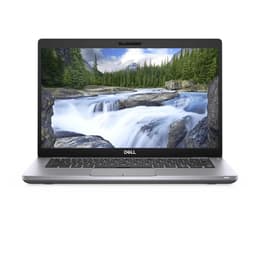
Dell Latitude 5410 14"
Starting at

Refurbished price:$219.92

Versus $1,829.82 new

See options
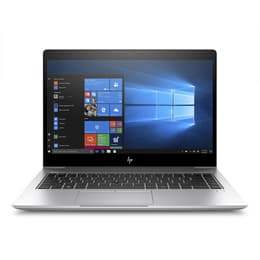
HP EliteBook 840 G6 14"
Starting at

Refurbished price:$280.00

Versus $1,319.98 new

See options

Ratings

The Dell Latitude 5410, released in late 2020, and the HP EliteBook 840 G6, launched in mid-2019, are both 14-inch business-oriented laptops designed for productivity and reliability. While sharing a similar form factor and target audience, the Latitude 5410 generally features a slightly newer internal architecture, whereas the EliteBook 840 G6 often offers more premium display options and a highly repairable design. Both devices run on the Windows operating system, providing a familiar environment for professional users.

Scores

Durability

When considering the practical lifespan of these laptops, several factors come into play, including their release timelines, operating system support, and ease of maintenance. The Dell Latitude 5410, being released in October 2020, benefits from a slightly more recent launch compared to the HP EliteBook 840 G6, which debuted in May 2019.

  • OS Support Duration: Both laptops primarily support Windows 10 Pro 64-bit and are compatible with Windows 11, with HP providing compatible driver support for the EliteBook 840 G6. The Dell Latitude 5410, with its later release, may receive official Windows updates for a slightly longer period.
  • Software Longevity: Given their business-class nature, both devices are expected to receive security and feature updates for several years, ensuring continued functionality and protection. The Dell Latitude 5410's 10th-generation internal components offer a minor advantage in terms of future compatibility with software advancements.
  • Repairability and Upgradability: The HP EliteBook 840 G6 is noted for its high repairability, scoring 10 out of 10, with easily accessible and replaceable components like RAM, SSD, and battery. The Dell Latitude 5410 also offers good upgradeability, with components like RAM not being soldered, allowing for memory expansion up to 64 GB. This modularity in both models contributes significantly to their potential practical lifespan, allowing users to extend their use through component upgrades or repairs.

Release Year

2019

2019

Last Os Compatibility

Yes

Yes

OS

Windows 11

Windows 11

Performance

The performance of these laptops is primarily driven by their internal processing capabilities and memory configurations, impacting how smoothly they handle daily tasks and more demanding applications. The Dell Latitude 5410 typically features 10th-generation processors, while the HP EliteBook 840 G6 is equipped with 8th-generation processors.

  • Processor Capabilities: The Latitude 5410's newer generation processor generally offers improved efficiency and responsiveness for everyday computing, such as web browsing, document editing, and video conferencing. The EliteBook 840 G6, while featuring an earlier generation processor, still handles demanding business applications and multitasking effectively.
  • Battery Behavior: The Dell Latitude 5410 often includes a larger 68 Wh battery, which has been noted to provide extended usage times, with some tests showing over 10 hours of general use and up to 19.5 hours for web browsing. The HP EliteBook 840 G6 typically comes with a 50 Wh battery, offering substantial battery life, with reports of around 16 hours of web browsing and 12.5 hours of video playback.
  • Memory and Storage: Both laptops support ample DDR4 RAM, with the Latitude 5410 configurable up to 64 GB and the EliteBook 840 G6 up to 32 GB, both featuring two SODIMM slots for user upgrades. For storage, both utilize fast NVMe PCIe M.2 SSDs, ensuring quick boot times and application loading.

Memory (GB)

8 GB

16 GB

Processor

Core i3 - Gen 10 (U)

Core i5 - Gen 8 (U)

Graphic card

Integrated Graphics

Integrated Graphics

Screen quality

The display is a critical component for any laptop, influencing user experience through clarity, brightness, and color reproduction. Both the Dell Latitude 5410 and the HP EliteBook 840 G6 feature 14-inch Full HD (1920x1080) anti-glare IPS displays.

  • Brightness and Clarity: The EliteBook 840 G6 often provides brighter display options, with configurations available up to 400 nits, and some models offering 4K UHD resolution. In contrast, the Latitude 5410's standard display options typically range from 220 nits to 300 nits, with some base configurations noted for lower brightness and limited color gamut coverage.
  • Color Reproduction and Viewing Experience: The HP EliteBook 840 G6's display can offer wide color coverage (up to 94% sRGB) and good color accuracy, contributing to a more vibrant visual experience. While the Latitude 5410's IPS panel offers comfortable viewing angles, some configurations may cover only about 52% of the sRGB gamut, which might be less ideal for tasks requiring precise color representation.
  • Refresh Rate and Eye Comfort: Both laptops typically feature a standard 60 Hz refresh rate. The EliteBook 840 G6's display uses Pulse-Width Modulation (PWM) for brightness adjustment up to 118 nits, but at a high frequency that is generally not noticeable to most users. The Latitude 5410's display has also been noted to use aggressive PWM at lower brightness levels in some configurations.

Resolution

1366 x 768

1920 x 1080

Screen type

IPS

IPS

Camera

Audiovisual

For communication and multimedia consumption, the integrated camera, microphone, and speakers play a significant role in the overall user experience. Both the Dell Latitude 5410 and the HP EliteBook 840 G6 are equipped with features suitable for professional use.

  • Webcam Quality: Both laptops typically include a 720p HD webcam. The Dell Latitude 5410 features an IR HD webcam with a privacy shutter, allowing for facial recognition login and physical privacy. The HP EliteBook 840 G6 also offers a 720p IR webcam, supporting Windows Hello for secure login.
  • Audio Input: The EliteBook 840 G6 is equipped with three digital microphones, enhancing clarity for calls and recordings, and features HP Noise Cancellation Software. The Latitude 5410 includes an integrated microphone, suitable for standard voice communication.
  • Speaker Output: The HP EliteBook 840 G6 boasts dual stereo speakers tuned by Bang & Olufsen, providing a richer audio experience for media consumption and conference calls. The Dell Latitude 5410 also features dual 2W speakers, offering clear audio output for general use.

Miscellaneous

Beyond core performance and display, various practical elements contribute to the daily usability and overall experience of a laptop. These include connectivity options, physical ports, security features, and the device's physical attributes.

  • Connectivity Options: The Dell Latitude 5410 supports Wi-Fi 6 (802.11ax) and Bluetooth 5.1, offering modern wireless speeds and reliable connections. The HP EliteBook 840 G6 also offers Wi-Fi 6 (802.11ax) or Wi-Fi 5 (802.11ac) and Bluetooth 5.0, providing robust wireless capabilities. Both include an RJ45 Ethernet port for wired network connections.
  • Port Selection: The Latitude 5410 provides three USB 3.2 Gen 1 Type-A ports (one with PowerShare), one USB 3.2 Gen 2 Type-C port with DisplayPort Alt Mode/Power Delivery, and optional Thunderbolt 3 support. It also includes an HDMI 1.4b port and a microSD card reader. The EliteBook 840 G6 features two USB 3.1 Gen 1 Type-A ports (one charging), one Thunderbolt 3 (USB Type-C) port, an HDMI 1.4b port, and a headphone/microphone combo jack. It notably lacks a microSD card slot.
  • Physical Design and Security: The Latitude 5410 has a starting weight of approximately 1.47 kg and is constructed from mostly plastic reinforced with carbon fiber and magnesium, offering a durable feel. It includes a fingerprint reader and a privacy shutter for the webcam. The EliteBook 840 G6, starting at 1.48 kg, features an aluminum chassis, providing a premium and sturdy build. It also incorporates a fingerprint sensor and an IR webcam for enhanced security.

Weight

3000 oz

52 oz

Screen size

14

14

Both the Dell Latitude 5410 and the HP EliteBook 840 G6 are solid choices within the business laptop segment, each with distinct strengths that cater to different user priorities. Users often praise the Latitude 5410 for its exceptional battery life, with its larger capacity providing extended unplugged usage, making it a strong contender for professionals on the go. Its upgradeability, particularly the non-soldered RAM, is also a frequently noted positive, allowing for future-proofing and performance enhancements.

Conversely, the HP EliteBook 840 G6 receives commendation for its premium aluminum build quality and often superior display options, including brighter panels and wider color coverage, which are beneficial for visual tasks. Its high repairability score and modular design are also significant advantages, appealing to users who value ease of maintenance and component replacement. A common criticism for some configurations of the Latitude 5410 has been its display brightness and color accuracy, which might not meet the expectations of users requiring precise visual work. The EliteBook 840 G6, while generally well-regarded, has been noted by some users for the absence of a microSD card slot, which can be a minor inconvenience for those who frequently transfer data from cameras or other devices.

Users prioritizing extended battery life and a slightly newer internal platform for general productivity and office tasks may find the Dell Latitude 5410 well-suited to their needs. Its robust upgrade options also make it a flexible choice for long-term use. On the other hand, users who value a more premium build, brighter and more color-accurate display options, and a highly repairable design might lean toward the HP EliteBook 840 G6. Both laptops represent reliable choices, and considering a quality-assured refurbished option for either model can be an eco-friendly alternative for acquiring these capable business machines.


See all articles

Our recent comparisons