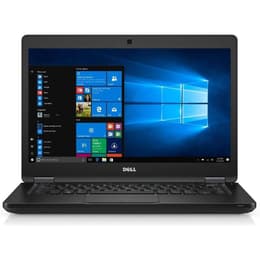
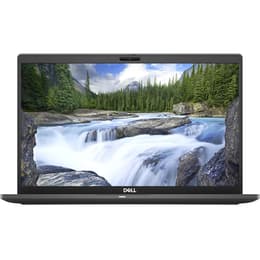
Dell Latitude 5490 14" vs Dell Latitude 7410 14"

Dell Latitude 5490 14"
Starting at

Refurbished price:$222.00

Versus $1,399.00 new

See options
Dell Latitude 7410 14"
Starting at

Refurbished price:$246.00

Versus $1,227.00 new

See options

The Dell Latitude 5490, a 14-inch business laptop released in 2018, and the Dell Latitude 7410, a 14-inch business laptop introduced in 2020, represent different generations within Dell's professional-grade Latitude series. While both are designed for productivity and reliability, the Latitude 7410 brings more recent advancements in processing power, display technology, and connectivity options, building upon the solid foundation established by its predecessor.

Scores

Durability

When considering the practical lifespan of these devices, several factors come into play, including their release timelines, operating system support, and ease of maintenance.

  • Release Timeline and Age: The Latitude 5490 was released in 2018, making it an older model compared to the Latitude 7410, which debuted in 2020. This two-year difference means the 7410 benefits from a more recent hardware foundation.
  • OS Support Duration: Both laptops are designed to run Windows operating systems. The newer release of the Latitude 7410 generally implies a longer period of official software and security updates from Dell and Microsoft, extending its viable operational life compared to the 5490.
  • Repairability: Both models offer a degree of user-serviceability for common components. Dell provides guides for replacing Customer Replaceable Units (CRUs) such as the battery and SSD for both the Latitude 5490 and 7410. However, some configurations of the Latitude 7410 may feature soldered RAM or Wi-Fi modules, which could impact the ease or cost of certain upgrades or repairs. The Latitude 5490 generally offers more modularity for RAM and storage upgrades.

Release Year

2017

2020

Last Os Compatibility

Yes

Yes

OS

Windows 11

Windows 11

Performance

The performance capabilities of these laptops are largely influenced by their internal components, particularly their processors and memory configurations, affecting how smoothly they handle daily tasks and more demanding applications.

  • Processor Capabilities: The Latitude 5490 typically features 7th and 8th generation Intel Core processors, providing solid performance for general office tasks, web browsing, and light multitasking. The Latitude 7410, being a newer model, comes equipped with 10th generation Intel Core processors, with some configurations offering 11th generation options. This newer generation of processors in the 7410 generally translates to improved efficiency and responsiveness for more intensive applications and smoother multitasking.
  • Memory and Storage: Both laptops support up to 32GB of RAM, allowing for robust multitasking. The Latitude 5490 often comes with DDR4 RAM in two slots, offering flexibility for upgrades. While the Latitude 7410 also supports up to 32GB of RAM, some configurations may have soldered memory, which limits upgrade options. Both models utilize SSD storage, with NVMe PCIe options available, ensuring fast boot times and quick application loading.
  • Battery Behavior: The Latitude 5490, with its 4-cell 68Wh or 42Wh battery, has shown battery life ranging from around 9 to over 15 hours in various tests, depending on the specific configuration and usage. The Latitude 7410, with 4-cell 52Wh or 68Wh battery options, typically offers between 8 and 13.5 hours of use, though some users report 4-6 hours under heavy workloads. The 7410 also features Dell's Optimizer AI software, which can adapt to usage patterns to conserve power.

Memory (GB)

8 GB

8 GB

Processor

Core i5 - Gen 8 (U)

Core i5 - Gen 10 (U)

Graphic card

Integrated Graphics

Integrated Graphics

Screen quality

The visual experience on these laptops is shaped by their display technology, resolution, and brightness levels, impacting clarity and usability in different environments.

  • Display Technology and Resolution: The Latitude 5490 typically offers 14-inch displays with either HD (1366x768) or Full HD (1920x1080) resolutions, often with an anti-glare finish. Some configurations included touch capabilities. The Latitude 7410 provides more advanced options, including Full HD (1920x1080) and a high-resolution 4K UHD (3840x2160) display. The 4K option on the 7410 is notable for its low-power and low-blue-light features, designed to reduce eye strain.
  • Brightness and Clarity: The Latitude 5490's displays generally have a brightness of around 220 nits, which is suitable for indoor use but may struggle in bright outdoor conditions. The Latitude 7410 offers brighter panels, with Full HD options reaching around 300 nits and 4K displays capable of up to 422 nits, providing better visibility in varied lighting. The 7410 also features narrower bezels, contributing to a more immersive viewing experience.
  • Refresh Rate and Smoothness: Both models typically feature standard 60Hz refresh rates, which are adequate for general productivity tasks. Neither is designed for high-refresh-rate applications like competitive gaming.

Resolution

1920 x 1080

1920 x 1080

Screen type

LED

LCD

Camera

Audiovisual

For communication and media consumption, the camera, microphone, and speaker quality are important considerations for users.

  • Camera System: Both the Dell Latitude 5490 and 7410 are equipped with integrated webcams, typically offering 720p resolution for video conferencing. Some configurations of the Latitude 7410 may offer Full HD webcams, providing a clearer image for virtual meetings.
  • Microphone Quality: Both laptops include integrated microphones suitable for calls and voice commands. The Latitude 7410 often features dual array microphones, which can offer improved noise reduction and clearer audio capture compared to single microphone setups.
  • Speaker Output: The Latitude 5490's speakers have been noted in some reviews as being subpar for media consumption. In contrast, the Latitude 7410 generally features standard stereo speakers, with some users reporting good sound quality and distinct audio separation, making it more suitable for media playback and presentations.

Miscellaneous

Beyond core performance and display, practical elements like connectivity, physical ports, and build characteristics contribute to the overall user experience.

  • Connectivity Options: Both laptops support Wi-Fi and Bluetooth for wireless connectivity. The Latitude 7410 often includes newer Wi-Fi standards like Wi-Fi 6 (802.11ax) and Bluetooth 5.1, offering potentially faster and more stable wireless connections compared to the Latitude 5490's Wi-Fi 5 (802.11ac) and Bluetooth 4.2.
  • Port Types: The Latitude 5490 offers a comprehensive selection of ports, including USB-C with DisplayPort, multiple USB-A 3.0/3.1 Gen 1 ports, HDMI, VGA, RJ-45 Ethernet, and an SD card reader. The Latitude 7410 modernizes its port selection by including two USB-C ports with Thunderbolt 3 support, Power Delivery, and DisplayPort capabilities, alongside two USB-A 3.2 Gen 1 ports, HDMI 2.0, and a Micro-SD card reader. The 7410 also supports USB-C charging, a convenience not universally available on the 5490.
  • Build Materials and Dimensions: The Latitude 5490 features a matte black finish with a carbon-fiber lid and underside, and a plastic keyboard deck, weighing around 3.5 pounds (1.6 kg). It is built to be sturdy and durable, passing MIL-STD 810G benchmarks. The Latitude 7410 boasts a rugged aluminum exterior, offering a premium feel and similar MIL-STD 810G durability. It is slightly lighter at around 3.1 pounds (1.4 kg) and features a more compact design due to narrower display bezels.

Weight

45 oz

52 oz

Screen size

14

14

The Dell Latitude 5490 and 7410 both serve as reliable business laptops, each with distinct strengths that cater to different user priorities. The Latitude 5490, released in 2018, is praised by users for its robust build quality, solid performance for everyday tasks, and comprehensive port selection, including legacy options like VGA. Its modular design for RAM and storage upgrades is also a frequent positive point. However, some users have noted its display brightness and speaker quality as areas where it falls short.

The Latitude 7410, introduced in 2020, is often lauded for its more modern design, including narrower display bezels and a premium aluminum chassis. Users appreciate its enhanced display options, particularly the availability of a low-power 4K screen, and its improved connectivity with Thunderbolt 3 via USB-C. While its performance with newer generation processors is a clear advantage, some configurations with soldered RAM have been a point of discussion among those who value upgradeability. Battery life is generally good, though heavy usage can reduce it.

Users prioritizing a highly durable and versatile workhorse for standard office applications, with a preference for traditional port options and easier internal upgrades, may find the Dell Latitude 5490 well-suited to their needs. Its established reliability and robust design make it a practical choice for those seeking a dependable device. Conversely, users who value a more modern aesthetic, higher-resolution display options, faster connectivity standards like Thunderbolt 3, and slightly improved overall performance for more demanding tasks will likely lean toward the Dell Latitude 7410. Both models offer a quality-assured refurbished option, providing an eco-friendly alternative for those looking to make a sustainable choice while still acquiring a capable business laptop.


See all articles

Our recent comparisons