Galaxy A14 5G • Locked T-Mobile vs iPhone 14 • Locked Verizon

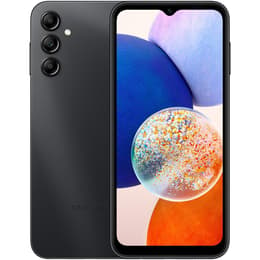
Galaxy A14 5G • Locked T-Mobile
Starting at

Refurbished price:$93.62

Versus $249.99 new

See options
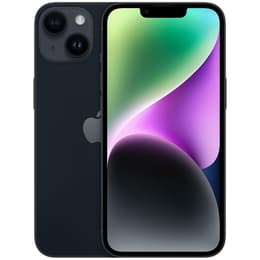
iPhone 14 • Locked Verizon
Starting at

Refurbished price:$299.00

Versus $599.00 new

See options

Ratings

The Samsung Galaxy A14 5G, released in January 2023, and the Apple iPhone 14, launched in September 2022, represent distinct approaches to the smartphone experience. While the Galaxy A14 5G operates on the Android platform, the iPhone 14 runs on Apple's iOS. These devices cater to different user preferences, primarily differing in their operating systems, display technologies, and overall performance tiers.

Scores

Durability

The longevity of a smartphone is influenced by its release timeline, software support, and physical durability features.

  • Release Timeline: The iPhone 14 was released in September 2022, making it slightly older than the Galaxy A14 5G, which launched in January 2023.
  • Software Support: Apple typically provides 5-6 years of major iOS updates for its devices, suggesting the iPhone 14 will receive software support for an extended period. The Galaxy A14 5G shipped with Android 13 and is guaranteed two major Android updates (up to Android 15) and four years of security updates, extending until 2027.
  • Durability Features: The iPhone 14 features a Ceramic Shield front cover and an aluminum design, along with an IP68 rating for water and dust resistance. The Galaxy A14 5G has a plastic polycarbonate back and frame, and while it offers a sturdy build, it does not carry an official IP rating for water and dust resistance.

Release Year

2023

2022

Last OS Compatibility

Yes

Yes

OS

Android

iOS

Foldable

No

No

Performance

Performance in smartphones is a blend of processing power, memory, and how efficiently the battery manages these resources during daily use.

  • Processing Capabilities: The iPhone 14 is equipped with a powerful current-generation processor, enabling it to handle demanding applications, complex multitasking, and graphics-intensive games with smooth responsiveness. The Galaxy A14 5G features an entry-level processor that provides solid performance for everyday tasks like browsing and social media, though some users have noted occasional sluggishness when moving between apps or launching certain applications.
  • Storage and RAM: The iPhone 14 offers storage options starting from 128GB, with configurations up to 512GB, and includes 6GB of RAM, which contributes to efficient multitasking. The Galaxy A14 5G comes with storage options of 64GB or 128GB, expandable up to 1TB via a microSD card, and is available with 4GB, 6GB, or 8GB of RAM.
  • Battery Behavior: The iPhone 14, with its 3279 mAh battery, is designed to offer all-day battery life for typical mixed usage, with some tests showing around 9 hours and 28 minutes of continuous web surfing. The Galaxy A14 5G houses a larger 5000mAh battery, which generally provides power for a full day of use, though some reviews indicate that its endurance might not always match its large capacity in specific heavy usage scenarios.

Memory (GB)

4 GB

6 GB

Screen quality

The visual experience on a smartphone is largely defined by its display technology, resolution, and refresh rate.

  • Display Technology and Clarity: The iPhone 14 features a 6.1-inch Super Retina XDR OLED display, offering deep blacks, vibrant colors, and a resolution of 2532x1170 pixels, resulting in a sharp 460 pixels per inch (ppi). The Galaxy A14 5G has a larger 6.6-inch PLS LCD display with a Full HD+ resolution of 1080x2408 pixels, providing around 400 ppi.
  • Brightness and Outdoor Visibility: The iPhone 14's OLED display can reach a typical brightness of 800 nits and a peak HDR brightness of 1200 nits, ensuring good visibility even in bright outdoor conditions. The Galaxy A14 5G's LCD panel has a peak brightness of around 500 nits, which can sometimes make outdoor viewing challenging in direct sunlight.
  • Refresh Rate and Smoothness: The iPhone 14 features a standard 60Hz refresh rate, which provides a smooth experience for most users. The Galaxy A14 5G offers a 90Hz refresh rate, contributing to smoother scrolling and a more fluid visual experience, particularly noticeable during gaming or navigating menus.

Resolution

1080 x 2408

1170 x 2532

Screen type

PLS LCD

Super Retina XDR OLED

Audiovisual

Camera capabilities are a significant factor for many users, encompassing photo quality, video recording, and audio output.

  • Rear Camera System: The iPhone 14 is equipped with a dual-camera system, featuring a 12MP main camera with sensor-shift optical image stabilization and a 12MP ultrawide camera. It offers improved low-light performance and features like Cinematic Mode and Action Mode for video. The Galaxy A14 5G has a triple rear camera setup, including a 50MP main sensor, a 2MP macro lens, and a 2MP depth sensor. It performs well in good lighting conditions, but users have noted that low-light photography can be a challenge, and it lacks an ultrawide lens.
  • Front Camera and Video Recording: The iPhone 14 features a 12MP front camera with autofocus, capable of recording 4K Dolby Vision HDR video. The Galaxy A14 5G has a 13MP front camera, and its video recording capabilities are limited to 1080p at 30 frames per second for both front and rear cameras.
  • Audio Experience: The iPhone 14 provides a clear audio experience for calls and media consumption. The Galaxy A14 5G features a single speaker for audio, and while call quality is solid, some users note it is not as rich as devices with stereo speakers.

Main camera

50 megapixels

12 megapixels

Front camera

13 megapixels

12 megapixels

Miscellaneous

Beyond core features, practical elements like connectivity, ports, and physical design contribute to the overall user experience.

  • Connectivity and Ports: Both devices support 5G connectivity. The iPhone 14 includes Wi-Fi 6 and relies on a Lightning port for charging and data transfer. The Galaxy A14 5G supports Wi-Fi 5 (802.11 a/b/g/n/ac) and features a USB-C port, along with a traditional 3.5mm headphone jack.
  • Biometric Security and Design: The iPhone 14 utilizes Face ID for secure facial recognition. The Galaxy A14 5G incorporates a side-mounted fingerprint sensor for biometric authentication. In terms of design, the iPhone 14 has a more compact form factor, weighing 172 grams and measuring 146.7 x 71.5 x 7.8 mm. The Galaxy A14 5G is larger and heavier at 202 grams and 167.7 x 78 x 9.1 mm, with a design that some describe as blocky.
  • Additional Features: The iPhone 14 includes features like Emergency SOS via satellite and Crash Detection. The Galaxy A14 5G offers NFC for tap-and-go payments.

Weight

7 oz

6 oz

Screen size (inches)

6.6

6.1

Network

5G

5G

SIM card

Physical SIM

eSIM

Carrier compatibility

T-Mobile

Verizon

User feedback for the Galaxy A14 5G often highlights its strong battery life, the inclusion of a headphone jack, and its larger display as key advantages. Common criticisms tend to focus on its camera performance in low-light conditions, the LCD display's brightness outdoors, and occasional performance lags. Conversely, the iPhone 14 receives praise for its robust camera system, smooth performance, and the consistent iOS software experience. Some users have noted the 60Hz refresh rate as a point of comparison to higher-end devices and the continued use of the Lightning port.

Users prioritizing an extensive software update timeline, a highly capable camera for various lighting conditions, and a compact design with premium build materials may find the iPhone 14 well-suited to their needs. Its powerful processor ensures a responsive experience for demanding applications. On the other hand, individuals who value a larger display, a long-lasting battery, the convenience of a headphone jack, and expandable storage might lean towards the Galaxy A14 5G. This device offers a practical Android experience for everyday tasks.

Both devices offer distinct advantages, and choosing between them often comes down to individual priorities regarding operating system preference, camera capabilities, display technology, and overall ecosystem. For those considering a more sustainable choice, quality-assured refurbished options for both models are available, providing an eco-friendly alternative.

See all articles

Our recent comparisons