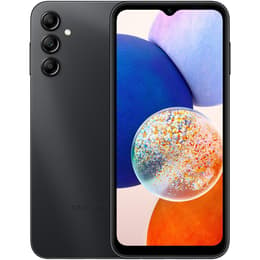
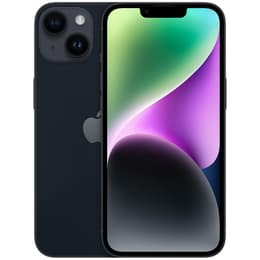
Galaxy A14 5G • Unlocked vs iPhone 14 • Locked AT&T

Galaxy A14 5G • Unlocked
Starting at

Refurbished price:$99.00

Versus $249.99 new

See options
iPhone 14 • Locked AT&T
Starting at

Refurbished price:$225.72

Versus $629.00 new

See options

Ratings

The Samsung Galaxy A14 5G (released January 2023) and the iPhone 14 (released September 2022) are distinct smartphone offerings from two major manufacturers. While the Galaxy A14 5G operates on the Android platform, providing a customizable user experience, the iPhone 14 runs on iOS, known for its integrated ecosystem. These devices cater to different user preferences, with key differences in their display technology, camera capabilities, and overall performance.

Scores

Durability

The longevity of a smartphone is influenced by its release timeline, software support, and ease of repair. Both devices offer a practical lifespan, though their approaches to updates and repairability differ.

  • Release Timeline and Age: The iPhone 14 was released in September 2022, preceding the Galaxy A14 5G's January 2023 launch. This difference in release date means the iPhone 14 has been available for a slightly longer period.
  • OS Support Duration: The Galaxy A14 5G is expected to receive two major Android OS updates and four years of security updates from its release, starting with Android 13. The iPhone 14, running on iOS, typically receives software updates for a longer duration, often around five to six years from its launch.
  • Repairability: The Galaxy A14 5G has a high repairability score, noted for its ease of disassembly and a battery held by an adhesive pull pouch, simplifying replacement. In contrast, while the iPhone 14 initially received a favorable repairability score due to its internal redesign, this was later downgraded due to software restrictions that complicate repairs with unauthorized parts.

Release Year

2023

2022

Last OS Compatibility

Yes

Yes

OS

Android

iOS

Foldable

No

No

Performance

Performance in smartphones is a blend of processing power, battery efficiency, and system responsiveness, impacting daily usage from app handling to multitasking.

  • Processor Capabilities: The iPhone 14 features a powerful processor that delivers smooth performance for demanding applications and multitasking. The Galaxy A14 5G, while capable, offers respectable performance for its category, handling everyday tasks efficiently.
  • Battery Behavior: The Galaxy A14 5G is equipped with a 5,000 mAh battery, often providing up to two days of use for many users, even with moderate to heavy activity. The iPhone 14, with a smaller battery capacity, generally offers all-day battery life for typical usage, though heavy use might require more frequent charging.
  • Storage Options: The iPhone 14 is available with internal storage options of 128GB, 256GB, and 512GB. The Galaxy A14 5G offers 64GB or 128GB of internal storage, with the added flexibility of expandable storage via a microSD card slot, supporting up to 1TB.

Memory (GB)

4 GB

6 GB

Screen quality

The display is a primary interface for smartphone interaction, with technology, resolution, and brightness significantly affecting the visual experience.

  • Display Technology and Resolution: The iPhone 14 features a 6.1-inch Super Retina XDR OLED display with a resolution of 2532 by 1170 pixels, offering deep blacks and vibrant colors. The Galaxy A14 5G has a larger 6.6-inch LCD display with a resolution of 2400 by 1080 pixels, providing a sharp picture.
  • Brightness Levels: The iPhone 14's OLED display can reach 800 nits typical maximum brightness and up to 1200 nits peak brightness for HDR content, making it highly visible in various lighting conditions, including direct sunlight. The Galaxy A14 5G's LCD screen is generally bright enough for comfortable indoor viewing and can be read outdoors, though it may struggle more in very bright sunlight compared to the iPhone.
  • Refresh Rate: The iPhone 14 maintains a standard 60Hz refresh rate. The Galaxy A14 5G offers a smoother visual experience with a 90Hz refresh rate, which can make scrolling and animations appear more fluid.

Resolution

1080 x 2408

1170 x 2532

Screen type

PLS LCD

Super Retina XDR OLED

Audiovisual

Camera systems are crucial for many users, with differences in sensor capabilities, low-light performance, and video features defining the photographic experience.

  • Camera System Capabilities: The iPhone 14 features a dual-camera system with a 12MP main camera and a 12MP ultra-wide camera, both benefiting from advanced image processing. The Galaxy A14 5G includes a triple camera setup with a 50MP main sensor, a 2MP macro camera, and a 2MP depth sensor, but lacks an ultra-wide lens.
  • Photography Performance: The iPhone 14 excels in capturing detailed photos with good dynamic range and improved low-light performance, especially with its Photonic Engine. The Galaxy A14 5G's 50MP main camera performs well in good lighting conditions, producing decent details and vibrant colors, but its low-light performance is more limited.
  • Video Recording: The iPhone 14 supports 4K video recording at various frame rates, including Cinematic mode for depth effects and Action mode for stabilized footage. The Galaxy A14 5G records video at up to 1080p resolution at 30 frames per second, which is suitable for general use but lacks the advanced features of the iPhone.

Main camera

50 megapixels

12 megapixels

Front camera

13 megapixels

12 megapixels

Miscellaneous

Beyond core features, practical elements like connectivity, physical design, and additional sensors contribute to the overall user experience.

  • Connectivity and Ports: Both devices support 5G connectivity. The iPhone 14 uses a Lightning port for charging and data transfer. The Galaxy A14 5G features a USB-C port and retains a 3.5mm headphone jack, offering more versatile audio connectivity.
  • Sensors and Biometrics: The iPhone 14 relies on Face ID for secure authentication. The Galaxy A14 5G includes a side-mounted fingerprint sensor for unlocking.
  • Dimensions and Build: The iPhone 14 measures 146.7 x 71.5 x 7.8 mm and weighs 172 grams, featuring a Ceramic Shield front and glass back with an aluminum design. The Galaxy A14 5G is larger and heavier at 167.7 x 78 x 9.1 mm and 204 grams, with a plastic polycarbonate back and frame. The iPhone 14 also has an IP68 rating for splash, water, and dust resistance, which the Galaxy A14 5G lacks.

Weight

7 oz

6 oz

Screen size (inches)

6.6

6.1

Network

5G

5G

SIM card

Physical SIM

eSIM

Carrier compatibility

Unlocked

AT&T

User feedback for the iPhone 14 often praises its smooth performance, vibrant display, and capable camera system, particularly for everyday photography and video. Users appreciate the consistent iOS experience and the device's overall reliability. Some common criticisms have included its battery life not being a significant leap from previous models and the initial repairability concerns due to software restrictions on parts.

The Galaxy A14 5G is frequently lauded for its long-lasting battery, large and sharp display, and solid main camera performance in good lighting. Users often highlight its value proposition and the inclusion of features like a headphone jack and expandable storage. Criticisms sometimes point to its less impressive low-light camera performance and the absence of an ultra-wide lens.

Users prioritizing a highly integrated ecosystem, advanced video capabilities, and robust low-light photography may find the iPhone 14 well-suited to their needs. Those who value extended battery life, a larger screen for media consumption, expandable storage, and a more open operating system might lean towards the Galaxy A14 5G. Both devices offer compelling features for different user profiles, and considering a quality-assured refurbished option for either model can be an eco-friendly alternative.

See all articles

Our recent comparisons