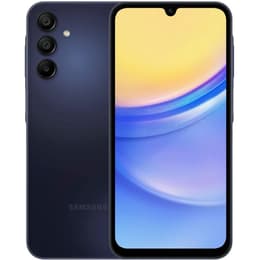


Galaxy A15 5G • Unlocked vs Google Pixel 8 Pro • Unlocked

Galaxy A15 5G • Unlocked
Starting at

Refurbished price:$108.00

Versus $207.99 new

See options
Google Pixel 8 Pro • Unlocked
Starting at

Refurbished price:$281.00

Versus $899.99 new

See options

Ratings

The Samsung Galaxy A15 5G, released in December 2023, and the Google Pixel 8 Pro, launched in October 2023, are both modern Android smartphones, yet they cater to different user expectations. While the Galaxy A15 5G focuses on delivering essential smartphone features with a strong emphasis on battery longevity and display quality, the Pixel 8 Pro offers a premium experience with advanced camera capabilities, a powerful processor, and an extended software support commitment. Both devices run on the Android operating system, providing access to a vast ecosystem of applications and services.

Scores

Durability

The longevity and support timeline for a smartphone are key considerations for many users, influencing how long a device remains functional and secure.

  • Release Timeline: The Google Pixel 8 Pro was released in October 2023, slightly preceding the Samsung Galaxy A15 5G's December 2023 launch. This means the Pixel 8 Pro has a marginally earlier starting point in its lifecycle.
  • Software Support: Google offers an extensive seven years of operating system and security updates for the Pixel 8 Pro, providing a prolonged period of software relevance and security. In contrast, the Galaxy A15 5G is eligible for four years of system updates and five years of security patches, which is a commendable policy for its category.
  • Build and Durability: The Pixel 8 Pro features Gorilla Glass Victus 2 on its display and an IP68 rating for dust and water resistance, indicating a robust build. The Galaxy A15 5G uses Dragontrail Pro glass for screen protection and has a plastic back and frame, but lacks an official IP rating.

Release Year

2023

2023

Last OS Compatibility

Yes

Yes

OS

Android

Android

Foldable

No

No

Performance

Performance is a critical aspect that dictates a smartphone's responsiveness and ability to handle various tasks, from everyday browsing to more demanding applications.

  • Processing Power: The Google Pixel 8 Pro is equipped with a current-generation processor designed for advanced AI capabilities and smooth operation across demanding applications and multitasking. The Galaxy A15 5G features a processor that capably handles daily tasks like email, web browsing, and media playback, though some users might experience occasional lag when switching between multiple applications.
  • Multitasking and Storage: The Pixel 8 Pro comes with 12GB of RAM, facilitating seamless multitasking and efficient handling of numerous open applications. It offers internal storage options up to 1TB, but without expandable storage. The Galaxy A15 5G is available with 4GB, 6GB, or 8GB of RAM and 128GB or 256GB of internal storage, which can be expanded up to 1TB using a microSD card.
  • Battery Performance: Both devices are equipped with large batteries. The Galaxy A15 5G has a 5000 mAh battery, often providing up to two days of moderate use on a single charge, and supports 25W wired fast charging. The Pixel 8 Pro features a 5050 mAh battery, capable of lasting over 24 hours, and supports faster 30W wired charging along with 23W wireless charging.

Memory (GB)

4 GB

12 GB

Screen quality

The display is the primary interface for user interaction, and its quality significantly impacts the overall viewing experience.

  • Display Technology and Size: The Galaxy A15 5G features a 6.5-inch Super AMOLED display, known for its vibrant colors and deep blacks. The Pixel 8 Pro boasts a larger 6.7-inch LTPO OLED display, referred to as a Super Actua Display, which offers enhanced visual fidelity.
  • Resolution and Clarity: The Galaxy A15 5G provides a Full HD+ resolution (2340x1080 pixels), delivering clear and detailed visuals for everyday content consumption. The Pixel 8 Pro offers a higher Quad HD+ resolution (2992x1344 pixels), resulting in sharper images and finer details, particularly noticeable with high-resolution media.
  • Brightness and Refresh Rate: The Galaxy A15 5G's display reaches up to 800 nits in High Brightness Mode and has a 90Hz refresh rate, providing smooth scrolling and good visibility in various lighting conditions. The Pixel 8 Pro's display can achieve a peak brightness of up to 2400 nits and features a variable refresh rate ranging from 1Hz to 120Hz, offering exceptional brightness for outdoor use and adaptive smoothness for content.

Resolution

1080 x 2340

1344 x 2992

Screen type

Super AMOLED

LTPO OLED

Audiovisual

Camera capabilities are a significant differentiator, with both devices offering distinct photographic experiences.

  • Rear Camera Systems: The Galaxy A15 5G includes a triple camera setup with a 50MP main sensor, a 5MP ultrawide lens, and a 2MP macro lens, suitable for capturing a variety of everyday scenes. The Pixel 8 Pro features a more advanced triple camera system, comprising a 50MP main sensor with optical image stabilization (OIS), a 48MP ultrawide lens with autofocus, and a 48MP telephoto lens offering 5x optical zoom and OIS, designed for versatility and high-quality imaging.
  • Photography Features: The Pixel 8 Pro benefits from advanced computational photography and AI features, including a Pro mode for manual controls and the ability to capture RAW images, enhancing creative control and image quality, especially in challenging lighting. The Galaxy A15 5G provides competent cameras for its segment, with its main camera producing detailed images, though without the extensive AI enhancements found in the Pixel.
  • Video and Audio: The Galaxy A15 5G records video at Full HD (1080p) at 30 frames per second. The Pixel 8 Pro offers more advanced video recording options, including 4K resolution at up to 60 frames per second and various slow-motion capabilities, alongside enhanced microphone quality for clearer audio capture. The Pixel 8 Pro also features stereo speakers for a more immersive media consumption experience, while the Galaxy A15 5G has a single down-firing speaker.

Main camera

50 megapixels

50 megapixels

Front camera

13 megapixels

10.5 megapixels

Miscellaneous

Beyond core specifications, several practical elements contribute to the overall user experience and device utility.

  • Connectivity and Ports: Both devices support 5G connectivity, though the Galaxy A15 5G supports C-band 5G but not the faster mmWave variety. The Galaxy A15 5G includes a 3.5mm headphone jack and a USB-C 2.0 port. The Pixel 8 Pro relies solely on its USB-C port for audio and charging, omitting the headphone jack. The Pixel 8 Pro supports both Nano SIM and eSIM, while the Galaxy A15 5G only supports physical SIM cards.
  • Security and Sensors: The Galaxy A15 5G features a side-mounted fingerprint sensor for secure unlocking. The Pixel 8 Pro offers an under-display optical fingerprint sensor and face unlock for biometric security, along with a unique built-in thermometer sensor.
  • Design and Build: The Galaxy A15 5G has a primarily plastic build, contributing to its lighter feel, and measures 160.1 x 76.8 x 8.4 mm, weighing 200g. The Pixel 8 Pro features a more premium construction with a polished aluminum frame and matte back glass, measuring 162.6 x 76.5 x 8.8 mm and weighing 213g.

Weight

7 oz

7 oz

Screen size (inches)

6.5

6.7

Network

5G

5G

SIM card

Physical SIM

Physical SIM + eSIM

Carrier compatibility

Unlocked

Unlocked

Connector

USB-C

USB-C

User feedback for the Samsung Galaxy A15 5G often highlights its impressive battery life, capable display, and Samsung's commitment to software updates as strong advantages. Some users have noted that its performance can be less fluid during heavy multitasking, and its plastic build might not feel as premium as higher-end devices. For the Google Pixel 8 Pro, common praise centers on its exceptional camera system, the advanced AI features, the vibrant and bright display, and the industry-leading software support policy. Criticisms are less frequent but sometimes point to its larger size and weight for those preferring a more compact device.

Users prioritizing extended software support, advanced photography capabilities, and a premium build will find the Google Pixel 8 Pro well-suited to their needs. Its powerful processor and high-resolution display also make it ideal for demanding applications and immersive media consumption. Conversely, users who value long battery life, expandable storage, and a more accessible entry point into the 5G smartphone ecosystem may prefer the Samsung Galaxy A15 5G. It serves as a reliable daily driver for essential tasks and offers a practical choice for students, professionals, or travelers seeking dependable performance without the most advanced features.

For those considering either device, exploring quality-assured refurbished options can provide an eco-friendly alternative, offering access to these technologies while supporting sustainable consumption.

See all articles

Our recent comparisons