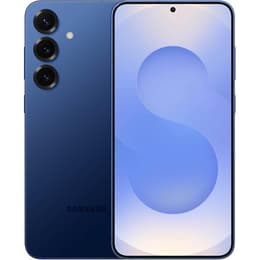

Galaxy A16 5G • Unlocked vs Galaxy S25+ • Unlocked

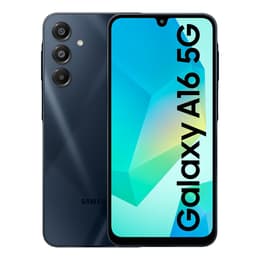
Galaxy A16 5G • Unlocked
Starting at

Refurbished price:$141.00

Versus $195.00 new

See options
Galaxy S25+ • Unlocked
Starting at

Refurbished price:$570.79

Versus $999.99 new

See options

Ratings

The Samsung Galaxy A16 5G, released in late 2024, and the Samsung Galaxy S25 Plus, launched in early 2025, represent distinct tiers within Samsung's smartphone lineup. While both operate on the Android platform, the A16 5G is positioned as a capable mid-range device, offering essential features and reliable performance for everyday use. In contrast, the S25 Plus stands as a flagship model, delivering advanced capabilities, enhanced durability, and a premium user experience.

Scores

Durability

The longevity of a smartphone is influenced by its physical resilience and the duration of software support it receives. These two devices offer different expectations in both areas.

  • Software Support: The Galaxy A16 5G is designed to receive six years of Android operating system upgrades and security patches, with support extending until October 2030. The Galaxy S25 Plus, as a flagship device, benefits from an extended commitment of seven years for both OS upgrades and security updates. This means the S25 Plus will maintain current software features and security protections for a longer period.
  • Physical Durability: The Galaxy A16 5G features an IP54 rating, indicating protection against dust and splashes. Its construction primarily uses a plastic frame and a material Samsung refers to as "Glastic" for the front and back, which mimics glass. The Galaxy S25 Plus, on the other hand, incorporates more robust materials, including Gorilla Glass Victus 2 for both its front and back, and Gorilla Armor for display protection. It also boasts an IP68 rating, signifying higher resistance to dust and water immersion.
  • Expected Lifespan: Users prioritizing extended software longevity and robust physical protection for demanding environments may find the Galaxy S25 Plus more suitable. For those seeking a device with solid software support for a considerable period and adequate protection for typical daily use, the Galaxy A16 5G offers a practical choice.

Release Year

2024

2025

OS

Android

Android

Foldable

No

No

Performance

Performance is a key differentiator, with the Galaxy S25 Plus engineered for demanding tasks and the A16 5G providing smooth operation for common applications.

  • Processing Power: The Galaxy A16 5G is equipped with an octa-core processor, such as the Exynos 1330 or MediaTek Dimensity 6300, which capably handles everyday activities like web browsing, social media, and media consumption. The Galaxy S25 Plus features a more advanced processor, typically the Qualcomm Snapdragon 8 Elite or an equivalent Exynos chipset, designed for rapid processing speeds and intensive tasks.
  • Multitasking and Storage: The A16 5G comes with 4GB, 6GB, or 8GB of RAM and 128GB or 256GB of internal storage, which is expandable via a microSD card up to 1.5TB. While it handles basic multitasking, users might experience slight delays when switching between many apps or during burst photography. The S25 Plus offers 12GB of RAM and 256GB or 512GB of faster UFS 4.0 internal storage, without expandable storage. This configuration ensures seamless multitasking, faster app loading, and smoother performance for graphically demanding games and applications.
  • Real-World Responsiveness: The Galaxy A16 5G provides a responsive experience for general use, but it is not optimized for heavy gaming or highly intensive applications. The Galaxy S25 Plus delivers an exceptionally fluid and agile experience, making it well-suited for power users and those who frequently engage with demanding software or high-fidelity mobile gaming.

Memory (GB)

4 GB

12 GB

Screen quality

The visual experience on both devices is distinct, with differences in display technology, resolution, and brightness impacting clarity and vibrancy.

  • Display Technology and Resolution: The Galaxy A16 5G features a 6.7-inch Super AMOLED display with a Full HD+ resolution (2340x1080 pixels). This provides vibrant colors and deep blacks suitable for everyday viewing. The Galaxy S25 Plus also has a 6.7-inch display, but it utilizes a Dynamic AMOLED 2X panel with a sharper WQHD+ resolution (3120x1440 pixels). This higher resolution results in finer detail and crisper images, particularly noticeable with high-quality content.
  • Brightness and Refresh Rate: The A16 5G offers a 90Hz refresh rate for smoother scrolling and animations, along with a peak brightness of 800 nits, which is generally sufficient for indoor and moderate outdoor use. The S25 Plus elevates the experience with an adaptive 120Hz refresh rate, providing exceptionally fluid motion and responsiveness. Its peak brightness reaches 2600 nits, ensuring excellent visibility even in bright outdoor conditions.
  • Viewing Experience: For users who primarily consume media, browse the web, and use social media, the A16 5G's display offers a pleasant and immersive experience. Those who prioritize the sharpest details, the smoothest interactions, and superior outdoor visibility will find the S25 Plus's display technology and higher brightness levels more advantageous.

Resolution

1080x2340

1440x3120

Screen type

Super AMOLED

Dynamic LTPO AMOLED 2X

Audiovisual

The camera systems on these two Galaxy phones cater to different photography needs, with the S25 Plus offering a more versatile and advanced setup.

  • Rear Camera Capabilities: The Galaxy A16 5G includes a triple rear camera system with a 50MP main sensor, a 5MP ultrawide lens, and a 2MP macro lens. The main camera performs well in good lighting conditions, capturing decent detail and exposure. However, the ultrawide and macro lenses are more limited in their performance, especially in challenging light. The Galaxy S25 Plus features a more comprehensive triple camera array, comprising a 50MP main camera with optical image stabilization (OIS), a 12MP ultrawide camera with a wide field of view, and a 10MP telephoto lens also with OIS, offering 3x optical zoom and up to 30x digital zoom.
  • Photography and Video Performance: For everyday photography, the A16 5G can capture good images, and it supports 4K video recording with decent stabilization. The S25 Plus excels in various lighting conditions, providing sharper images, better low-light performance, and more advanced features due to its larger sensors and OIS on multiple lenses. It also supports 8K video recording at 30 frames per second.
  • Front Camera and Audio: Both devices feature capable front-facing cameras for selfies and video calls; the A16 5G has a 13MP sensor, while the S25 Plus has a 12MP sensor. The S25 Plus also includes stereo speakers, enhancing the audio experience for media consumption.

Miscellaneous

Beyond core features, several practical elements distinguish the user experience and functionality of these two smartphones.

  • Connectivity and Ports: Both devices support 5G connectivity. The Galaxy A16 5G includes Wi-Fi 5 and Bluetooth 5.3, along with a USB-C 2.0 port. It supports one physical SIM card and one eSIM. The Galaxy S25 Plus offers more advanced connectivity with Wi-Fi 7 and Bluetooth 5.4, alongside a USB-C port. It also supports dual SIM functionality with a physical SIM and eSIM. Notably, the A16 5G does not include a 3.5mm headphone jack.
  • Biometrics and Build: The A16 5G features a side-mounted fingerprint scanner. Its build consists of a glass front, plastic back, and plastic frame. The S25 Plus integrates an ultrasonic in-screen fingerprint sensor for secure unlocking. Its construction typically involves premium materials like an aluminum or titanium frame and glass back.
  • Dimensions and Handling: The Galaxy A16 5G measures 164.4 x 77.9 x 7.9 mm and weighs 200g. The Galaxy S25 Plus is slightly more compact and lighter at 158.4 x 75.8 x 7.3 mm and 190g. These differences can impact how each device feels in hand and its portability.

Weight

7 oz

7 oz

Screen size (inches)

6.7

6.7

Network

5G

5G

SIM card

Physical SIM

Physical SIM + eSIM

Carrier compatibility

Unlocked

Unlocked

User feedback for the Galaxy A16 5G often highlights its strong battery life, vibrant Super AMOLED display, and the commitment to six years of software updates as significant advantages for its segment. Some users note that while it handles daily tasks well, performance can be sluggish with demanding applications or extensive multitasking, and the secondary cameras are not as capable as the main sensor.

For the Galaxy S25 Plus, common praise centers on its powerful performance, exceptional display quality with high brightness and adaptive refresh rate, and its versatile, high-quality camera system. The extended seven-year software support is also a frequently lauded feature. Potential concerns, though less common for a flagship, might revolve around the absence of expandable storage, which is a common trade-off in premium devices.

Users prioritizing a device with a long software lifespan, a bright and smooth display, and robust performance for all types of applications, including intensive gaming and photography, will find the Galaxy S25 Plus well-suited to their needs. Its premium build and advanced features cater to those seeking a top-tier smartphone experience. Conversely, individuals looking for a reliable smartphone that handles everyday tasks efficiently, offers a good display, and receives substantial software support without needing flagship-level performance or advanced camera features, may lean towards the Galaxy A16 5G. Both devices, especially when considering quality-assured refurbished options, provide an eco-friendly alternative for consumers.


See all articles

Our recent comparisons