Galaxy A53 5G • Unlocked vs iPhone 14 • Locked T-Mobile

Galaxy A53 5G • Unlocked
Starting at

Refurbished price:$113.00

Versus $414.99 new

See options
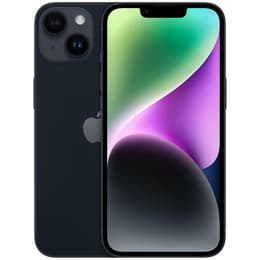
iPhone 14 • Locked T-Mobile
Starting at

Refurbished price:$239.00

Versus $599.00 new

See options

Ratings

The Samsung Galaxy A53 5G, released in March 2022, and the iPhone 14, launched in September 2022, represent distinct approaches to the modern smartphone experience. While the Galaxy A53 5G operates on the Android platform, offering extensive customization and expandable storage, the iPhone 14 runs on Apple's iOS, known for its integrated ecosystem and consistent performance. This comparison will explore their core differences, from display technology to camera capabilities, to help users identify which device aligns best with their daily needs.

Scores

Durability

When considering the long-term usability of a smartphone, factors like software support and physical resilience are key. The Galaxy A53 5G and iPhone 14 offer different propositions in these areas.

  • Release Timeline and Software Support: The Galaxy A53 5G, released in March 2022, was promised four generations of Android OS upgrades and five years of security updates from its launch. The iPhone 14, released in September 2022, typically receives iOS updates for approximately five to six years, suggesting a slightly longer software longevity expectation.
  • Build Materials and Durability: The Galaxy A53 5G features a Corning Gorilla Glass 5 front and a plastic back, contributing to its overall construction. It carries an IP67 rating for dust and water resistance. The iPhone 14 utilizes a Ceramic Shield front, a glass back, and an aluminum frame, offering enhanced drop performance for the front display. It boasts an IP68 rating, indicating a higher level of water and dust resistance.
  • Repairability Considerations: The Galaxy A53 5G has been noted as a relatively repairable device, with some sources giving it a repairability score around 6.75 or 7.5 out of 10, highlighting accessible components like the battery, though it uses adhesive for the back cover. The iPhone 14 initially received a favorable repairability score due to its internal redesign making back and front access easier, but this was later downgraded to a 'do-not-recommend' score of 4 out of 10 by iFixit due to software limitations and parts pairing requirements that complicate independent repairs.

Release Year

2022

2022

Last OS Compatibility

Yes

Yes

OS

Android

iOS

Foldable

No

No

Performance

The performance of a smartphone impacts everything from app responsiveness to gaming experiences. Both devices handle daily tasks, but their underlying architectures lead to different user experiences.

  • Storage and Expandability: The Galaxy A53 5G offers internal storage options of 128GB or 256GB and includes a microSD card slot, allowing users to expand storage up to 1TB. The iPhone 14 comes with 128GB, 256GB, or 512GB of internal storage, but it does not support expandable storage.
  • Battery Performance: The Galaxy A53 5G is equipped with a 5000 mAh battery, with Samsung claiming up to two days of battery life under typical usage. The iPhone 14 features a 3279 mAh battery, which generally provides enough power to last a full day for most users, achieving around 9 hours and 28 minutes in web browsing tests. Some iPhone 14 users have reported faster-than-expected battery degradation over time.
  • System Responsiveness and Multitasking: The Galaxy A53 5G, with its 6GB or 8GB of RAM, handles everyday applications smoothly, though it may show limitations with very demanding games or extensive multitasking compared to higher-end devices. The iPhone 14, featuring 6GB of RAM, delivers consistently smooth performance across demanding applications, intensive multitasking, and graphic-heavy gaming, benefiting from its optimized hardware and software integration.

Memory (GB)

6 GB

6 GB

Screen quality

The display is a primary interface for smartphone interaction, and both devices offer vibrant viewing experiences with distinct characteristics.

  • Display Technology and Clarity: The Galaxy A53 5G features a 6.5-inch Super AMOLED display with a resolution of 1080 x 2400 pixels, resulting in a pixel density of approximately 405 ppi. The iPhone 14 sports a 6.1-inch Super Retina XDR OLED display with a resolution of 2532 x 1170 pixels, offering a higher pixel density of around 460 ppi for sharper visuals.
  • Brightness and Outdoor Visibility: The Galaxy A53 5G's display can reach a peak brightness of 800 nits, providing good visibility in various lighting conditions. The iPhone 14 offers a typical brightness of 800 nits, with a peak brightness of 1200 nits when displaying HDR content, which can be beneficial for outdoor use and media consumption.
  • Refresh Rate and Smoothness: The Galaxy A53 5G boasts a 120Hz adaptive refresh rate, contributing to smoother scrolling and more fluid animations. In contrast, the iPhone 14 maintains a standard 60Hz refresh rate, which provides a consistent experience but does not offer the same level of visual fluidity as higher refresh rate displays.

Resolution

1080 x 2400

1170 x 2532

Screen type

Super AMOLED

Super Retina XDR OLED

Audiovisual

For many users, the camera system is a crucial component of a smartphone, and both the Galaxy A53 5G and iPhone 14 provide capable photographic and videographic tools.

  • Rear Camera System: The Galaxy A53 5G is equipped with a versatile quad-camera setup on the rear, including a 64MP main sensor with Optical Image Stabilization (OIS), a 12MP ultrawide lens, a 5MP macro lens, and a 5MP depth sensor. The iPhone 14 features a dual-camera system with a 12MP main camera that includes OIS and a 12MP ultrawide lens.
  • Photography Performance: The iPhone 14's main camera benefits from a larger sensor and Apple's Photonic Engine, which contributes to improved low-light performance and overall image quality. The Galaxy A53 5G's 64MP main sensor can capture detailed images in good lighting, and its OIS helps reduce blur.
  • Video Capabilities and Audio: The Galaxy A53 5G supports 4K video recording at 30 frames per second. The iPhone 14 offers more advanced video features, including 4K video recording at up to 60 frames per second, Cinematic Mode for depth-of-field effects, Action Mode for stabilized footage, and Dolby Vision HDR recording. Both devices feature stereo speakers for media consumption.

Main camera

64 megapixels

12 megapixels

Front camera

32 megapixels

12 megapixels

Miscellaneous

Beyond the core specifications, several practical elements contribute to the overall user experience and daily functionality of a smartphone.

  • Connectivity and Ports: Both devices support 5G connectivity. The Galaxy A53 5G includes Wi-Fi 802.11 a/b/g/n/ac and Bluetooth 5.1, along with a USB-C 2.0 port for charging and data transfer. The iPhone 14 features Wi-Fi 802.11ax (Wi-Fi 6) and Bluetooth 5.3, utilizing Apple's proprietary Lightning port.
  • Biometric Security: The Galaxy A53 5G incorporates an optical fingerprint sensor embedded under the display for secure unlocking and authentication. The iPhone 14 relies on Face ID, Apple's facial recognition system, for biometric security.
  • Physical Design and Handling: The Galaxy A53 5G measures 159.6 x 74.8 x 8.1 mm and weighs 189g. The iPhone 14 is more compact and lighter, with dimensions of 146.7 x 71.5 x 7.8 mm and a weight of 172g. These differences mean the iPhone 14 offers a smaller footprint and lighter feel in hand compared to the Galaxy A53 5G.

Weight

7 oz

6 oz

Screen size (inches)

6.5

6.1

Network

5G

5G

SIM card

Physical SIM

eSIM

Carrier compatibility

Unlocked

T-Mobile

The Samsung Galaxy A53 5G and the iPhone 14 cater to different user preferences, each excelling in specific areas. User feedback for the Galaxy A53 5G often praises its vibrant Super AMOLED display, long-lasting battery, and the flexibility of expandable storage, which is a significant advantage for users who store large amounts of media or apps. However, some users have noted that its processor performance can sometimes feel less responsive compared to higher-end devices, and there have been reports of connector issues in some units.

The iPhone 14 is frequently lauded for its powerful performance, advanced camera capabilities, and the seamless integration within the Apple ecosystem. Common criticisms include its standard 60Hz display refresh rate, the presence of a notch, and some user reports of faster battery health degradation than anticipated.

Users prioritizing a larger, high-refresh-rate display, extensive storage expansion, and the Android operating system's customization options may find the Galaxy A53 5G well-suited to their needs. Conversely, individuals who value consistent high performance, advanced video recording features, a compact design, and the long-term software support of iOS will likely lean towards the iPhone 14. Both devices offer a quality-assured refurbished option, providing an eco-friendly alternative for consumers looking to make a sustainable choice.


See all articles

Our recent comparisons