Galaxy Note20 Ultra • Unlocked vs Galaxy S21 Ultra 5G • Unlocked

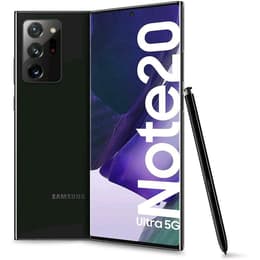
Galaxy Note20 Ultra • Unlocked
Starting at

Refurbished price:$259.00

Versus $1,300.00 new

See options
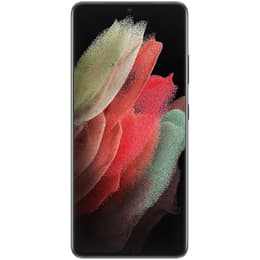
Galaxy S21 Ultra 5G • Unlocked
Starting at

Refurbished price:$199.99

Versus $1,299.99 new

See options

Ratings

The Samsung Galaxy Note20 Ultra, released in August 2020, and the Samsung Galaxy S21 Ultra 5G, launched in January 2021, represent two generations of Samsung's premium smartphone offerings. While both devices deliver a high-end Android experience with advanced features, the S21 Ultra 5G introduces a refined camera system, a more powerful internal architecture, and updated display capabilities. Both operate on the Android platform, offering a consistent software experience with Samsung's One UI overlay.

Scores

Durability

When considering the long-term usability of these devices, their release timelines and software support are key factors.

  • Release Timeline: The Galaxy Note20 Ultra was released in August 2020, while the Galaxy S21 Ultra 5G followed in January 2021. This six-month difference means the S21 Ultra 5G benefits from a slightly longer period of official software and security updates.
  • OS Support: The Note20 Ultra launched with Android 10 and concluded its major OS updates with Android 13 (One UI 5.1). Its security updates officially ended around August 2025. The S21 Ultra 5G, starting with Android 11, received major OS updates up to Android 15 (One UI 7.0), with security updates concluding around February 2026.
  • Durability: Both models feature an IP68 rating for dust and water resistance and are protected by Corning Gorilla Glass Victus on the front and back, contributing to their physical resilience.

Release Year

2020

2021

Last OS Compatibility

No

Yes

OS

Android

Android

Foldable

No

No

Performance

The performance of these devices is driven by their respective internal components, impacting everything from app responsiveness to demanding tasks like gaming.

  • Processing Power: The Galaxy Note20 Ultra features a powerful processor for its generation, capable of handling everyday applications and multitasking smoothly. The Galaxy S21 Ultra 5G, being a newer device, incorporates a next-generation processor, offering enhanced speed and efficiency for more intensive applications and a generally snappier user experience.
  • Multitasking and Storage: Both phones offer ample RAM, with the S21 Ultra 5G having configurations that include up to 16GB, providing more headroom for extensive multitasking. The Note20 Ultra includes a microSD card slot for expandable storage, a feature not present on the S21 Ultra 5G, which relies solely on its internal storage options.
  • Battery Behavior: The Note20 Ultra is equipped with a 4500mAh battery, while the S21 Ultra 5G has a larger 5000mAh battery. Despite the difference in capacity, some users have reported that the Note20 Ultra can offer comparable or even slightly better practical battery life in certain usage scenarios, potentially due to optimization or display settings.

Memory

12 GB

12 GB

Screen quality

Both the Galaxy Note20 Ultra and the Galaxy S21 Ultra 5G offer premium display experiences, though with some notable distinctions in their capabilities.

  • Display Technology and Resolution: Both devices feature a Dynamic AMOLED 2X display, known for vibrant colors and deep blacks. The Note20 Ultra has a 6.9-inch display, while the S21 Ultra 5G has a slightly smaller 6.8-inch screen. Both offer high resolutions, but the S21 Ultra 5G can maintain its maximum WQHD+ resolution at a 120Hz refresh rate simultaneously, providing a smoother and sharper visual experience. The Note20 Ultra requires users to choose between the highest resolution (WQHD+) at 60Hz or a lower resolution (FHD+) at 120Hz.
  • Brightness and Clarity: Both displays offer excellent brightness levels, ensuring good visibility even in bright outdoor conditions. The high pixel densities on both phones contribute to sharp text and clear images.
  • Refresh Rate: The adaptive 120Hz refresh rate on both devices provides fluid scrolling and a responsive feel. The S21 Ultra 5G's ability to deliver this at its highest resolution is a key advantage for users who prioritize both sharpness and smoothness.

Resolution

1440 x 3088

1440 x 3200

Screen type

Dynamic AMOLED 2X

Dynamic AMOLED 2X

Audiovisual

The camera systems on both the Galaxy Note20 Ultra and the Galaxy S21 Ultra 5G are designed for versatile photography, with the S21 Ultra 5G offering some advancements.

  • Rear Camera System: Both phones feature a 108MP main wide-angle sensor. The S21 Ultra 5G distinguishes itself with a more advanced telephoto setup, including two 10MP telephoto lenses, one offering 3x optical zoom and another with 10x optical zoom, enabling greater zoom capabilities. The Note20 Ultra has a single 12MP telephoto lens with 5x optical zoom. Both also include a 12MP ultrawide camera.
  • Photography Performance: In everyday lighting, both devices capture detailed and vibrant photos. For low-light conditions, the S21 Ultra 5G generally offers improved performance, producing images with less noise and better detail, though some users note a more processed look.
  • Video and Audio: Both phones are capable of recording 8K video at 24fps and 4K video at 60fps. The S21 Ultra 5G has an advantage in that it can film with its telephoto camera at 4K/60fps, whereas the Note20 Ultra uses digital zoom at that resolution and frame rate. Both offer quality microphone performance for calls and recordings, and stereo speakers for media consumption.

Main camera

108 megapixels

108 megapixels

Front camera

10 megapixels

40 megapixels

Miscellaneous

Beyond core specifications, several practical elements differentiate the user experience of these two devices.

  • S Pen Integration: A primary distinction lies in the S Pen. The Galaxy Note20 Ultra features an integrated S Pen that docks directly into the phone, offering low latency and advanced Air Actions for remote control and gestures. The Galaxy S21 Ultra 5G supports S Pen functionality, but the stylus is an external accessory and does not have a dedicated internal slot. While it supports basic S Pen functions, some of the advanced Air Actions and integrated features found on the Note20 Ultra require a specific S Pen Pro.
  • Connectivity and Ports: Both devices offer 5G connectivity, Wi-Fi, Bluetooth, and NFC. The S21 Ultra 5G supports the newer Wi-Fi 6e standard, potentially offering faster and more stable wireless connections where available. Both utilize a USB-C port for charging and data transfer, and neither includes a 3.5mm headphone jack.
  • Design and Handling: The Note20 Ultra has dimensions of 164.8 x 77.2 x 8.1 mm and weighs 208g. The S21 Ultra 5G is slightly thicker and heavier at 165.1 x 75.6 x 8.9 mm and 228g. The S21 Ultra 5G's camera module is noted by some users to be better balanced, making it feel more comfortable for one-handed use despite its weight.

Weight

7 oz

8 oz

Screen size (inches)

6.9

6.8

Network

LTE

5G

SIM card

Physical SIM + eSIM

Physical SIM + eSIM

Carrier compatibility

Unlocked

Unlocked

The Samsung Galaxy Note20 Ultra and Galaxy S21 Ultra 5G both delivered flagship experiences in their respective release years, each with distinct strengths. Users often praise the Note20 Ultra for its fully integrated S Pen experience, which offers a seamless and feature-rich stylus for productivity and creative tasks. Some users also found its battery life to be robust despite a smaller capacity compared to its successor.

However, the Note20 Ultra faced some criticisms, including reports of dust or condensation within the camera module for a small number of users, and concerns about battery drain with the Exynos processor variant. The S21 Ultra 5G, on the other hand, is frequently lauded for its advanced camera system, particularly its enhanced telephoto capabilities, and its ability to deliver a 120Hz refresh rate at its highest display resolution.

Common concerns for the S21 Ultra 5G included some reported software glitches affecting default apps and call functionality, as well as occasional battery optimization issues. A small number of users also reported screen blacking out issues.

Users prioritizing a fully integrated S Pen experience with all its advanced gestures and a dedicated storage slot may find the Galaxy Note20 Ultra better suited to their needs. Those who prioritize the latest camera technology, particularly for zoom photography, and a display that offers both high resolution and a smooth refresh rate simultaneously, will likely lean towards the Galaxy S21 Ultra 5G. Additionally, users seeking a device with a slightly longer software support window would benefit from the S21 Ultra 5G's newer release. For those looking for an eco-friendly alternative, both models are available as quality-assured refurbished options, offering a sustainable choice for acquiring premium technology.

See all articles

Our recent comparisons