
Galaxy S21 FE 5G • Unlocked vs iPhone 15 • Locked AT&T

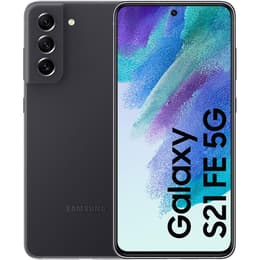
Galaxy S21 FE 5G • Unlocked
Starting at

Refurbished price:$133.00

Versus $699.99 new

See options
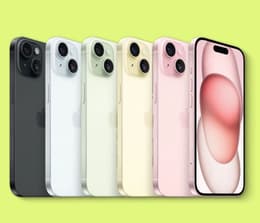
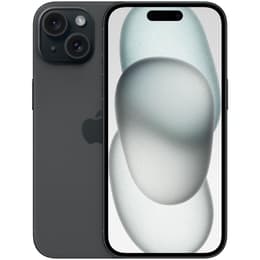
iPhone 15 • Locked AT&T
Starting at

Refurbished price:$348.00

Versus $729.00 new

See options

Ratings

The Samsung Galaxy S21 FE 5G, released in January 2022, and the Apple iPhone 15, launched in September 2023, represent distinct approaches to the modern smartphone experience. While both offer robust features for daily use, they differ significantly in their operating systems, design philosophies, and core hardware. The Galaxy S21 FE runs on Android, providing a customizable interface, whereas the iPhone 15 operates on Apple's iOS, known for its integrated ecosystem and streamlined user experience.

Scores

Durability

When considering the long-term usability of a smartphone, factors like software support and physical resilience are key. The Galaxy S21 FE 5G and iPhone 15 offer different timelines for updates and varying degrees of repairability.

  • Software Longevity: The iPhone 15, released in late 2023, is expected to receive major iOS updates for approximately 5-7 years, with security updates potentially extending beyond that, possibly until 2035. The Galaxy S21 FE, launched in early 2022, is promised four major Android OS upgrades, meaning its final update will likely be Android 16, and security updates are expected until at least the end of 2025, with a demotion to quarterly updates as of October 2025.
  • Physical Durability: Both devices feature IP68 ratings for dust and water resistance, allowing submersion up to 1.5 meters for 30 minutes for the S21 FE and 6 meters for 30 minutes for the iPhone 15. The iPhone 15 incorporates a Ceramic Shield front and a color-infused glass back, while the Galaxy S21 FE uses Gorilla Glass Victus on the front and a plastic back with an aluminum frame.
  • Repairability: While specific repairability scores can vary, Apple has historically provided extended security-related software updates and often makes battery and other repairs available for 5-7 year old handsets.

Release Year

2022

2023

Last OS Compatibility

Yes

Yes

OS

Android

iOS

Foldable

No

No

Performance

The performance of a smartphone is crucial for handling everyday tasks, from browsing and social media to demanding applications and gaming. Both the Galaxy S21 FE 5G and the iPhone 15 deliver smooth experiences, though they achieve this with different underlying hardware.

  • Everyday Responsiveness: The iPhone 15, equipped with a current-generation processor, offers consistently fluid navigation and quick app launches, ensuring a responsive experience even with intensive multitasking. The Galaxy S21 FE, powered by a capable processor (Snapdragon 888 or Exynos 2100 depending on region), also handles daily tasks and demanding applications smoothly, with users reporting snappy performance.
  • Multitasking and Storage: The iPhone 15 comes with 6GB of RAM and storage options up to 512GB, providing ample space and efficient multitasking. The Galaxy S21 FE offers 6GB or 8GB of RAM and up to 256GB of internal storage, which is sufficient for most users' app and media needs.
  • Battery Behavior: The iPhone 15 is designed to provide all-day battery life for most users, with up to 20 hours of video playback. The Galaxy S21 FE features a larger battery capacity (4500 mAh) and is noted for its long battery life, often lasting a full day and a half with moderate to heavy use, even with a 120Hz refresh rate enabled.

Memory (GB)

6 GB

6 GB

Screen quality

The display is a primary interface for any smartphone, and both the Galaxy S21 FE 5G and the iPhone 15 offer vibrant and clear viewing experiences, though with distinct characteristics.

  • Display Technology and Clarity: The iPhone 15 features a 6.1-inch Super Retina XDR OLED display, delivering deep blacks, vibrant colors, and a resolution of 2556x1179 pixels at 460 ppi. The Galaxy S21 FE boasts a slightly larger 6.4-inch Dynamic AMOLED 2X display with a resolution of 2400x1080 pixels at 401 ppi, also providing a vibrant and sharp picture.
  • Brightness and Refresh Rate: The iPhone 15 offers a typical brightness of 1000 nits, peaking at 1600 nits for HDR content and up to 2000 nits outdoors, ensuring good visibility in various lighting conditions. Its refresh rate is 60Hz. The Galaxy S21 FE features a 120Hz refresh rate for smoother scrolling and animations, and its display can reach up to 1044 cd/m² (nits) in certain measurements, providing satisfying brightness levels.
  • Viewing Experience: The iPhone 15 introduces the Dynamic Island, an interactive area around the front camera that displays alerts and live activities. The Galaxy S21 FE offers a bezel-less design and a high refresh rate, enhancing the immersive feel for gaming and video consumption.

Resolution

1080 x 2340

1179 x 2556

Screen type

Dynamic AMOLED 2X

Super Retina XDR OLED

Audiovisual

Both the Galaxy S21 FE 5G and the iPhone 15 are equipped with capable camera systems designed to capture high-quality photos and videos, catering to different user preferences and shooting styles.

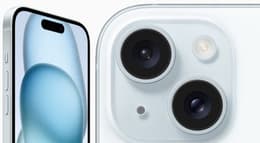
  • Rear Camera Systems: The iPhone 15 features an advanced dual-camera system with a 48MP main sensor and a 12MP ultrawide lens. It utilizes computational photography to produce detailed 24MP photos by default and offers a 2x optical zoom option through intelligent cropping of the main sensor. The Galaxy S21 FE comes with a triple-lens setup, including a 12MP wide, 12MP ultrawide, and an 8MP telephoto lens with 3x optical zoom. Users report that the S21 FE's images are rich in detail and color, performing well in various lighting conditions.
  • Low-Light and Video Performance: The iPhone 15 offers improved Night mode for clearer details and more vivid colors in low-light conditions, and its video recording quality is noted for impressive stabilization and consistent quality up to 4K at 60fps. The Galaxy S21 FE's camera also performs well in low light with Night mode, and it supports 4K video recording at 30/60fps, with super steady stabilization available for 1080p at 30fps.
  • Front Camera and Audio: The iPhone 15 has a 12MP TrueDepth front camera with autofocus, delivering natural-looking selfies and supporting 4K video recording. The Galaxy S21 FE features a 32MP front camera, which uses pixel-binning for detailed selfies. Both devices offer stereo speakers, with the iPhone 15 providing clear audio for calls and media, and the S21 FE's speakers producing averagely good quality that can fill a room.

Main camera

12 megapixels

48 megapixels

Front camera

32 megapixels

12 megapixels

Miscellaneous

Beyond the core components, several practical features and design elements contribute to the overall user experience of these smartphones.

  • Connectivity and Ports: Both devices support 5G connectivity for fast mobile data. The iPhone 15 features Wi-Fi 6 and Bluetooth 5.3, and notably, it has transitioned to a USB-C port for charging and data transfer, with USB 2.0 speeds. The Galaxy S21 FE supports Wi-Fi 6 and Bluetooth 5.0, and also uses a USB-C port.
  • Biometric Security: The iPhone 15 relies on Face ID for secure facial recognition. The Galaxy S21 FE incorporates an under-display optical fingerprint sensor for biometric authentication.
  • Design and Handling: The iPhone 15 has a height of 147.6 mm, a width of 71.6 mm, a depth of 7.8 mm, and weighs 171 grams, featuring contoured aluminum edges and a matte glass back that resists fingerprints. The Galaxy S21 FE is slightly larger and heavier at 155.7 x 74.5 x 7.9 mm and 177 grams, with an aluminum frame and a plastic back.

Weight

7 oz

171 oz

Screen size (inches)

6.4

6.1

Network

5G

5G

SIM card

Physical SIM

eSIM

Carrier compatibility

Unlocked

AT&T

The Samsung Galaxy S21 FE 5G and the iPhone 15 cater to different user preferences, each excelling in specific areas. Users often praise the Galaxy S21 FE for its vibrant 120Hz AMOLED display, versatile triple-camera system with optical zoom, and long-lasting battery life. Its customizable Android experience and slightly larger screen are frequently highlighted as strong points. Some common criticisms include its plastic back, which some users perceive as less premium, and the occasional inconsistency in camera color profiles between lenses.

The iPhone 15 receives commendation for its consistent performance, high-quality camera system with excellent video capabilities, and the integrated, user-friendly iOS ecosystem. Its Ceramic Shield front and the introduction of the Dynamic Island are often seen as significant upgrades. However, some users express a desire for a higher refresh rate display and a dedicated telephoto lens on the base model.

Users prioritizing a highly customizable operating system, a smoother high refresh rate display, and a dedicated optical telephoto lens may find the Galaxy S21 FE 5G well-suited to their needs. Conversely, those who value a streamlined user experience, strong video recording capabilities, and a robust software update policy may lean toward the iPhone 15. Both devices offer compelling features, and choosing between them often comes down to individual priorities regarding operating system preference, display characteristics, and camera versatility. For those seeking an eco-friendly and quality-assured option, considering a refurbished version of either device can be a practical choice.

See all articles

Our recent comparisons