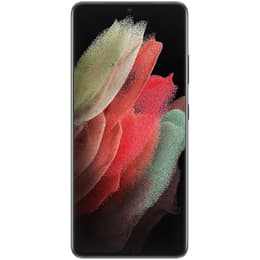

Galaxy S21 Ultra 5G • Unlocked vs Google Pixel 7a • Unlocked

Galaxy S21 Ultra 5G • Unlocked
Starting at

Refurbished price:$257.00

Versus $1,199.99 new

See options
Google Pixel 7a • Unlocked
Starting at

Refurbished price:$163.00

Versus $899.99 new

See options

Ratings

The Samsung Galaxy S21 Ultra 5G, released in January 2021, and the Google Pixel 7A, launched in May 2023, are Android smartphones that offer distinct user experiences. While both devices operate on the Android platform, they cater to different priorities through their hardware and software approaches. The Galaxy S21 Ultra emphasizes a large, high-resolution display and a versatile camera system, whereas the Pixel 7A focuses on Google's advanced computational photography and a streamlined software experience.

Scores

Durability

When considering the long-term usability, the release dates of these devices play a significant role in their expected software support and practical lifespan.

  • Release Timeline: The Galaxy S21 Ultra was released in early 2021, making it an older device compared to the Pixel 7A, which launched in mid-2023. This age difference directly impacts how long each device will receive major operating system updates.
  • Software Support: The Pixel 7A, being a newer Google device, is expected to receive major Android version updates until at least May 2026 and security updates until May 2028. The Galaxy S21 Ultra, having launched earlier, has received updates up to Android 14 and typically receives 4 major OS updates and 5 years of security updates from its release. This means the Pixel 7A will benefit from newer features and security patches for a more extended duration.
  • Build Quality and Repairability: The Galaxy S21 Ultra features a robust build with Gorilla Glass Victus on both the front and back, alongside an IP68 rating for dust and water resistance. The Pixel 7A uses Gorilla Glass 3 on the front and a plastic back, with an IP67 rating, offering slightly less protection against submersion. The Pixel 7A has a repairability score of 5/10 from iFixit, indicating it is relatively easy to repair with available parts, while the S21 Ultra is noted to be less straightforward to repair due to its construction.

Release Year

2021

2023

Last OS Compatibility

Yes

Yes

OS

Android

Android

Foldable

No

No

Performance

The performance of these two smartphones is influenced by their respective processors and available memory, impacting how smoothly they handle daily tasks and demanding applications.

  • Processing Power: The Galaxy S21 Ultra, equipped with a flagship-grade processor for its release year, provides strong performance for gaming and multitasking. The Pixel 7A uses a newer processor optimized for AI tasks, handling everyday applications smoothly. For intensive tasks and demanding games, the Galaxy S21 Ultra generally holds an advantage in raw processing power.
  • Multitasking and Storage: The Galaxy S21 Ultra offers more RAM options, including 12GB and 16GB, which can benefit users who frequently switch between many applications or engage in heavy multitasking. The Pixel 7A comes with 8GB of RAM. Both devices offer 128GB of internal storage, with the S21 Ultra also having options for 256GB and 512GB.
  • Battery Behavior: The Galaxy S21 Ultra has a larger 5000 mAh battery, which often translates to longer endurance under heavy usage, especially with its adaptive refresh rate display. The Pixel 7A, with its 4385 mAh battery, provides solid endurance for everyday tasks, though some users have reported mixed experiences with battery life, with some noting improvements after adaptive battery optimization.

Memory (GB)

12 GB

8 GB

Screen quality

The visual experience on these devices differs significantly due to their display technologies and specifications.

  • Display Technology and Size: The Galaxy S21 Ultra features a larger 6.8-inch Dynamic AMOLED 2X display, known for its vibrant colors, deep blacks, and high contrast. The Pixel 7A has a smaller 6.1-inch OLED screen, which also offers excellent contrast and colors.
  • Resolution and Clarity: The S21 Ultra boasts a QHD+ resolution (3200 x 1440 pixels), providing a very sharp and detailed image, particularly noticeable on its larger screen. The Pixel 7A offers a crisp FHD+ resolution (2400 x 1080 pixels), which is clear for most viewing, but less pixel-dense than the S21 Ultra.
  • Refresh Rate and Brightness: The S21 Ultra features an adaptive 120Hz refresh rate, allowing for fluid scrolling and animations that adjust based on content. The Pixel 7A offers a 90Hz refresh rate, which provides a smooth user experience compared to standard displays. The S21 Ultra also has a higher peak brightness of up to 1500 nits, making it more visible in bright outdoor conditions, compared to the Pixel 7A's peak brightness of around 1000 nits.

Resolution

1440 x 3200

1080 x 2400

Screen type

Dynamic AMOLED 2X

OLED

Audiovisual

Both smartphones offer capable camera systems, but they approach photography with different strengths and features.

  • Camera System Versatility: The Galaxy S21 Ultra features a quad-camera setup, including a 108 MP main sensor, a 12 MP ultrawide lens, and two 10 MP telephoto lenses (3x and 10x optical zoom), providing extensive versatility, especially for zoom photography. The Pixel 7A has a dual-camera system with a 64 MP main sensor and a 13 MP ultrawide lens.
  • Photography Performance: The S21 Ultra is praised for its versatile camera system with impressive zoom capabilities. The Pixel 7A delivers impressive photos, relying heavily on Google's computational photography for image processing and features like Night Sight. While the Pixel 7A excels in software-driven enhancements, the S21 Ultra offers more hardware flexibility, particularly with its telephoto lenses.
  • Video Recording and Front Camera: The Galaxy S21 Ultra supports 8K video recording at 24fps and features a 40 MP front camera. The Pixel 7A records 4K video at 30/60fps and has a 13 MP front camera.

Main camera

108 megapixels

64 megapixels

Front camera

40 megapixels

13 megapixels

Miscellaneous

Beyond core specifications, several practical elements contribute to the overall user experience of these devices.

  • Connectivity and Ports: Both devices support 5G connectivity and Wi-Fi 6E for fast wireless internet. The Pixel 7A features Bluetooth 5.3, a slightly newer standard than the S21 Ultra's Bluetooth 5.2. Both smartphones utilize a USB-C port for charging and data transfer and lack a traditional headphone jack.
  • Biometrics and Sensors: The Galaxy S21 Ultra uses an ultrasonic in-display fingerprint sensor and supports face recognition. It also offers S Pen support, expanding its functionality for note-taking and drawing. The Pixel 7A features an optical under-display fingerprint sensor and face unlock. Some users have reported mixed reliability with the Pixel 7A's fingerprint sensor.
  • Dimensions and Build Materials: The Galaxy S21 Ultra is a larger and heavier device, measuring 165.1 x 75.6 x 8.9 mm and weighing around 227-229g. It features a premium build with Gorilla Glass Victus on both the front and back, and an aluminum frame. The Pixel 7A is more compact and lighter at 152 x 72.9 x 9 mm and 193.5g, with a glass front (Gorilla Glass 3), plastic back, and aluminum frame.

Weight

8 oz

7 oz

Screen size (inches)

6.8

6.1

Network

5G

5G

SIM card

Physical SIM + eSIM

Physical SIM + eSIM

Carrier compatibility

Unlocked

Unlocked

The Samsung Galaxy S21 Ultra 5G and Google Pixel 7A offer distinct advantages, making the choice dependent on individual user priorities. The S21 Ultra is often praised for its expansive, high-resolution display, its highly versatile camera system with impressive zoom capabilities, and its premium build quality. Some users, however, note its larger size and the fact that it will receive fewer major Android updates compared to newer devices.

The Pixel 7A is generally lauded for its impressive computational photography, smooth software experience, and Google's AI-driven features. However, common criticisms from users include mixed battery life experiences, occasional heating, and inconsistent fingerprint sensor performance.

Users prioritizing a large, high-quality display, extensive camera versatility with optical zoom, and a premium build may find the Galaxy S21 Ultra well-suited to their needs. Conversely, users who value a more compact device, a streamlined software experience with longer update support, and advanced computational photography may lean toward the Pixel 7A. Both devices represent solid choices within the Android ecosystem, and considering a quality-assured refurbished option can be an eco-friendly alternative for either model.

See all articles

Our recent comparisons