Google Pixel 7a • Unlocked vs iPhone 15 • Unlocked

Google Pixel 7a • Unlocked
Starting at

Refurbished price:$163.00

Versus $899.99 new

See options
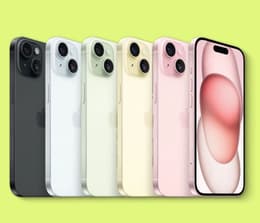
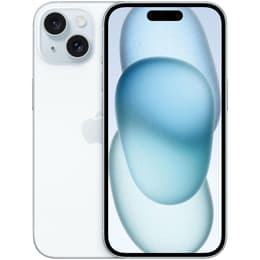
iPhone 15 • Unlocked
Starting at

Refurbished price:$359.99

Versus $729.00 new

See options

Ratings

The Google Pixel 7a, released in May 2023, and the iPhone 15, launched in September 2023, represent distinct approaches to the modern smartphone experience. While both devices offer capable performance and advanced camera systems, they differ in their operating system philosophies and specific hardware implementations. The Pixel 7a runs on Google's Android platform, emphasizing AI-driven features and a clean user interface, whereas the iPhone 15 operates on Apple's iOS, known for its integrated ecosystem and consistent user experience. These differences cater to varying user preferences in terms of software environment and overall device interaction.

Scores

Durability

When considering the longevity of a smartphone, software support and physical durability are key factors. Both the Pixel 7a and the iPhone 15 offer substantial support, though with different timelines and approaches.

  • Software Updates: The Google Pixel 7a is expected to receive operating system and security updates for five years from its release, extending until at least May 2028. The iPhone 15 is guaranteed a minimum of five years of software support from its initial supply date, with Apple historically providing iOS updates for 5-7 years and security updates for up to 7 years. This suggests the iPhone 15 may receive updates for a slightly longer period, potentially until 2035 for major iOS versions.
  • Physical Durability: The iPhone 15 features a Ceramic Shield front cover and an IP68 rating for water and dust resistance, indicating a robust build. The Pixel 7a utilizes Corning Gorilla Glass 3 for its display protection and carries an IP67 rating for dust and water resistance. Both devices are designed to withstand daily use, but the iPhone 15's Ceramic Shield and higher IP rating suggest a slightly more resilient construction against drops and water immersion.
  • Practical Lifespan: Users can expect both devices to remain functional and secure for several years. The Pixel 7a's five-year update commitment provides a clear expectation for its usable life, while the iPhone 15's longer historical support trend from Apple suggests it could potentially offer a more extended practical lifespan for those who prioritize the latest software features.

Release Year

2023

2023

Last OS Compatibility

Yes

Yes

OS

Android

iOS

Foldable

No

No

Performance

The performance of a smartphone is crucial for handling daily tasks, from casual browsing to demanding applications. Both the Pixel 7a and iPhone 15 deliver smooth experiences, but they achieve this through different hardware and software optimizations.

  • Everyday Responsiveness: The Google Pixel 7a, powered by its current-generation processor, handles daily tasks, app loading, and multitasking smoothly. Users generally report a fluid experience when navigating the interface and running various applications. The iPhone 15, equipped with a powerful processor, also offers fast, fluid, and reliable performance for opening apps, switching between tasks, browsing, and streaming.
  • Demanding Applications and Gaming: For more intensive use, such as graphic-heavy games or video editing, the iPhone 15 demonstrates strong capabilities, powering through demanding games even at high settings. Its processor is designed to maintain performance over time. The Pixel 7a can also handle strenuous games, though some users might notice slightly less optimal thermal performance during extended demanding sessions compared to its more premium counterparts.
  • Storage and Multitasking: The Pixel 7a comes with 8GB of RAM and 128GB of internal storage. The iPhone 15 offers 6GB of RAM and storage options of 128GB, 256GB, or 512GB. While the Pixel 7a has more RAM, both devices are optimized to manage multiple applications efficiently, providing a responsive multitasking experience.

Memory (GB)

8 GB

6 GB

Screen quality

The display is a primary interface for any smartphone, and both the Pixel 7a and iPhone 15 offer vibrant viewing experiences with distinct characteristics.

  • Display Technology and Clarity: Both devices feature OLED displays, which provide deep blacks and vibrant colors. The Google Pixel 7a has a 6.1-inch OLED screen with a 1080x2400 pixel resolution, resulting in approximately 431 pixels per inch (ppi). The iPhone 15 also has a 6.1-inch Super Retina XDR OLED display with a resolution of 2556x1179 pixels, offering a higher pixel density of around 460 ppi. This higher pixel density on the iPhone 15 translates to slightly sharper text and finer details.
  • Brightness and Outdoor Visibility: The iPhone 15 boasts a typical brightness of 1000 nits and can reach a peak outdoor brightness of 2000 nits, making it highly visible even in bright sunlight. The Pixel 7a offers good brightness, with outdoor adaptive brightness reaching around 900-950 nits. For users frequently outdoors, the iPhone 15 provides a brighter viewing experience.
  • Refresh Rate and Smoothness: A key difference lies in the refresh rate. The Pixel 7a features a 90 Hz refresh rate, which contributes to smoother scrolling and a more fluid visual experience compared to a standard 60 Hz display. The iPhone 15 maintains a 60 Hz refresh rate. This means animations and scrolling on the Pixel 7a appear noticeably smoother.

Resolution

1080 x 2400

1179 x 2556

Screen type

OLED

Super Retina XDR OLED

Audiovisual

Both the Google Pixel 7a and the iPhone 15 are equipped with advanced camera systems designed to capture high-quality photos and videos, each with its own strengths.

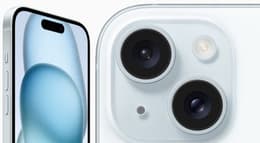
  • Main Camera Performance: The Google Pixel 7a features a 64 MP main camera with optical image stabilization (OIS) and a 13 MP ultrawide lens. It is known for taking great photos, particularly benefiting from Google's computational photography. The iPhone 15 comes with an advanced dual-camera system, including a 48 MP main camera with 2x telephoto capabilities and a 12 MP ultrawide camera. The iPhone 15's larger sensor and improved image processing contribute to excellent detail and color accuracy.
  • Low-Light and Video Capabilities: Both devices perform well in everyday photography. For low-light conditions, both offer features to enhance image quality, though specific performance can vary. In terms of video recording, the Pixel 7a supports 4K video at 30 and 60 frames per second (fps). The iPhone 15 also records 4K video at various frame rates, and its video quality is generally considered strong, with good stabilization and dynamic range.
  • Front Camera and Audio: The Pixel 7a has a 13 MP ultrawide front camera. The iPhone 15 features a 12 MP front camera. Both are capable of capturing detailed selfies and supporting high-quality video calls. For audio, both devices offer stereo speakers and good microphone quality for calls and recordings, providing a clear media consumption and communication experience.

Main camera

64 megapixels

48 megapixels

Front camera

13 megapixels

12 megapixels

Miscellaneous

Beyond core performance and display, several other features contribute to the overall user experience and practical utility of a smartphone.

  • Connectivity and Ports: Both the Pixel 7a and iPhone 15 support 5G connectivity, ensuring fast mobile data speeds. They also include modern Wi-Fi standards (Wi-Fi 6E for both) and Bluetooth 5.3 for wireless accessories. A notable difference is the charging and data port: the Pixel 7a uses a USB-C 3.2 port, while the iPhone 15 has transitioned to a USB-C port, replacing the proprietary Lightning connector. This change on the iPhone 15 allows for greater compatibility with other electronic devices.
  • Biometric Security and Features: The Pixel 7a typically uses an in-display fingerprint sensor for biometric authentication. The iPhone 15 relies on Face ID for secure facial recognition. Both methods offer reliable security. The iPhone 15 also features the Dynamic Island, an interactive area around the front camera cutout that displays alerts and activities.
  • Design and Handling: The Pixel 7a has dimensions of 152 mm (height) x 72.9 mm (width) x 9 mm (depth) and weighs 193.5 grams. The iPhone 15 is slightly more compact and lighter, measuring 147.6 mm (height) x 71.6 mm (width) x 7.80 mm (depth) and weighing 171 grams. The iPhone 15 features an aluminum design with a color-infused glass back, while the Pixel 7a has a more traditional build.

Weight

7 oz

171 oz

Screen size (inches)

6.1

6.1

Network

5G

5G

SIM card

Physical SIM + eSIM

eSIM

Carrier compatibility

Unlocked

Unlocked

The Google Pixel 7a and iPhone 15 both offer compelling smartphone experiences, each excelling in different areas based on user priorities. User feedback for the Pixel 7a often praises its capable camera system and smooth performance for everyday tasks. Some users, however, have noted that its battery life can be inconsistent, with experiences varying from lasting a full day to draining quickly under heavy use.

The iPhone 15 is frequently lauded for its consistently fluid performance, excellent camera capabilities, and a polished user interface. While many users find its battery life sufficient for a full day, some reports indicate faster battery draining for certain usage patterns.

Users prioritizing a highly integrated ecosystem, a slightly brighter display, and potentially longer software support may find the iPhone 15 well-suited to their needs. Its Ceramic Shield front and higher water resistance rating also offer a degree of enhanced physical durability. Conversely, users who value a smoother display refresh rate, a clean Android experience with Google's AI features, and a slightly more accessible entry point into advanced smartphone technology might lean towards the Google Pixel 7a. Both devices represent quality choices, and considering a quality-assured refurbished option for either model can be an eco-friendly alternative to purchasing new.

See all articles

Our recent comparisons