
Compare models

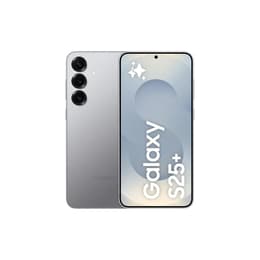
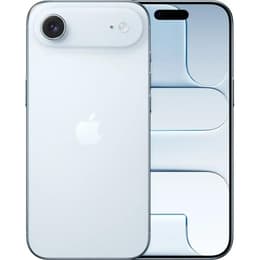
Galaxy S25+ • Unlocked vs iPhone Air • Unlocked

  • 1-year warranty
  • Free standard shipping
  • Free 30-day returns
Galaxy S25+ • Unlocked
Starting at

Refurbished price:$536.00

Versus $999.99 new

See options
iPhone Air • Unlocked
Starting at

Refurbished price:$762.00

Versus $1,099.00 new

See options

Differences at a glance

The Samsung Galaxy S25+ (2025) and Apple iPhone Air (2025) represent distinct approaches to modern flagship mobile design, balancing everyday utility with alternative physical form factors. While the Galaxy S25+ delivers a traditional, feature-rich Android experience running on One UI, the iPhone Air introduces an ultra-slim profile powered by iOS. Both devices target users looking for modern mobile capabilities, though they approach portability, software ecosystems, and hardware configurations differently.

Available Models

Color

Storage

Scores

Durability

Both smartphones provide robust long-term durability features, though they differ in their software support frameworks and build architecture.

  • Software longevity and updates: The Galaxy S25+ benefits from a multi-year update commitment typical of current Android flagships, while the iPhone Air receives consistent, long-term iOS updates backed by Apple's established support ecosystem.
  • Build protection and maintenance: The Galaxy S25+ utilizes durable glass panels with aluminum framing, whereas the iPhone Air features a rigid titanium-based enclosure designed for structural integrity at a reduced thickness.
  • Expected practical lifespan: Both models deliver high-tier hardware durability that comfortably supports several years of daily usage under standard conditions.

Release Year

2025

2025

Last OS Compatibility

No

Yes

OS

Android

iOS

Foldable

No

No

Performance

Performance capabilities on both devices handle intensive everyday workloads, though their internal configurations and battery behaviors reflect their physical designs.

  • Multitasking and daily tasks: Both models handle demanding applications, rapid app switching, and graphics-heavy gaming smoothly, supported by high-capacity memory configurations.
  • Battery behavior and endurance: The Galaxy S25+ includes a standard physical battery capacity suited for full-day general use, whereas the ultra-thin profile of the iPhone Air results in a more compact internal power cell that may require more frequent charging during heavy workloads.
  • Storage availability: Both devices offer ample baseline storage tiers to accommodate large media libraries and offline file management.

Screen quality

Visual output on both devices relies on advanced display technology optimized for clarity, outdoor visibility, and smooth motion.

  • Display technology and clarity: Both smartphones feature high-resolution OLED panels that deliver deep contrast levels, sharp text rendering, and vivid color reproduction for media consumption.
  • Outdoor visibility: High peak brightness levels on both screens ensure content remains legible under direct sunlight.
  • Refresh rate smoothness: Adaptive refresh rates scaling up to 120Hz allow for fluid scrolling and responsive touch interactions across both interfaces.

Resolution

1440x3120

2736x1260

Screen type

Dynamic LTPO AMOLED 2X

Super Retina XDR

Audiovisual

Camera systems on these devices cater to distinct photographic preferences through different hardware layouts and software processing tools.

  • Lens versatility: The Galaxy S25+ features a multi-lens rear camera array including telephoto capabilities for optical zoom, while the iPhone Air focuses on a streamlined single-lens main camera setup embedded within a slim housing.
  • Everyday and low-light capture: Both devices utilize advanced image processing to deliver clear photos and stable video recording in varied lighting conditions.
  • Media and audio output: Stereo speaker setups on both models provide clear sound for calls and casual media playback, though physical depth constraints shape overall acoustic resonance.

Miscellaneous

Practical daily features, connectivity standards, and physical dimensions shape the ergonomics of each device.

  • Connectivity and ports: Both models support current 5G networks, fast Wi-Fi standards, and utilize universal USB-C connectivity for data transfer and charging.
  • Biometrics and sensors: The Galaxy S25+ uses an in-display fingerprint sensor alongside facial recognition, whereas the iPhone Air relies exclusively on secure facial authentication.
  • Ergonomics and weight: The Galaxy S25+ offers a standard handset footprint, while the iPhone Air emphasizes an exceptionally lightweight and thin profile that changes pocketability and one-handed handling.

Weight

7 oz

185 oz

Screen size (inches)

6.7

6.5

Network

5G

5G

SIM card

Physical SIM + eSIM

eSIM

Carrier compatibility

Unlocked

Unlocked

Connector

USB-C

USB-C

What the community thinks

User discussions across community forums highlight distinct preferences for each device based on physical design and software preference. The Galaxy S25+ frequently receives praise for its versatile multi-lens camera system, reliable battery endurance, and flexible Android interface. Conversely, users often note the iPhone Air for its striking, featherlight profile and seamless integration into the iOS ecosystem, though some discussions point out trade-offs regarding battery longevity and the single-lens camera limitation.

Users prioritizing extended battery capacity, optical zoom flexibility, and an Android environment will find the Galaxy S25+ well-suited to their needs. Meanwhile, users prioritizing an ultra-slim physical footprint, lightweight handling, and the iOS platform may lean toward the iPhone Air. For those exploring sustainable choices, choosing a quality-assured refurbished option provides a reliable, eco-friendly alternative to purchasing new. Ultimately, selecting between the two depends on whether physical minimalism or hardware versatility aligns more closely with daily routines.
Our recent comparisons