Galaxy S10 • Unlocked vs Galaxy S21 FE 5G • Locked AT&T

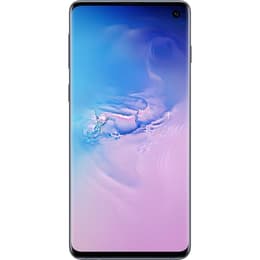
Galaxy S10 • Unlocked
Starting at

Refurbished price:$148.00

Versus $669.00 new

See options
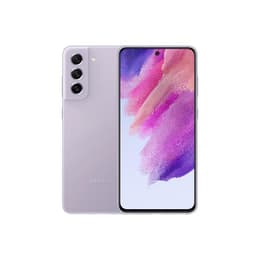
Galaxy S21 FE 5G • Locked AT&T
Starting at

Refurbished price:$135.00

Versus $699.99 new

See options

Ratings

The Samsung Galaxy S10, released in March 2019, and the Samsung Galaxy S21 FE 5G, launched in January 2022, represent different generations within Samsung's smartphone lineup. While both devices offer a premium Android experience, the S21 FE 5G introduces several advancements in performance, display technology, and software longevity, reflecting its more recent release. These differences cater to varying user priorities, from those seeking established features to those desiring more current specifications and extended support.

Scores

Durability

When considering the long-term usability of these devices, their respective release timelines and software support policies are key differentiators.

  • Release Timeline and Age: The Galaxy S10 was released in March 2019, making it significantly older than the Galaxy S21 FE 5G, which launched in January 2022. This age difference directly impacts the remaining software support and overall practical lifespan of each device.
  • OS Support Duration: The Galaxy S10 received its last major Android operating system update with Android 12 (One UI 4) in early 2022, and its security updates concluded around April 2023 for most models, with the S10 Lite receiving updates until March 2024. In contrast, the Galaxy S21 FE 5G launched with Android 12 and is expected to receive up to four major Android OS upgrades, potentially extending to Android 16, along with security updates until at least the end of 2025.
  • Repairability: The Galaxy S10 received a low repairability score of 3 out of 10 from iFixit, primarily due to extensive adhesive use, a soldered charging port, and an integrated fingerprint sensor that complicates screen replacements. The Galaxy S21 FE 5G, however, has a more favorable repairability score of 7.5 out of 10, indicating a comparatively easier process for component replacement.

Release Year

2019

2022

Last OS Compatibility

No

Yes

OS

Android

Android

Foldable

No

No

Performance

The performance capabilities of the Galaxy S10 and Galaxy S21 FE 5G reflect the advancements in mobile processing technology over their respective release periods.

  • Processor Capabilities: The Galaxy S10 is powered by a processor that, while capable at its release, is several generations older than the one found in the Galaxy S21 FE 5G. The S21 FE 5G features a more current-generation processor, enabling smoother operation for demanding applications, faster app loading times, and more efficient multitasking.
  • System Responsiveness and Multitasking: Users of the Galaxy S21 FE 5G generally experience a more responsive system, with quicker transitions between apps and less noticeable lag during intensive tasks or gaming. The S10 still offers a capable experience for everyday use, but the S21 FE 5G provides a more fluid and future-ready performance, especially for users who frequently engage with graphically intensive games or complex productivity applications.
  • Storage and RAM: Both devices offer various storage options, with the Galaxy S10 providing 128GB or 512GB and the S21 FE 5G offering 128GB or 256GB. The S10 also supports expandable storage via microSD, a feature not present in the S21 FE 5G. The S10 typically comes with 8GB of RAM, while the S21 FE 5G is available with either 6GB or 8GB, both configurations supporting efficient multitasking.

Memory (GB)

8 GB

6 GB

Screen quality

Both the Galaxy S10 and Galaxy S21 FE 5G feature high-quality displays, but they differ in key specifications that impact the visual experience.

  • Display Technology and Resolution: The Galaxy S10 features a 6.1-inch Dynamic AMOLED display with a Quad HD+ resolution (1440 x 3040 pixels), offering a very sharp and detailed image. The Galaxy S21 FE 5G has a slightly larger 6.4-inch Dynamic AMOLED 2X display with a Full HD+ resolution (1080 x 2400 pixels). While the S10 has a higher pixel density, the S21 FE 5G's display still provides a clear and vibrant viewing experience.
  • Refresh Rate and Smoothness: A notable difference is the refresh rate; the Galaxy S10 has a standard 60Hz refresh rate, while the Galaxy S21 FE 5G boasts a 120Hz refresh rate. This higher refresh rate on the S21 FE 5G results in noticeably smoother scrolling, more fluid animations, and a more responsive feel during gaming or general navigation.
  • Brightness and Outdoor Visibility: Both displays offer vibrant colors and deep blacks characteristic of AMOLED technology. The Galaxy S21 FE 5G generally achieves higher peak brightness levels, which can improve outdoor visibility in bright conditions. Both screens are protected by durable glass, with the S10 featuring Gorilla Glass 6 and the S21 FE 5G utilizing Gorilla Glass Victus.

Resolution

1440 x 3040

1080 x 2340

Screen type

Dynamic AMOLED

Dynamic AMOLED 2X

Audiovisual

The camera systems on both the Galaxy S10 and Galaxy S21 FE 5G are designed to capture quality images and videos, though with some generational improvements in the newer model.

  • Rear Camera System: The Galaxy S10 features a triple rear camera setup consisting of a 12 MP wide lens with optical image stabilization (OIS), a 12 MP telephoto lens with OIS and 2x optical zoom, and a 16 MP ultrawide lens. The Galaxy S21 FE 5G also has a triple rear camera system, including a 12 MP wide lens with OIS, an 8 MP telephoto lens with OIS and 3x optical zoom, and a 12 MP ultrawide lens. While the S10 has a higher resolution ultrawide, the S21 FE 5G offers a greater optical zoom capability.
  • Photography Performance: Both devices are capable of producing good photos in well-lit conditions, with vibrant colors and detail. User feedback for the S10 indicates solid performance, though it can fall behind in very low-light scenarios compared to newer flagships. The S21 FE 5G generally performs well across various lighting conditions, with users noting rich detail and color.
  • Video Recording and Front Camera: Both phones support 4K video recording at 60 frames per second. The Galaxy S10 has a 10 MP front-facing camera, while the Galaxy S21 FE 5G features a higher-resolution 32 MP front camera, which can result in more detailed selfies. The S21 FE 5G also includes features like Super Steady stabilization for video, though it's limited to 1080p at 30fps.

Main camera

12 megapixels

12 megapixels

Front camera

10 megapixels

32 megapixels

Miscellaneous

Beyond core specifications, several practical elements differentiate the user experience between the Galaxy S10 and Galaxy S21 FE 5G.

  • Connectivity and Ports: The Galaxy S10 supports 4G LTE networks, Wi-Fi 6, and Bluetooth 5.0. It also notably includes a 3.5mm headphone jack and a USB-C port. The Galaxy S21 FE 5G offers more advanced connectivity with 5G network support, Wi-Fi 6, and Bluetooth 5.0, but it omits the 3.5mm headphone jack, relying solely on its USB-C port for wired audio and charging.
  • Biometric Security: Both devices feature in-display fingerprint sensors for secure unlocking. The Galaxy S10 uses an ultrasonic sensor, while the S21 FE 5G employs an optical sensor. Both methods provide convenient and generally reliable authentication.
  • Build Materials and Dimensions: The Galaxy S10 has a glass front and back with an aluminum frame, contributing to a premium feel. The S21 FE 5G also features an aluminum frame and Gorilla Glass Victus on the front, but it utilizes a plastic back. The S10 measures 149.9 x 70.4 x 7.8 mm and weighs 157g, while the S21 FE 5G is slightly larger and heavier at 155.7 x 74.5 x 7.9 mm and 177g.

Weight

6 oz

7 oz

Screen size (inches)

6.1

6.4

Network

LTE

5G

SIM card

Physical SIM

Physical SIM

Carrier compatibility

Unlocked

AT&T

The Samsung Galaxy S10 and Galaxy S21 FE 5G cater to different user needs, largely influenced by their release dates and the technological advancements in between. Users often praised the Galaxy S10 at its launch for its innovative display, versatile camera system, and the inclusion of a headphone jack. However, common criticisms included its battery life for heavy users and its low repairability score.

The Galaxy S21 FE 5G, being a newer device, benefits from a more powerful processor, a smoother 120Hz display, and a larger battery that generally provides longer usage times. Its camera system is also well-regarded, and it offers 5G connectivity, which is a significant advantage for future-proofing. Some users have noted that while its performance is strong, the device can sometimes run warm, and the telephoto lens resolution is lower than that of the flagship S21.

Users prioritizing a compact design, a higher-resolution display, and the convenience of a 3.5mm headphone jack might find the Galaxy S10 appealing, especially if their usage is moderate and they are comfortable with an older software support cycle. Conversely, users who value extended software updates, a smoother display experience, 5G connectivity, and a more robust battery life will likely find the Galaxy S21 FE 5G better suited to their needs. It also offers a more repair-friendly design.

For those evaluating these devices, considering a quality-assured refurbished option can provide an eco-friendly alternative, allowing access to these features while extending the product's lifecycle.


See all articles

Our recent comparisons