
Galaxy S10 • Unlocked vs iPhone X • Unlocked

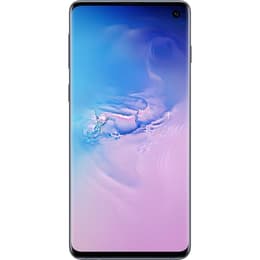
Galaxy S10 • Unlocked
Starting at

Refurbished price:$158.00

Versus $669.00 new

See options
iPhone X • Unlocked
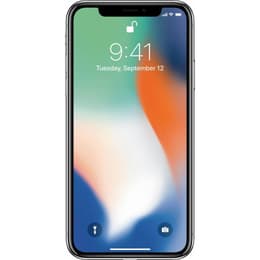
iPhone X • Unlocked
Starting at

Refurbished price:$151.00

Versus $449.00 new

See options

Ratings

The Samsung Galaxy S10, released in March 2019, and the Apple iPhone X, launched in November 2017, represent flagship smartphones from their respective manufacturers. While both devices offered premium experiences at their release, they differ significantly in their operating systems and design philosophies. The Galaxy S10 runs on Android, offering a customizable interface, while the iPhone X operates on Apple's iOS, known for its integrated ecosystem. Key distinctions also emerge in their display technology, camera systems, and biometric security methods.

Scores

Durability

When considering the practical lifespan of these devices, several factors come into play, including their initial release dates, software support, and ease of repair.

  • Release Timeline: The iPhone X was introduced in November 2017, making it approximately 16 months older than the Galaxy S10, which launched in March 2019. This age difference can impact the duration of future software updates.
  • Software Longevity: The iPhone X launched with iOS 11 and received updates up to iOS 16. The Galaxy S10, starting with Android 9, was upgradable to Android 12. Generally, newer devices tend to receive software support for a longer period, suggesting the Galaxy S10 may have a slightly extended software lifespan compared to the iPhone X from its release date.
  • Repairability: The iPhone X received a repairability score of 6 out of 10 from iFixit, with display and battery replacements noted as relatively straightforward. In contrast, the Galaxy S10 scored lower at 3 out of 10, primarily due to extensive use of adhesive and a soldered charging port, making repairs more challenging.

Release Year

2019

2017

Last OS Compatibility

No

No

OS

Android

iOS

Foldable

No

No

Performance

Both the Galaxy S10 and iPhone X were equipped with high-performance processors for their time, designed to handle demanding applications and multitasking. Their approaches to internal storage and battery management, however, present different user experiences.

  • Processing Power: The iPhone X features a processor that delivers efficient performance for everyday tasks and gaming, supported by its optimized operating system. The Galaxy S10, with its newer generation processor, offers robust performance, capable of smoothly running graphics-intensive applications and managing multiple tasks simultaneously.
  • Storage Options: The iPhone X was available with 64GB or 256GB of internal storage. The Galaxy S10 offered more generous base storage options, starting at 128GB and going up to 512GB, providing more space for apps, photos, and videos.
  • Battery Behavior: The iPhone X houses a 2716 mAh battery, which for many users provided sufficient power for a day of moderate use, though heavy users might find themselves seeking a charger sooner. The Galaxy S10 comes with a larger 3400 mAh battery, generally offering extended usage times for many users, potentially lasting through a full day even with more intensive activity.

Memory

8 GB

3 GB

Screen quality

The display is a central feature for both smartphones, offering vibrant visuals, though they differ in size, technology, and overall presentation.

  • Display Technology and Size: The iPhone X introduced a 5.8-inch Super Retina OLED display, known for its deep blacks and accurate color reproduction. The Galaxy S10 features a larger 6.1-inch Dynamic AMOLED display, which also delivers rich colors and high contrast. Both utilize OLED technology, allowing for vibrant visuals.
  • Resolution and Clarity: The iPhone X offers a resolution of 2436 x 1125 pixels, resulting in a pixel density of 458 pixels per inch (ppi). The Galaxy S10 boasts a higher resolution of 3040 x 1440 pixels, with a pixel density of 550 ppi, providing a slightly sharper image.
  • Brightness and Refresh Rate: The iPhone X has a typical maximum brightness of 625 nits, suitable for most viewing conditions. The Galaxy S10 can reach a peak brightness of 1200 nits, offering better visibility in bright outdoor environments. Both displays feature a standard 60Hz refresh rate, providing smooth scrolling and animations.

Resolution

1440 x 3040

1125 x 2436

Screen type

Dynamic AMOLED

Super Retina OLED

Audiovisual

Both devices offer capable camera systems, designed to capture high-quality photos and videos, but they approach versatility and features differently.

  • Rear Camera System: The iPhone X features a dual 12-megapixel rear camera setup, consisting of a wide-angle lens with an f/1.8 aperture and a telephoto lens with an f/2.4 aperture, both with optical image stabilization. The Galaxy S10 offers a more versatile triple-lens rear camera system, including a 12-megapixel wide-angle lens (f/1.5-2.4), a 12-megapixel telephoto lens (f/2.4), and a 16-megapixel ultrawide lens (f/2.2), providing more photographic options.
  • Photography Features: The iPhone X includes Portrait Mode with Portrait Lighting effects and offers 4K video recording at up to 60 frames per second. The Galaxy S10's camera system is noted for its ultrawide lens, which is beneficial for landscape and group shots, and supports HDR10+ video recording, along with a Super Steady mode for smoother video capture.
  • Front Camera: The iPhone X features a 7-megapixel TrueDepth front camera, which enables Face ID and Portrait Mode selfies. The Galaxy S10 comes with a 10-megapixel front camera, capable of capturing detailed selfies.

Main camera

12 megapixels

12 megapixels

Front camera

10 megapixels

7 megapixels

Miscellaneous

Beyond core performance and display, several practical elements contribute to the overall user experience, from connectivity to physical design.

  • Connectivity and Ports: The iPhone X supports 4G LTE, Wi-Fi 802.11ac, and Bluetooth 5.0, utilizing a Lightning port for charging and data transfer. The Galaxy S10 also supports 4G LTE and Bluetooth 5.0, but notably includes Wi-Fi 6 for potentially faster and more efficient wireless connections, and features a USB-C port, along with a 3.5mm headphone jack.
  • Biometric Security: The iPhone X relies exclusively on Face ID for secure authentication, using its TrueDepth camera system. The Galaxy S10 introduced an ultrasonic in-display fingerprint sensor for convenient unlocking, alongside traditional facial recognition.
  • Build and Handling: Both phones feature a glass front and back with a metal frame, offering a premium feel. The iPhone X uses a stainless steel frame and has an IP67 rating for water and dust resistance. The Galaxy S10 has an aluminum frame and a slightly higher IP68 rating, indicating enhanced protection against dust and water ingress. The Galaxy S10 is also lighter at 157g compared to the iPhone X's 174g.

Weight

6 oz

6 oz

Screen size (inches)

6.1

5.8

Network

LTE

LTE

SIM card

Physical SIM

Physical SIM

Carrier compatibility

Unlocked

Unlocked

The Samsung Galaxy S10 and iPhone X, while both premium devices, cater to different preferences and priorities. Users often praise the iPhone X for its intuitive iOS ecosystem, consistent performance, and the introduction of Face ID, which redefined smartphone security. Its OLED display was also a significant highlight at its release, offering excellent visual quality. Some users, however, noted that its battery life, while adequate, might not always last through a full day of heavy use compared to some larger phones of its era.

The Galaxy S10, being a newer device, often receives acclaim for its expansive and vibrant Dynamic AMOLED display, the versatility of its triple-lens camera system including an ultrawide lens, and the convenience of its in-display ultrasonic fingerprint sensor. Its inclusion of a 3.5mm headphone jack and expandable storage were also points of appreciation for many Android users. Criticisms sometimes centered on its repairability, which was noted as more challenging due to its construction.

Users prioritizing a highly integrated and user-friendly software experience with robust security features like Face ID may find the iPhone X well-suited to their needs. Those who value a larger, more vibrant display, a versatile camera system with an ultrawide lens, and greater customization options within the Android ecosystem might lean towards the Galaxy S10. Additionally, the Galaxy S10's inclusion of a traditional headphone jack and expandable storage could be key decision factors for some. Both models are available as quality-assured refurbished options, providing a sustainable choice for consumers.

See all articles

Our recent comparisons