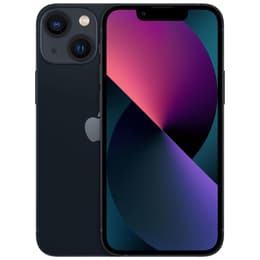

Google Pixel 7a • Unlocked vs iPhone 13 mini • Unlocked

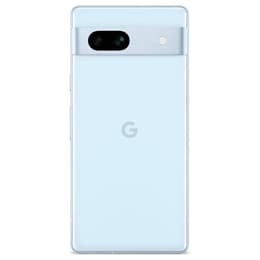
Google Pixel 7a • Unlocked
Starting at

Refurbished price:$163.00

Versus $899.99 new

See options
iPhone 13 mini • Unlocked
Starting at

Refurbished price:$216.00

Versus $629.00 new

See options

Ratings

The Google Pixel 7A, released in May 2023, and the iPhone 13 Mini, launched in September 2021, offer distinct smartphone experiences. While the Pixel 7A runs on the Android operating system and emphasizes advanced computational photography and AI features, the iPhone 13 Mini operates on iOS, focusing on a compact form factor and a streamlined user experience. These devices cater to different preferences, primarily differing in their operating systems, physical size, and camera philosophies.

Scores

Durability

When considering the long-term usability of these devices, their release timelines and software support are key factors. The Pixel 7A, being a newer device, generally benefits from a longer expected period of software updates compared to the iPhone 13 Mini.

  • Release Timeline: The iPhone 13 Mini was released in September 2021, making it approximately a year and a half older than the Google Pixel 7A, which launched in May 2023. This difference in release dates impacts their remaining support cycles.
  • Software Longevity: Google typically provides around five years of major OS upgrades and security updates for its Pixel A-series phones, meaning the Pixel 7A is expected to receive updates until approximately 2028. The iPhone 13 Mini, running iOS, is anticipated to receive major iOS updates for about 5-6 years from its release, with current support extending to iOS 26, suggesting continued updates until around 2027 or 2028.
  • Repairability: The Google Pixel 7A has a repairability score of 5 out of 10 from iFixit, indicating a moderate ease of repair, especially after Google released service manuals. The iPhone 13 Mini, however, has a lower repairability score of 4 out of 10, with some components requiring specialized tools and processes for replacement.

Release Year

2023

2021

Last OS Compatibility

Yes

Yes

OS

Android

iOS

Foldable

No

No

Performance

Both the Google Pixel 7A and the iPhone 13 Mini deliver responsive performance for everyday tasks, though they approach it with different hardware and software optimizations.

  • System Responsiveness: The Pixel 7A is powered by a current-generation processor, enabling smooth navigation, quick app launches, and efficient multitasking. The iPhone 13 Mini features a powerful chip that ensures a fluid iOS experience, handling demanding applications and graphics-intensive games with ease.
  • Multitasking and RAM: The Pixel 7A comes with 8GB of RAM, which supports robust multitasking and keeps multiple applications active in the background without significant slowdowns. The iPhone 13 Mini is equipped with 4GB of RAM, optimized by iOS to manage applications effectively, providing a seamless experience even with several apps open.
  • Storage Options: The Pixel 7A is available with 128GB of internal storage. The iPhone 13 Mini offers more flexibility with storage options, including 128GB, 256GB, and 512GB variants, catering to users with varying storage needs for apps, photos, and videos.

Memory (GB)

8 GB

4 GB

Screen quality

The display quality on both devices offers clear visuals, but they differ in size, refresh rate, and overall viewing experience.

  • Display Technology and Size: The Google Pixel 7A features a 6.1-inch OLED display, providing vibrant colors and deep blacks across a larger viewing area. The iPhone 13 Mini, designed for a compact experience, has a 5.4-inch Super Retina XDR OLED display, known for its high contrast and color accuracy in a smaller form factor.
  • Resolution and Clarity: Both phones offer high-resolution displays. The Pixel 7A has a 2400x1080 pixel resolution, while the iPhone 13 Mini features a 2340x1080 pixel resolution, resulting in sharp text and detailed images on both screens.
  • Refresh Rate and Brightness: The Pixel 7A supports a 90Hz refresh rate, which contributes to smoother scrolling and a more fluid visual experience. The iPhone 13 Mini has a standard 60Hz refresh rate. Both displays offer good brightness, with the Pixel 7A providing ample brightness for outdoor use and the iPhone 13 Mini reaching up to 800 nits typical brightness and 1200 nits for HDR content, ensuring visibility in various lighting conditions.

Resolution

1080 x 2400

1080 x 2340

Screen type

OLED

Super Retina XDR OLED

Audiovisual

Both smartphones offer capable camera systems, but they excel in different areas, reflecting their respective manufacturers' approaches to mobile photography.

  • Rear Camera System: The Google Pixel 7A features a dual-camera setup with a 64-megapixel main sensor and a 13-megapixel ultrawide lens. It is recognized for its computational photography, producing detailed and color-accurate photos, particularly in everyday scenarios. The iPhone 13 Mini also has a dual 12-megapixel camera system, comprising a main wide lens with sensor-shift optical image stabilization and an ultrawide lens, known for its consistent image quality and natural color reproduction.
  • Low-Light Performance and Video: The Pixel 7A delivers good low-light performance, leveraging its software processing to enhance details and reduce noise. It supports 4K video recording at 30 and 60 frames per second. The iPhone 13 Mini also performs well in low light, with its main camera offering improved light gathering. Its video recording capabilities include Cinematic mode and HDR video recording with Dolby Vision up to 4K at 60 frames per second, providing high-quality video capture.
  • Front Camera: The Pixel 7A includes a 13-megapixel ultrawide front camera, suitable for group selfies and video calls. The iPhone 13 Mini features a 12-megapixel front camera that supports features like Portrait mode and 4K video recording, delivering clear and detailed self-portraits and video.

Main camera

64 megapixels

12 megapixels

Front camera

13 megapixels

12 megapixels

Miscellaneous

Beyond core performance and display, several practical elements contribute to the overall user experience of these devices.

  • Connectivity and Ports: The Google Pixel 7A supports Wi-Fi 6E and Bluetooth 5.3, offering faster and more stable wireless connections, and features a USB-C 3.2 port for charging and data transfer. The iPhone 13 Mini supports Wi-Fi 6 and Bluetooth 5.0, and utilizes Apple's proprietary Lightning connector. Both devices offer 5G connectivity for faster mobile data speeds.
  • Biometric Security: The Pixel 7A includes both an under-display fingerprint sensor and face unlock for secure access. The iPhone 13 Mini relies on Face ID, Apple's facial recognition system, for secure authentication.
  • Build Materials and Durability: The Pixel 7A incorporates recycled glass and plastics in its construction and has an IP67 rating for dust and water resistance. The iPhone 13 Mini features an aluminum frame, a Ceramic Shield front cover for enhanced drop protection, and an IP68 rating, allowing for greater water immersion.
  • Dimensions and Weight: The iPhone 13 Mini is notably more compact and lighter, measuring 131.5 mm in height, 64.2 mm in width, and 7.65 mm in depth, weighing around 140-141 grams. The Pixel 7A is larger and heavier at 152 mm in height, 72.9 mm in width, 9 mm in depth, and weighing 193.5 grams, offering a more substantial feel in hand.

Weight

7 oz

4 oz

Screen size (inches)

6.1

5.4

Network

5G

5G

SIM card

Physical SIM + eSIM

Physical SIM + eSIM

Carrier compatibility

Unlocked

Unlocked

User feedback often highlights the distinct strengths of both the Google Pixel 7A and the iPhone 13 Mini. The Pixel 7A is frequently praised for its exceptional camera capabilities, particularly its computational photography features that simplify capturing high-quality images. Users also appreciate its clean Android experience and the integration of Google's AI features. Some common criticisms include its slightly larger size compared to previous A-series Pixels and occasional reports of the device warming up during demanding tasks.

The iPhone 13 Mini receives consistent acclaim for its compact size, making it a preferred choice for users who value one-handed usability and pocketability. Its performance is generally regarded as very smooth, and its battery life, while not as extensive as larger iPhone models, is considered a significant improvement over its predecessor, often lasting a full day for moderate use. A frequent point of discussion is its smaller screen, which some users find less ideal for media consumption or extensive browsing.

Users prioritizing a powerful camera with advanced software processing and a larger display within the Android ecosystem may find the Google Pixel 7A well-suited to their needs. Conversely, users who value a highly compact device with a premium build, a streamlined operating system, and consistent performance will likely lean toward the iPhone 13 Mini. Both devices represent quality-assured options, and considering a refurbished model can be an eco-friendly alternative for acquiring either of these capable smartphones.
See all articles

Our recent comparisons