Galaxy S22 5G • Locked T-Mobile vs iPhone 14 • Unlocked

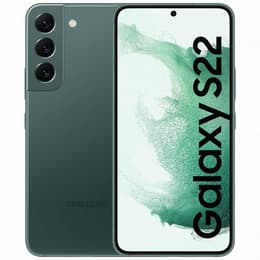
Galaxy S22 5G • Locked T-Mobile
Starting at

Refurbished price:$212.99

Versus $783.99 new

See options
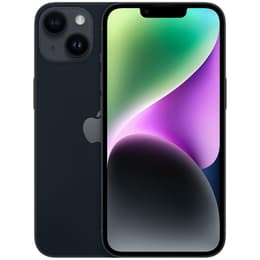
iPhone 14 • Unlocked
Starting at

Refurbished price:$254.00

Versus $629.00 new

See options

Ratings

The Samsung Galaxy S22, released in February 2022, and the iPhone 14, launched in September 2022, represent distinct approaches to the modern smartphone experience. While both devices offer premium features and robust performance, they differ significantly in their operating systems, camera capabilities, and design philosophies. The Galaxy S22 operates on the Android platform, offering extensive customization, whereas the iPhone 14 runs on iOS, known for its integrated ecosystem and streamlined user experience.

Scores

Durability

When considering the long-term usability of these devices, several factors contribute to their expected lifespan, including software support and physical resilience.

  • Release Timeline and Software Support: The Samsung Galaxy S22, released in early 2022, typically receives major Android operating system updates for approximately four to five years, with security updates extending beyond that period. The iPhone 14, launched several months later in late 2022, generally benefits from a longer software support window, often receiving iOS updates for five to six years from its release date. This difference means the iPhone 14 may offer an additional year or more of the latest software features and security patches.
  • Physical Durability: Both smartphones feature an IP68 rating for dust and water resistance, indicating they can withstand submersion in up to 6 meters of water for 30 minutes. The iPhone 14 incorporates a Ceramic Shield front cover, which Apple states offers enhanced drop performance. The Galaxy S22 utilizes Gorilla Glass Victus+ for its front and back panels, providing a high level of scratch and shatter resistance.
  • Repairability Considerations: The iPhone 14 initially received praise for an internal redesign that made certain repairs, such as back glass replacement, more accessible. However, its repairability score was later adjusted due to software-based part pairing requirements that can complicate unauthorized repairs. The Galaxy S22, while not having the same part-pairing controversy, generally presents a more complex internal structure for repairs, often requiring specialized tools and expertise.

Release Year

2022

2022

Last OS Compatibility

Yes

Yes

OS

Android

iOS

Foldable

No

No

Performance

The performance of a smartphone is crucial for daily tasks, from browsing and social media to demanding applications and gaming. Both the Galaxy S22 and iPhone 14 deliver responsive experiences, though they achieve this through different hardware and software optimizations.

  • Processing Power: The Galaxy S22 is equipped with an advanced processor built on a 4-nanometer process, which contributes to efficient handling of various tasks and applications. The iPhone 14 features a powerful processor with a 5-core graphics processing unit, enabling smooth performance across the iOS ecosystem. In real-world usage, both devices are capable of running demanding applications and multitasking without significant slowdowns. The iPhone 14 demonstrated slight performance gains over its predecessor, particularly in graphics-intensive operations.
  • Memory and Storage: The Galaxy S22 typically comes with 8GB of RAM, providing ample capacity for running multiple applications simultaneously. It offers storage options of 128GB and 256GB. The iPhone 14 includes 6GB of RAM and is available with 128GB, 256GB, or 512GB of internal storage. The larger RAM in the Galaxy S22 can be beneficial for heavy multitasking on Android, while iOS's memory management allows the iPhone 14 to perform efficiently with its 6GB.
  • Battery Behavior: In some independent tests, the iPhone 14, with its 3279 mAh battery, demonstrated longer battery life compared to the Galaxy S22, which has a 3700 mAh battery. However, some iPhone 14 users have reported concerns regarding battery degradation over time, suggesting that battery health might decline faster for some individuals. The actual battery life for both devices can vary significantly based on usage patterns and network conditions.

Memory (GB)

8 GB

6 GB

Screen quality

The display is a primary interface for smartphone interaction, and both the Galaxy S22 and iPhone 14 offer high-quality viewing experiences with distinct characteristics.

  • Display Technology and Clarity: The Galaxy S22 features a 6.1-inch Dynamic AMOLED 2X display, offering vibrant colors, deep blacks, and excellent contrast. It has a resolution of 2340 x 1080 pixels. The iPhone 14 comes with a 6.1-inch Super Retina XDR OLED display, also known for its rich colors and deep blacks, with a resolution of 2532 x 1170 pixels, resulting in a higher pixel density of 460 pixels per inch.
  • Brightness and Refresh Rate: The Galaxy S22's display can reach a peak brightness of 1300 nits, making it suitable for outdoor visibility. It also boasts an adaptive refresh rate of up to 120Hz, which provides a smoother scrolling experience and more fluid animations. The iPhone 14 offers a peak brightness of 1200 nits for HDR content and maintains a standard refresh rate of 60Hz. Users prioritizing smoother motion will notice the difference with the Galaxy S22's higher refresh rate.
  • Viewing Experience: Both devices provide an immersive viewing experience for media consumption and daily use. The iPhone 14's higher pixel density offers slightly sharper text and images, while the Galaxy S22's adaptive refresh rate contributes to a more responsive feel during navigation and gaming.

Resolution

1080 x 2340

1170 x 2532

Screen type

Dynamic AMOLED 2X

Super Retina XDR OLED

Audiovisual

Both the Galaxy S22 and iPhone 14 offer advanced camera systems designed to capture high-quality photos and videos, though they approach imaging with different hardware configurations and software features.

  • Rear Camera Systems: The Galaxy S22 features a versatile triple-lens rear camera setup, including a 50-megapixel main sensor, a 12-megapixel ultrawide lens, and a 10-megapixel telephoto lens with 3x optical zoom. This configuration allows for greater flexibility in framing shots, from wide landscapes to distant subjects. The iPhone 14 is equipped with a dual-camera system, comprising a 12-megapixel main camera with sensor-shift optical image stabilization and a 12-megapixel ultrawide camera.
  • Photography Performance: Both phones excel in everyday photography, producing detailed images with accurate color reproduction. The iPhone 14 introduced improvements in low-light capture, enhancing detail and reducing noise in challenging lighting conditions. The Galaxy S22's larger main sensor and advanced processing also contribute to strong low-light performance. The telephoto lens on the Galaxy S22 provides a distinct advantage for users who frequently zoom in on subjects.
  • Video Recording and Front Camera: The Galaxy S22 supports video recording up to 8K resolution, offering a high level of detail for those with compatible viewing equipment. The iPhone 14 records video up to 4K resolution and includes features like Cinematic mode for depth-of-field effects. For selfies and video calls, the Galaxy S22 has a 10-megapixel front camera, while the iPhone 14 features a 12-megapixel front camera with autofocus, which can result in sharper and more consistent self-portraits.

Main camera

50 megapixels

12 megapixels

Front camera

10 megapixels

12 megapixels

Miscellaneous

Beyond core performance and display, several practical elements differentiate the user experience of the Galaxy S22 and iPhone 14.

  • Connectivity and Ports: Both devices support 5G connectivity for fast mobile data speeds and feature modern Wi-Fi standards for robust wireless internet access. The Galaxy S22 utilizes a USB-C port for charging and data transfer, a widely adopted standard. The iPhone 14 continues to use Apple's proprietary Lightning port. Both phones support Bluetooth for connecting wireless accessories, with the iPhone 14 featuring Bluetooth 5.3 and the Galaxy S22 using Bluetooth 5.2.
  • Sensors and Unique Features: Both smartphones include essential sensors like accelerometers, gyroscopes, and proximity sensors. The iPhone 14 incorporates Face ID for secure facial recognition and includes an Emergency SOS via satellite feature in select regions, allowing users to connect with emergency services outside of cellular and Wi-Fi coverage. The Galaxy S22 features an under-display fingerprint sensor for biometric authentication.
  • Design and Handling: The Galaxy S22 has dimensions of 70.6 x 146.0 x 7.6 mm and weighs 168 grams. The iPhone 14 measures 146.7 x 71.5 x 7.8 mm and weighs 172 grams. Both devices offer a comfortable in-hand feel, with the iPhone 14 being slightly thicker and heavier. The build materials for both include glass front and back panels with aluminum frames.

Weight

7 oz

6 oz

Screen size (inches)

6.1

6.1

Network

5G

5G

SIM card

Physical SIM + eSIM

eSIM

Carrier compatibility

T-Mobile

Unlocked

Connector

USB-C

Lightning

The Samsung Galaxy S22 and iPhone 14 each offer a compelling smartphone experience, catering to different user preferences and priorities. User feedback for the Galaxy S22 often praises its versatile camera system, particularly the inclusion of a telephoto lens, and its vibrant, high-refresh-rate display. Some users appreciate the customization options available through the Android operating system. Common criticisms sometimes point to battery life that, while adequate for many, may require more frequent charging for heavy users compared to some competitors. For the iPhone 14, users frequently highlight its consistent performance, the quality of its camera system, and the seamless integration within the Apple ecosystem. However, some users have expressed concerns about battery degradation over time and the standard 60Hz refresh rate of its display.

Users who prioritize a highly customizable operating system, a versatile camera with optical zoom capabilities, and a smoother display refresh rate may find the Samsung Galaxy S22 to be a suitable choice. Conversely, individuals who value a streamlined user experience, a strong emphasis on privacy and security, and a potentially longer period of software updates might lean towards the iPhone 14. Both devices represent solid options in the smartphone market, and considering a quality-assured refurbished option for either model can provide an eco-friendly alternative for consumers.


See all articles

Our recent comparisons