Compare models
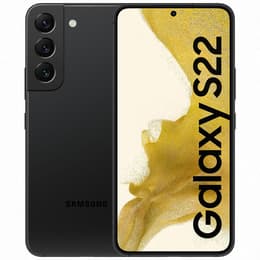
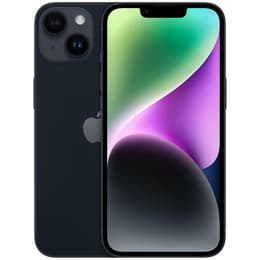
Galaxy S22 5G • Unlocked vs iPhone 14 • Locked T-Mobile
- 1-year warranty
- Free standard shipping
- Free 30-day returns
Differences at a glance
The Samsung Galaxy S22 5G, released in February 2022, and the iPhone 14, launched in September 2022, are both prominent smartphones offering distinct user experiences. While both devices provide robust performance and advanced camera capabilities, they differ significantly in their operating systems and display technologies. The Galaxy S22 runs on Android, offering extensive customization, whereas the iPhone 14 operates on Apple's iOS, known for its integrated ecosystem and user-friendly interface.
Available Models
Color
Storage (GB)
Scores
Durability
When considering the long-term usability of these devices, their release timelines and software support play a crucial role. The Galaxy S22, introduced earlier, typically receives major Android OS updates for about four years and security updates for five years from its release. The iPhone 14, being a later release, generally benefits from a longer software support window, often extending to five or six years of major iOS updates.
- Software Longevity: The iPhone 14 is expected to receive software updates for a longer period, potentially offering an extended practical lifespan for users who prioritize the latest features and security patches.
- Physical Durability: Both devices feature robust construction. The Galaxy S22 utilizes Gorilla Glass Victus+ on its front and back, paired with an Armor Aluminum frame. The iPhone 14 features a Ceramic Shield front cover and an aerospace-grade aluminum frame. Both carry an IP68 rating for dust and water resistance, though the iPhone 14 is rated for submersion up to 6 meters for 30 minutes, compared to the Galaxy S22's 1.5 meters for 30 minutes.
- Repairability: While specific repairability scores can vary, both manufacturers offer repair services. The availability of parts and independent repair options can influence the practical lifespan of either device.
Release Year
2022
2022
Last OS Compatibility
Yes
Yes
OS
Android
iOS
Foldable
No
No
Performance
Both the Galaxy S22 and iPhone 14 deliver strong performance for everyday tasks and demanding applications, though they achieve this through different hardware and software optimizations.
- System Responsiveness: The iPhone 14 provides a consistently smooth and fluid user experience, handling app launches, multitasking, and graphic-intensive games with ease. The Galaxy S22 also offers a highly responsive experience, capable of managing multiple applications simultaneously and running demanding games without significant slowdowns.
- Storage and Memory: The Galaxy S22 comes with 8GB of RAM and storage options of 128GB or 256GB. The iPhone 14 features 6GB of RAM and offers more storage flexibility with options for 128GB, 256GB, and 512GB. Users who frequently store large files or a vast media library might find the iPhone's higher storage tier beneficial.
- Battery Behavior: The Galaxy S22 is equipped with a 3700 mAh battery, while the iPhone 14 has a 3279 mAh battery. In real-world use, the iPhone 14 generally provides reliable all-day battery life for typical users, while some Galaxy S22 users have reported that its battery life can be a concern for heavy usage, potentially requiring more frequent charging.
Screen quality
The visual experience on both smartphones is vibrant and clear, but there are key differences in their display technologies and refresh rates that impact overall smoothness and brightness.
- Display Technology and Clarity: The Galaxy S22 features a 6.1-inch Dynamic AMOLED 2X display, offering rich colors and deep blacks. The iPhone 14 also boasts a 6.1-inch Super Retina XDR OLED display, known for its excellent color accuracy and contrast. Both provide sharp visuals suitable for media consumption and daily use.
- Refresh Rate: A notable difference is the refresh rate. The Galaxy S22 offers an adaptive refresh rate that can go up to 120Hz, resulting in smoother scrolling and more fluid animations. The iPhone 14 maintains a standard 60Hz refresh rate, which is still smooth for most users but less fluid than a 120Hz display, particularly noticeable during fast-paced content or scrolling.
- Brightness Levels: Both devices offer strong brightness for outdoor visibility. The Galaxy S22 can reach a peak brightness of 1300 nits, while the iPhone 14 achieves a peak HDR brightness of 1200 nits. This ensures good readability even in bright conditions.
Resolution
1080 x 2340
1170 x 2532
Screen type
Dynamic AMOLED 2X
Super Retina XDR OLED
Audiovisual
Both the Galaxy S22 and iPhone 14 offer advanced camera systems capable of capturing high-quality photos and videos, each with its own strengths and unique features.
- Rear Camera System: The Galaxy S22 features a versatile triple-camera setup, including a 50MP main sensor with optical image stabilization (OIS), a 12MP ultrawide lens, and a 10MP telephoto lens with 3x optical zoom and OIS. This dedicated telephoto lens provides greater flexibility for zoomed-in shots. The iPhone 14 has a dual-camera system with a 12MP main sensor (f/1.5, sensor-shift OIS) and a 12MP ultrawide lens (f/2.4, 120° field of view).
- Photography Performance: The iPhone 14 introduces improved low-light performance across its cameras, capturing more detail and brighter images in challenging conditions. The Galaxy S22 also excels in low-light photography, with its larger main sensor contributing to detailed shots. Both offer features like Night mode and advanced computational photography for enhanced image quality.
- Video Recording and Front Camera: For video, the iPhone 14 includes Cinematic mode for shallow depth-of-field effects and Action mode for smooth, stabilized handheld footage. Its 12MP front camera now features autofocus, improving clarity for selfies and video calls. The Galaxy S22 offers strong video capabilities and a 10MP front camera, providing clear results for video conferencing and self-portraits.
Main camera
50 megapixels
12 megapixels
Front camera
10 megapixels
12 megapixels
Miscellaneous
Beyond core performance and display, several practical elements differentiate the user experience of the Galaxy S22 and iPhone 14, from connectivity to physical design.
- Connectivity and Ports: Both devices support 5G networks, Wi-Fi 6, and Bluetooth for fast wireless communication. The Galaxy S22 uses a USB-C port for charging and data transfer, a widely adopted standard. The iPhone 14 continues to use Apple's proprietary Lightning port.
- Biometric Security: The Galaxy S22 features an ultrasonic in-screen fingerprint sensor for convenient unlocking and authentication, alongside 2D face unlock. The iPhone 14 relies solely on Face ID, its advanced facial recognition system.
- Design and Handling: The Galaxy S22 measures 146 x 70.6 x 7.6mm and weighs 168g. The iPhone 14 is slightly taller and wider at 146.7 x 71.5 x 7.8mm and weighs 172g. Both are compact devices, comfortable for one-handed use, with premium build materials.
Weight
6 oz
6 oz
Screen size (inches)
6.1
6.1
Network
5G
5G
SIM card
Physical SIM + eSIM
eSIM
Carrier compatibility
Unlocked
T-Mobile
What the community thinks
Users often praise the Samsung Galaxy S22 for its vibrant 120Hz display, versatile camera system with a dedicated telephoto lens, and the flexibility of the Android operating system. Some common criticisms, however, frequently point to its battery life, which for heavy users, may not consistently last a full day. The iPhone 14 is generally lauded for its consistent performance, excellent video capabilities, and the seamless integration within the Apple ecosystem. Users appreciate its reliable battery life for typical usage and the enhanced low-light photography. A frequent point of discussion for the iPhone 14 is its 60Hz display, which some users feel is a step behind competitors offering higher refresh rates.
For individuals prioritizing a highly customizable experience, a smoother scrolling display, and a dedicated telephoto camera, the Galaxy S22 may be a more suitable choice. Its Android platform offers extensive personalization options. Conversely, users who value a streamlined operating system, strong video features like Action Mode, and a longer software support window will likely find the iPhone 14 better aligns with their needs. Both devices represent solid choices in the smartphone market, and considering a quality-assured refurbished option for either model can be an eco-friendly alternative to purchasing new, allowing for informed and sustainable choices.