Galaxy S22 5G • Unlocked vs iPhone 14 • Locked Verizon

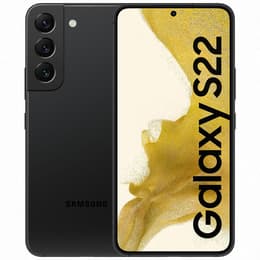
Galaxy S22 5G • Unlocked
Starting at

Refurbished price:$148.99

Versus $579.00 new

See options
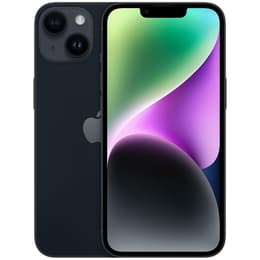
iPhone 14 • Locked Verizon
Starting at

Refurbished price:$299.00

Versus $599.00 new

See options

Ratings

The Samsung Galaxy S22 5G, released in February 2022, and the Apple iPhone 14, launched in September 2022, represent two distinct approaches to the premium smartphone experience. While both offer advanced mobile technology, they differ significantly in their operating systems and core design philosophies. The Galaxy S22 operates on Android, providing a customizable interface, whereas the iPhone 14 runs on Apple's iOS, known for its integrated ecosystem and streamlined user experience.

Scores

Durability

Evaluating the long-term usability of these devices involves considering their release timelines, software support, and physical resilience.

  • Release Timeline: The Galaxy S22 was introduced in February 2022, preceding the iPhone 14's September 2022 launch. This difference means the iPhone 14 generally benefits from a slightly longer period of future software updates and support from its manufacturer.
  • Software Longevity: Apple typically provides iOS updates for its devices for five to six years from their release, suggesting the iPhone 14 will receive updates for an extended period. Samsung generally offers four years of Android OS updates and five years of security updates for its flagship devices like the Galaxy S22.
  • Repairability and Durability: Both devices feature robust builds with IP68 ratings for dust and water resistance. The iPhone 14 incorporates Ceramic Shield on the front and a redesigned internal structure that initially aimed to improve repairability, particularly for the back glass. However, iFixit later revised its repairability score for the iPhone 14 downwards due to software limitations on parts pairing, which can complicate independent repairs. The Galaxy S22 also features a durable glass front and back, protected by Gorilla Glass Victus+, and an aluminum frame.

Release Year

2022

2022

Last OS Compatibility

Yes

Yes

OS

Android

iOS

Foldable

No

No

Performance

Performance is a key differentiator, influencing how smoothly applications run and how efficiently daily tasks are handled.

  • Processing Capabilities: The iPhone 14 is equipped with a powerful processor that ensures smooth operation across demanding applications and multitasking scenarios. The Galaxy S22 features a current-generation processor designed to handle intensive tasks, offering responsive performance for gaming and complex applications.
  • Battery Behavior: The iPhone 14 has a battery capacity of 3,279 mAh, providing up to 20 hours of video playback. The Galaxy S22 comes with a 3,700 mAh battery. In real-world usage tests, the iPhone 14 has demonstrated efficient power management, often outlasting devices with larger battery capacities in certain scenarios.
  • Storage and Responsiveness: Both devices offer various internal storage options, typically starting from 128GB, which impacts the number of applications and media files that can be stored. The system responsiveness on both is generally fluid, allowing for quick app launches and seamless transitions between tasks, supported by sufficient RAM for effective multitasking.

Memory (GB)

8 GB

6 GB

Screen quality

The visual experience on both smartphones is delivered through high-quality displays, though with some notable differences in technology and features.

  • Display Technology and Clarity: The iPhone 14 features a 6.1-inch Super Retina XDR OLED display, offering deep blacks and vibrant colors with a resolution of 2532 x 1170 pixels. The Galaxy S22 sports a 6.1-inch Dynamic AMOLED 2X display, providing rich colors and excellent contrast at a resolution of 2340 x 1080 pixels.
  • Brightness and Outdoor Visibility: Both displays offer high peak brightness levels, making them suitable for outdoor viewing. The iPhone 14 reaches up to 1200 nits peak brightness for HDR content, while the Galaxy S22 can achieve up to 1300 nits peak brightness.
  • Refresh Rate and Smoothness: A key difference lies in the refresh rate; the iPhone 14 has a standard 60Hz refresh rate, which provides a smooth experience for most users. The Galaxy S22, however, features an adaptive 120Hz refresh rate, which can make scrolling and animations appear noticeably smoother, particularly for users who prioritize a highly fluid visual experience.

Resolution

1080 x 2340

1170 x 2532

Screen type

Dynamic AMOLED 2X

Super Retina XDR OLED

Audiovisual

Both smartphones offer advanced camera systems designed to capture high-quality images and videos, though with different configurations and processing approaches.

  • Rear Camera System: The iPhone 14 features a dual-camera system with a 12MP main sensor and a 12MP ultrawide sensor. It includes features like Photonic Engine for improved low-light performance and sensor-shift optical image stabilization on the main lens. The Galaxy S22 boasts a triple-camera setup, including a 50MP main sensor, a 12MP ultrawide sensor, and a 10MP telephoto lens with 3x optical zoom.
  • Photography Performance: The iPhone 14 excels in capturing detailed and color-accurate photos in various lighting conditions, with its computational photography enhancing results, especially in low light. The Galaxy S22's larger main sensor and dedicated telephoto lens provide versatility, allowing for detailed zoomed-in shots and strong performance in everyday photography.
  • Video Recording and Audio: Both devices are capable of recording high-resolution video, with the iPhone 14 supporting 4K Dolby Vision HDR video recording and Cinematic mode. The Galaxy S22 can record up to 8K video at 24fps, offering high detail for video enthusiasts. Both phones provide stereo speaker output for media consumption and clear microphone quality for calls and recordings.

Main camera

50 megapixels

12 megapixels

Front camera

10 megapixels

12 megapixels

Miscellaneous

Beyond core features, several practical elements contribute to the overall user experience and device functionality.

  • Connectivity and Ports: Both the Galaxy S22 and iPhone 14 support 5G connectivity for fast mobile data speeds. The iPhone 14 models sold in the US rely solely on eSIM, while international versions may support physical nano-SIMs. The Galaxy S22 supports both physical nano-SIM and eSIM. The iPhone 14 uses a Lightning port for charging and data transfer, whereas the Galaxy S22 features a USB-C port.
  • Biometric Security and Sensors: The iPhone 14 utilizes Face ID for secure facial recognition. The Galaxy S22 incorporates an ultrasonic fingerprint sensor embedded under the display for biometric authentication. Both devices include a range of sensors such as accelerometers, gyroscopes, proximity sensors, and barometers.
  • Design and Build Materials: The iPhone 14 features a Ceramic Shield front, a glass back, and an aerospace-grade aluminum frame. It weighs 172 grams. The Galaxy S22 also has a glass front and back (Gorilla Glass Victus+) with an aluminum frame, weighing 167 grams.

Weight

6 oz

6 oz

Screen size (inches)

6.1

6.1

Network

5G

5G

SIM card

Physical SIM + eSIM

eSIM

Carrier compatibility

Unlocked

Verizon

The Samsung Galaxy S22 and iPhone 14 cater to users with differing priorities, reflecting their distinct operating systems and hardware focuses. Users often praise the Galaxy S22 for its versatile camera system, particularly the inclusion of a telephoto lens, and its vibrant, high-refresh-rate display, which provides a very smooth visual experience. Some users appreciate the greater customization options offered by the Android operating system. Criticisms sometimes point to its battery life, which, while adequate for many, may require more frequent charging for heavy users compared to some competitors.

The iPhone 14 is frequently lauded for its consistent performance, the intuitive nature of iOS, and its strong ecosystem integration. Its camera system is well-regarded for reliable image quality and video capabilities, especially in low light. Users also value its robust build quality and the long-term software support Apple provides. A common point of discussion for some users is the standard 60Hz display refresh rate, which is less fluid than the higher refresh rates found on some Android counterparts.

For individuals who prioritize a highly customizable Android experience, a versatile camera with optical zoom, and a smoother display for scrolling and gaming, the Galaxy S22 may be a more suitable choice. Conversely, users who value a streamlined and integrated ecosystem, consistent performance, strong video capabilities, and extended software longevity might find the iPhone 14 better aligns with their needs. Both devices offer a quality-assured refurbished option, providing an eco-friendly alternative for those seeking advanced smartphone technology.

See all articles

Our recent comparisons