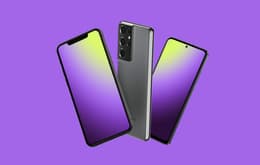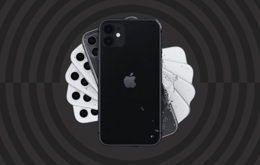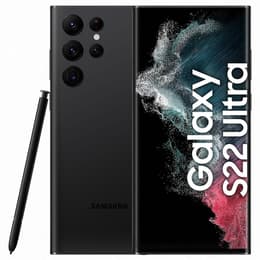
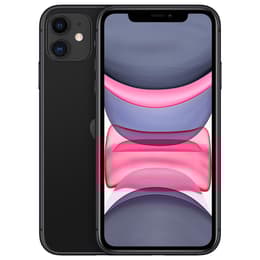

Galaxy S22 Ultra 5G • Unlocked vs iPhone 11 • Unlocked

Galaxy S22 Ultra 5G • Unlocked
Starting at

Refurbished price:$264.99

Versus $899.00 new

See options
iPhone 11 • Unlocked
Starting at

Refurbished price:$152.00

Versus $499.00 new

See options

Ratings

The Samsung Galaxy S22 Ultra 5G, released in February 2022, and the Apple iPhone 11, launched in September 2019, represent distinct approaches to smartphone design and functionality from different generations. While both are capable devices, the Galaxy S22 Ultra 5G offers a more advanced feature set, particularly in its display technology, camera capabilities, and integrated S Pen, whereas the iPhone 11 provides a streamlined iOS experience with solid core performance. These differences cater to varying user preferences and needs.

Scores

Durability

The practical lifespan of a smartphone is often influenced by its release timeline and the duration of software support it receives. The Galaxy S22 Ultra 5G, being a more recent device, benefits from a longer expected period of major Android and security updates compared to the iPhone 11.

  • Software Longevity: The Galaxy S22 Ultra 5G, released in early 2022, is expected to receive major Android updates for several more years, typically four to five years from its release, with security updates extending beyond that. The iPhone 11, released in late 2019, is anticipated to receive major iOS updates until late 2026, with security patches continuing for an additional year or two.
  • Repairability: Both devices are designed with some consideration for repair, though the complexity varies. The iPhone 11 has a repairability score of 6/10 according to iFixit, indicating that common repairs like screen and battery replacements are feasible. Information on the S22 Ultra's repairability suggests a similar level of complexity for internal components.
  • Expected Practical Lifespan: Users can expect the Galaxy S22 Ultra 5G to remain fully functional and supported for a longer duration due to its newer release. The iPhone 11, while still capable, is nearing the end of its major software update cycle, which might impact compatibility with future applications and features.

Release Year

2022

2019

Last OS Compatibility

Yes

Yes

OS

Android

iOS

Foldable

No

No

Performance

Performance in both devices is driven by their respective internal components, impacting how smoothly applications run, how quickly tasks are completed, and overall system responsiveness. The significant difference in release dates means the Galaxy S22 Ultra 5G incorporates more recent advancements in processing power.

  • Processing Capabilities: The Galaxy S22 Ultra 5G handles demanding applications, intensive multitasking, and graphic-heavy gaming with ease, offering a highly responsive user experience. The iPhone 11, while still providing smooth performance for everyday tasks and many applications, may show its age with the most resource-intensive software or future updates.
  • Multitasking and Responsiveness: The Galaxy S22 Ultra 5G typically features more RAM options, contributing to its ability to keep numerous applications open in the background without slowdowns. The iPhone 11, with its optimized iOS, manages multitasking efficiently for its hardware, though it has less RAM.
  • Storage Options: The Galaxy S22 Ultra 5G offers a wider range of storage configurations, including options up to 1TB, catering to users with extensive storage needs. The iPhone 11 comes with standard storage tiers, which may be sufficient for average users but could be limiting for those who store large amounts of media or applications.

Memory (GB)

8 GB

4 GB

Screen quality

The visual experience is a key differentiator between these two smartphones, with distinct display technologies and specifications influencing clarity, color, and brightness.

  • Display Technology and Resolution: The Galaxy S22 Ultra 5G features a 6.8-inch Dynamic AMOLED 2X display with a QHD+ resolution (1440 x 3088 pixels), offering exceptional clarity, deep blacks, and vibrant colors. In contrast, the iPhone 11 uses a 6.1-inch Liquid Retina HD LCD display with a lower resolution (1792 x 828 pixels), which provides good color accuracy but does not match the contrast or sharpness of an OLED panel.
  • Brightness and Refresh Rate: The Galaxy S22 Ultra 5G boasts a peak brightness of up to 1750 nits, making it highly visible even in bright outdoor conditions, and features an adaptive refresh rate up to 120Hz for smoother scrolling and more fluid animations. The iPhone 11 has a typical maximum brightness of 625 nits and a standard 60Hz refresh rate, which is adequate for most viewing but less fluid than the S22 Ultra.
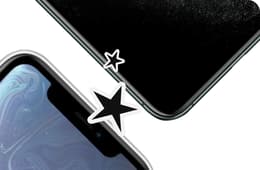
  • Viewing Experience: The larger, higher-resolution AMOLED screen of the S22 Ultra 5G provides a more immersive viewing experience, particularly for media consumption and detailed work. The iPhone 11's LCD screen, while still offering a good visual experience, has thicker bezels and a notch that takes up more screen space compared to the S22 Ultra's punch-hole camera.

Resolution

1440 x 3088

828 x 1792

Screen type

Dynamic AMOLED 2X

Liquid Retina IPS LCD

Audiovisual

The camera systems of the Galaxy S22 Ultra 5G and the iPhone 11 reflect different design philosophies and technological advancements, offering varied capabilities for photography and videography.

  • Camera System Configuration: The Galaxy S22 Ultra 5G features a versatile quad-camera setup, including a 108MP wide lens, a 12MP ultrawide lens, and two 10MP telephoto lenses (3x and 10x optical zoom), alongside a 40MP front camera. The iPhone 11 has a dual 12MP camera system, comprising a wide and an ultrawide lens, and a 12MP front camera, lacking a dedicated telephoto lens.
  • Photography Performance: The S22 Ultra 5G excels in detail capture, especially with its high-resolution main sensor and advanced zoom capabilities, performing well in various lighting conditions including improved low-light photography. The iPhone 11 offers reliable exposure and good color reproduction in everyday conditions, with a notable Night Mode for low-light shots, though its ultrawide lens performs best in good lighting.
  • Video Recording and Audio: Both devices offer strong video recording capabilities. The S22 Ultra 5G supports up to 8K video recording and features advanced stabilization. The iPhone 11 records up to 4K at 60fps, with excellent image stabilization, particularly praised for its video quality. Both provide good microphone quality for calls and recording, and capable speaker output for media consumption.

Main camera

108 megapixels

12 megapixels

Front camera

40 megapixels

12 megapixels

Miscellaneous

Beyond core performance and display, several practical elements contribute to the overall user experience, including connectivity, physical design, and additional features.

  • Connectivity and Ports: The Galaxy S22 Ultra 5G supports 5G connectivity, offering faster mobile data speeds where available, along with Wi-Fi 6E and Bluetooth 5.2. The iPhone 11 supports 4G LTE, Wi-Fi 6, and Bluetooth 5.0, but does not have 5G capabilities. The S22 Ultra uses a USB-C port, while the iPhone 11 features Apple's proprietary Lightning port.
  • Design and Build Materials: The S22 Ultra 5G features a premium build with Gorilla Glass Victus+ on both the front and back, and an aluminum frame, offering IP68 dust and water resistance. It also integrates an S Pen stylus directly into the device. The iPhone 11 also has a glass front and back with an aluminum frame, and IP68 water and dust resistance, though its glass is not as advanced as the S22 Ultra's.
  • Weight, Dimensions, and Sensors: The Galaxy S22 Ultra 5G is a larger and heavier device, measuring 163.3 x 77.9 x 8.9 mm and weighing 228g, which can impact one-handed use. The iPhone 11 is more compact at 150.9 x 75.7 x 8.3 mm and 194g. Both include essential sensors like accelerometers, gyroscopes, and ambient light sensors, with the S22 Ultra featuring an ultrasonic fingerprint sensor and the iPhone 11 relying on Face ID for biometric authentication.

Weight

8 oz

7 oz

Screen size (inches)

6.8

6.1

Network

5G

LTE

SIM card

Physical SIM + eSIM

Physical SIM + eSIM

Carrier compatibility

Unlocked

Unlocked

The Samsung Galaxy S22 Ultra 5G and the iPhone 11 cater to different user expectations, largely due to their generational gap and distinct operating systems. Users frequently praise the Galaxy S22 Ultra 5G for its expansive and vibrant display, its highly versatile camera system with impressive zoom capabilities, and the integrated S Pen, which offers unique productivity features. Common criticisms sometimes point to its large size, which can make one-handed use challenging, and occasional reports of overheating under heavy load.

The iPhone 11, on the other hand, is often lauded by users for its consistent and smooth performance, reliable camera for everyday photography, and excellent battery life, especially considering its age. Some users have noted that its LCD screen, while good, doesn't offer the same visual impact as newer OLED panels, and the lack of 5G connectivity is a limitation in areas with advanced network infrastructure.

Users prioritizing a cutting-edge display, advanced camera features with extensive zoom, and the productivity benefits of a stylus will find the Galaxy S22 Ultra 5G well-suited to their needs. Its more recent release also means a longer period of software support. Conversely, users who value a straightforward, highly optimized smartphone experience, a slightly more compact design, and a robust camera for general use may lean toward the iPhone 11. For those considering either device, exploring quality-assured refurbished options can provide an eco-friendly alternative, extending the life of these electronics and offering a sustainable choice.

See all articles

Our recent comparisons