
Galaxy S22 Ultra 5G • Unlocked vs iPhone 12 mini • Unlocked

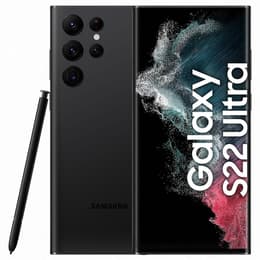
Galaxy S22 Ultra 5G • Unlocked
Starting at

Refurbished price:$264.99

Versus $899.00 new

See options
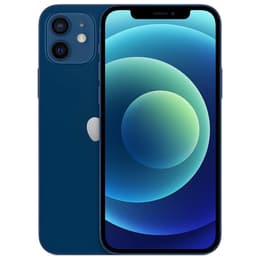
iPhone 12 mini • Unlocked
Starting at

Refurbished price:$149.00

Versus $459.00 new

See options

Ratings

The Samsung Galaxy S22 Ultra 5G, released in February 2022, and the Apple iPhone 12 Mini, launched in November 2020, represent distinct philosophies in smartphone design and functionality. While both are premium devices, they cater to different user preferences, primarily differing in size, camera capabilities, and integrated features. The Galaxy S22 Ultra operates on Android, offering a highly customizable experience, whereas the iPhone 12 Mini runs on Apple's iOS, known for its streamlined interface and ecosystem.

Scores

Durability

These devices offer varying timelines for software support and physical resilience, impacting their practical lifespan.

  • Release Timeline: The iPhone 12 Mini, released in late 2020, precedes the Galaxy S22 Ultra 5G, which launched in early 2022. This difference in release date means the Galaxy S22 Ultra will likely receive software updates for a longer period into the future.
  • Software Longevity: Apple typically provides iOS updates for 5-6 years from a device's release, suggesting the iPhone 12 Mini will continue to receive updates for a few more years. Samsung generally offers several years of Android OS updates and security patches for its flagship devices, positioning the S22 Ultra for extended support.
  • Build Materials: Both phones feature robust construction. The iPhone 12 Mini incorporates a Ceramic Shield front cover and an aluminum frame, contributing to its durability. The Galaxy S22 Ultra utilizes Gorilla Glass Victus+ on both its front and back, paired with an aluminum frame, and both devices carry an IP68 rating for dust and water resistance.

Release Year

2022

2020

Last OS Compatibility

Yes

Yes

OS

Android

iOS

Foldable

No

No

Performance

Performance aspects for both devices are influenced by their respective hardware and software optimizations.

  • Storage and RAM: The iPhone 12 Mini offers storage options up to 256GB and includes 4GB of RAM. The Galaxy S22 Ultra provides a wider range of storage, up to 1TB, and comes with 8GB or 12GB of RAM, allowing for more extensive multitasking and storage of large files.
  • Everyday Responsiveness: The iPhone 12 Mini, powered by its A14 Bionic chip, handles daily tasks, demanding applications, and gaming smoothly without noticeable lag. The Galaxy S22 Ultra, equipped with a current-generation processor (Snapdragon 8 Gen 1 or Exynos 2200 depending on region), also delivers excellent performance for multiple apps and intensive use.
  • Battery Behavior: The iPhone 12 Mini has a smaller battery capacity, which means heavy users may find themselves needing to charge it more frequently, though it can last a full day with moderate use. The Galaxy S22 Ultra features a larger battery, designed to last a full day or more under varied activity, including extended screen-on time.

Memory (GB)

8 GB

4 GB

Screen quality

The visual experience on these devices differs significantly due to their display characteristics.

  • Display Technology and Size: The iPhone 12 Mini features a 5.4-inch Super Retina XDR OLED display, offering deep blacks and vibrant colors in a compact form factor. The Galaxy S22 Ultra boasts a larger 6.8-inch Dynamic AMOLED 2X display, providing an expansive viewing area.
  • Resolution and Clarity: The iPhone 12 Mini has a resolution of 2340 x 1080 pixels, resulting in a pixel density of 476 ppi, which contributes to sharp images and text. The Galaxy S22 Ultra offers a higher resolution of 1440 x 3088 pixels, with approximately 500 ppi, delivering exceptional detail across its larger screen.
  • Brightness and Refresh Rate: Both displays offer high peak brightness for HDR content, with the iPhone 12 Mini reaching 1200 nits and the Galaxy S22 Ultra peaking at 1750 nits, enhancing outdoor visibility and HDR viewing. The Galaxy S22 Ultra features a 120Hz refresh rate for smoother scrolling and animations, while the iPhone 12 Mini has a standard 60Hz refresh rate.

Resolution

1440 x 3088

1080 x 2340

Screen type

Dynamic AMOLED 2X

Super Retina XDR OLED

Audiovisual

Both smartphones offer advanced camera systems, but with different configurations and capabilities.

  • Rear Camera Systems: The iPhone 12 Mini features a dual 12MP camera system with wide and ultrawide lenses, including optical image stabilization on the wide lens. The Galaxy S22 Ultra has a more versatile quad-camera setup, including a 108MP wide lens, two 10MP telephoto lenses (offering 3x and 10x optical zoom), and a 12MP ultrawide lens, all with optical image stabilization on key sensors.
  • Photography Performance: The iPhone 12 Mini excels in everyday photography and low-light conditions with its Night mode available across all cameras, Deep Fusion, and Smart HDR 3. The Galaxy S22 Ultra's multiple lenses and higher megapixel count provide greater flexibility for various shooting scenarios, including detailed zoom shots and expansive ultrawide captures.
  • Video Recording and Audio: Both devices support 4K video recording, with the iPhone 12 Mini capable of Dolby Vision HDR video up to 4K at 30fps. The Galaxy S22 Ultra can record up to 8K video at 24fps and 4K at 30/60fps. Both offer quality microphone performance for calls and recordings, and stereo speakers for media consumption.

Main camera

108 megapixels

12 megapixels

Front camera

40 megapixels

12 megapixels

Miscellaneous

Beyond core features, several practical elements differentiate these two devices.

  • Connectivity: Both the iPhone 12 Mini and the Galaxy S22 Ultra support 5G cellular connectivity. The Galaxy S22 Ultra also supports Wi-Fi 6E and Bluetooth 5.2, while the iPhone 12 Mini supports Wi-Fi 6 and Bluetooth 5.0.
  • Ports and Charging: The iPhone 12 Mini uses Apple's proprietary Lightning port and supports MagSafe wireless charging, though at a slightly lower peak wattage (12W) compared to other iPhone 12 models. The Galaxy S22 Ultra features a USB-C port, offering broader compatibility, and supports faster wired and wireless charging standards.
  • Unique Features and Design: The Galaxy S22 Ultra integrates an S Pen stylus, offering enhanced productivity and creative input. The iPhone 12 Mini's primary distinction is its compact size and lightweight design, making it highly suitable for one-handed use and portability.

Weight

8 oz

7 oz

Screen size (inches)

6.8

5.4

Network

5G

5G

SIM card

Physical SIM + eSIM

Physical SIM + eSIM

Carrier compatibility

Unlocked

Unlocked

User feedback for the iPhone 12 Mini often praises its compact form factor, making it comfortable for one-handed use and easy to carry. Its performance is consistently noted as excellent for its size, handling demanding apps and games without issue. However, a frequent criticism is its battery life, which many users find requires midday charging, especially with heavy use. The camera system is generally well-regarded for its quality in various lighting conditions.

The Galaxy S22 Ultra is often lauded for its expansive and vibrant display, versatile camera system with impressive zoom capabilities, and the integrated S Pen, which users find enhances productivity and creativity. Its battery life is generally considered robust, capable of lasting a full day for most users. Some users have noted that while performance is strong, it may not always feel significantly faster than previous generations in everyday tasks.

Users prioritizing a highly compact and lightweight device that is easy to manage with one hand will find the iPhone 12 Mini well-suited to their needs. Those who require an expansive display for media consumption, a highly versatile camera system with advanced zoom, and integrated stylus functionality for productivity may lean toward the Galaxy S22 Ultra 5G. Both devices offer a quality-assured refurbished option, providing an eco-friendly alternative for consumers.
See all articles

Our recent comparisons