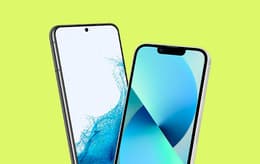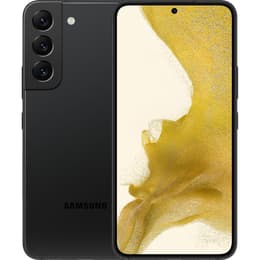
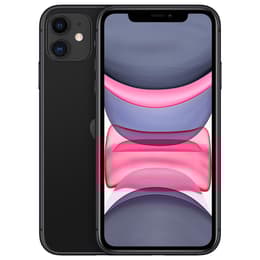

Galaxy S22+ 5G • Locked T-Mobile vs iPhone 11 • Unlocked

Galaxy S22+ 5G • Locked T-Mobile
Starting at

Refurbished price:$212.82

Versus $959.99 new

See options
iPhone 11 • Unlocked
Starting at

Refurbished price:$152.00

Versus $499.00 new

See options

Ratings

The Samsung Galaxy S22 Plus, released in February 2022, and the Apple iPhone 11, launched in September 2019, represent different generations and operating systems within the smartphone market. While both offer a comprehensive smartphone experience, the Galaxy S22 Plus brings more recent advancements in display technology, camera capabilities, and processing power, whereas the iPhone 11 provides a well-established iOS ecosystem. This comparison will explore their core differences to help users determine which device aligns best with their needs.

Scores

Durability

The lifespan of a smartphone is influenced by its release date, software support, and physical resilience.

  • Release Timeline and Software Support: The iPhone 11, released in September 2019, has received several major iOS updates, with compatibility extending to iOS 18 in September 2024 and iOS 26 in September 2025. The Samsung Galaxy S22 Plus, launched in February 2022, benefits from a more recent release, typically receiving four major Android OS updates and five years of security patches. This means the Galaxy S22 Plus is expected to receive software support for a longer duration into the future.
  • Physical Durability: Both devices feature an IP68 rating for water and dust resistance, indicating they can withstand submersion in water for a limited time. The iPhone 11 utilizes a combination of aerospace-grade aluminum and tough glass. The Galaxy S22 Plus incorporates Gorilla Glass Victus+ on both the front and back, along with an Armor Aluminum frame, contributing to its robust build. User reports suggest the iPhone 11 is quite durable for its time, handling accidental drops and knocks well with a good case.
  • Repairability: While specific repairability scores can vary, both manufacturers have systems in place for authorized repairs. The iPhone 11's display replacement with unauthorized parts could trigger a warning notification.

Release Year

2022

2019

Last OS Compatibility

Yes

Yes

OS

Android

iOS

Foldable

No

No

Performance

Performance is a key differentiator, impacting how smoothly applications run and how efficiently the device handles demanding tasks.

  • Processing Power: The Galaxy S22 Plus features a more current-generation processor, enabling it to handle demanding applications and multitasking with greater responsiveness. Users report that for daily tasks like scrolling, watching videos, or multitasking, the S22 Plus performs without issues. The iPhone 11, with its older processor, still offers a smooth and quick experience for everyday use. However, some users note that it may not be as snappy as newer phones, especially with more recent iOS versions.
  • Multitasking and Storage: The Galaxy S22 Plus typically comes with 8GB of RAM, which contributes to its ability to manage multiple applications simultaneously without slowdowns. The iPhone 11 features 4GB of RAM. Both devices offer various internal storage options, including 128GB and 256GB, with the iPhone 11 also having a 64GB option.
  • Battery Behavior: The Galaxy S22 Plus is equipped with a 4500 mAh battery. User experiences with the S22 Plus's battery life have been mixed, with some reporting initial concerns that improved over time as the phone learned usage patterns. The iPhone 11 has a 3110 mAh battery. Users generally found the iPhone 11's battery life to be good, often lasting a full day with normal use.

Memory (GB)

8 GB

4 GB

Screen quality

The visual experience on a smartphone is largely defined by its display technology and characteristics.

  • Display Technology and Clarity: The Samsung Galaxy S22 Plus features a 6.6-inch Dynamic AMOLED 2X display, offering vibrant colors, deep blacks, and excellent contrast. Its resolution is 2340 x 1080 pixels. The iPhone 11 has a 6.1-inch Liquid Retina IPS LCD display with a resolution of 1792 x 828 pixels. The AMOLED technology in the S22 Plus generally provides a more vivid and immersive viewing experience compared to the LCD of the iPhone 11.
  • Brightness and Refresh Rate: The Galaxy S22 Plus boasts a high peak brightness of 1750 nits, ensuring excellent visibility even in bright outdoor conditions. It also features an adaptive refresh rate of up to 120Hz, which results in smoother scrolling and more fluid animations. The iPhone 11 has a typical maximum brightness of 625 nits and a standard 60Hz refresh rate. Users of the iPhone 11 have noted difficulty seeing the screen in super bright sunlight.
  • Screen Size and Viewing Experience: The larger 6.6-inch display of the Galaxy S22 Plus offers more screen real estate for media consumption and multitasking compared to the iPhone 11's 6.1-inch screen.

Resolution

1080 x 2340

828 x 1792

Screen type

Dynamic AMOLED 2X

Liquid Retina IPS LCD

Audiovisual

Both devices offer capable camera systems, but with distinct differences in their hardware and photographic capabilities.

  • Rear Camera Systems: The Samsung Galaxy S22 Plus features a versatile triple-lens rear camera setup, including a 50MP main wide-angle lens with optical image stabilization (OIS), a 12MP ultra-wide lens, and a 10MP telephoto lens with 3x optical zoom. This allows for greater flexibility in capturing different perspectives. The iPhone 11 comes with a dual-lens system, comprising a 12MP wide-angle lens with OIS and a 12MP ultra-wide-angle lens.
  • Photography Features: The Galaxy S22 Plus offers features like 30x Space Zoom and an enhanced Night Mode. User feedback on the S22 Plus camera is generally positive for clarity, colors, and sharpness, though some users have noted challenges with moving objects in suboptimal conditions. The iPhone 11 is praised for its overall image quality, good colors, and reliable exposure, with its Night Mode being a significant improvement for low-light photography. It also offers Portrait mode with advanced bokeh and depth control.
  • Video Recording and Front Camera: The Galaxy S22 Plus supports 8K video recording at 24fps and 4K at up to 60fps, along with Super Steady video. It has a 10MP front camera. The iPhone 11 records 4K video at up to 60fps and features a 12MP front camera.

Main camera

50 megapixels

12 megapixels

Front camera

10 megapixels

12 megapixels

Miscellaneous

Beyond the core features, several practical elements contribute to the overall user experience of these smartphones.

  • Connectivity: The Samsung Galaxy S22 Plus supports 5G connectivity, Wi-Fi 6E, and Bluetooth 5.2, offering faster data speeds and more advanced wireless capabilities. The iPhone 11 supports 4G LTE, Wi-Fi 6, and Bluetooth 5.0. For users in areas with 5G infrastructure, the S22 Plus provides access to the latest network speeds.
  • Ports and Biometrics: The Galaxy S22 Plus features a USB-C port for charging and data transfer. It includes an ultrasonic under-display fingerprint sensor and face recognition for secure unlocking. The iPhone 11 uses Apple's proprietary Lightning port. Its primary biometric security is Face ID, utilizing the TrueDepth camera system.
  • Dimensions and Build Materials: The Galaxy S22 Plus measures approximately 157.4 x 75.8 x 7.6 mm and weighs around 195 grams. It features a premium feel with its glass and aluminum construction. The iPhone 11 measures 150.9 x 75.7 x 8.3 mm and weighs 194 grams. Both devices offer a solid in-hand feel.

Weight

7 oz

7 oz

Screen size (inches)

6.6

6.1

Network

5G

LTE

SIM card

Physical SIM + eSIM

Physical SIM + eSIM

Carrier compatibility

T-Mobile

Unlocked

Connector

USB-C

Lightning

User feedback for the Samsung Galaxy S22 Plus often highlights its excellent display, premium design, and capable camera system as strong points. Many appreciate the smooth user interface and consistent software updates. Criticisms sometimes point to initial battery life concerns, which some users found improved over time, and occasional camera lag with moving subjects.

For the iPhone 11, common praise includes its reliable performance for everyday tasks, good battery life, and the effectiveness of its camera's Night Mode. Users frequently commend its overall smoothness and the consistent iOS experience. Some criticisms revolve around the screen's visibility in bright sunlight and the limitations of its older processor compared to newer models.

Users prioritizing a modern display with a high refresh rate, advanced camera features including a telephoto lens, and access to 5G connectivity will find the Samsung Galaxy S22 Plus well-suited to their needs. Its newer hardware offers more headroom for future applications and a longer period of software support. Conversely, users who value the established iOS ecosystem, consistent performance for general use, and a robust camera for everyday photography, particularly in low light, may lean towards the iPhone 11. It remains a dependable device for those seeking a quality-assured refurbished option. Both devices offer distinct advantages, catering to different user preferences and priorities in the smartphone experience.

See all articles

Our recent comparisons