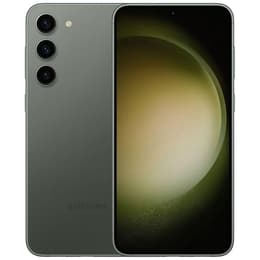
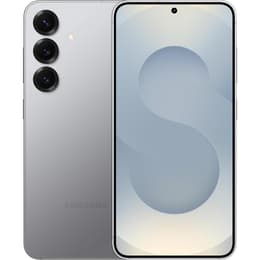

Galaxy S23+ • Unlocked vs Galaxy S25 • Unlocked

Galaxy S23+ • Unlocked
Starting at

Refurbished price:$259.99

Versus $999.99 new

See options
Galaxy S25 • Unlocked
Starting at

Refurbished price:$425.00

Versus $1,299.00 new

See options

Ratings

The Samsung Galaxy S23 Plus, released in February 2023, and the Samsung Galaxy S25, launched in February 2025, represent two consecutive generations within Samsung's flagship smartphone series. While both devices offer a premium Android experience with Samsung's One UI, the S25 introduces notable advancements in processing power, display technology, and extended software support. This comparison aims to highlight the practical differences to assist users in making an informed decision.

Scores

Durability

When considering the long-term usability of a smartphone, software support and physical resilience are key factors. The Galaxy S23 Plus and Galaxy S25 offer different timelines for updates and share robust build qualities.

  • Software Longevity: The Galaxy S23 Plus, launched with Android 13, is committed to receiving four major Android OS upgrades and five years of security updates, extending its support until approximately 2028. In contrast, the newer Galaxy S25, released with Android 15, benefits from Samsung's extended policy, offering seven years of OS upgrades and seven years of security updates, ensuring support until around 2032. This makes the S25 a more future-proof option for users who prioritize the latest software features and security patches for an extended period.
  • Physical Durability: Both devices feature an IP68 rating for dust and water resistance, indicating protection against immersion in water. They also incorporate Gorilla Glass Victus 2 on both the front and back, paired with an Armor Aluminum frame, providing a high level of scratch and drop resistance. The Galaxy S25 series has also shown improved repairability scores, with some models receiving high marks for ease of disassembly and component replacement.
  • Practical Lifespan: While both phones are built to last, the Galaxy S25's significantly longer software support means it will remain current with new features and security for several years beyond the S23 Plus. Users who tend to keep their phones for many years will find the S25's extended support more beneficial.

Release Year

2023

2025

Last OS Compatibility

Yes

Yes

OS

Android

Android

Foldable

No

No

Performance

The performance of a smartphone is largely determined by its internal components, influencing app responsiveness, multitasking capabilities, and gaming experiences.

  • Processor Capabilities: The Galaxy S23 Plus is powered by a current-generation processor optimized for Galaxy devices, enabling smooth operation for everyday tasks and capable handling of demanding applications and mobile gaming. The Galaxy S25 features a newer generation processor, manufactured with a more advanced process, which translates to enhanced overall system responsiveness and improved efficiency for complex computations, including advanced AI features.
  • Memory and Storage: The Galaxy S23 Plus typically comes with 8GB of RAM, which is sufficient for effective multitasking and running multiple applications simultaneously. Storage options for the S23 Plus include 256GB and 512GB. The Galaxy S25 generally offers 12GB of RAM across its models, providing more headroom for intensive multitasking and ensuring smoother transitions between applications. Storage configurations for the S25 Plus typically start at 256GB and go up to 512GB.
  • Real-world Usage: Users of the S23 Plus generally report consistent performance for daily use, with efficient app loading and smooth navigation. The Galaxy S25, with its newer processor and increased RAM, offers a noticeable improvement in handling highly demanding applications, complex AI tasks, and sustained high-performance gaming without significant slowdowns.

Memory (GB)

8 GB

12 GB

Screen quality

The display is a primary interface for smartphone interaction, and both devices offer high-quality viewing experiences with some key distinctions.

  • Display Technology and Clarity: Both devices feature Dynamic AMOLED 2X displays, known for their vibrant colors, deep blacks, and excellent contrast. The Galaxy S23 Plus has a 6.6-inch FHD+ (2340 x 1080) display, offering sharp visuals for its size. The Galaxy S25 Plus boasts a larger 6.7-inch QHD+ (3120 x 1440) display, providing a more expansive viewing area and noticeably higher pixel density for even finer detail and clarity. The base Galaxy S25 model, however, maintains a 6.2-inch FHD+ display.
  • Brightness and Refresh Rate: Both phones feature adaptive refresh rates up to 120Hz, ensuring smooth scrolling and fluid animations. The Galaxy S23 Plus offers a peak brightness of 1750 nits, providing good visibility in various lighting conditions. The Galaxy S25 significantly increases this to a peak brightness of 2600 nits, enhancing outdoor visibility and HDR content viewing.
  • Viewing Experience: The larger, higher-resolution display of the Galaxy S25 Plus offers a more immersive viewing experience, particularly for media consumption and detailed work. The increased brightness on the S25 also contributes to better usability under direct sunlight.

Resolution

1080 x 2340

1080x2340

Screen type

Dynamic AMOLED 2X

Dynamic LTPO AMOLED 2X

Audiovisual

The camera systems on both the Galaxy S23 Plus and Galaxy S25 are designed to capture high-quality images and videos, with the newer model benefiting from software enhancements.

  • Camera Hardware: The Galaxy S23 Plus features a versatile triple-camera setup on the rear, including a 50MP main sensor with optical image stabilization (OIS), a 12MP ultrawide lens, and a 10MP telephoto lens capable of 3x optical zoom. The front camera is a 12MP sensor. The Galaxy S25 Plus largely retains the same camera hardware as its predecessor, featuring a 50MP main, 12MP ultrawide, and 10MP telephoto lens with 3x optical zoom.
  • Photography Performance: Both devices deliver strong photography performance in well-lit conditions, producing detailed and vibrant images. The S25, however, leverages enhanced AI processing and computational photography to refine image quality, potentially offering improvements in areas like dynamic range, color accuracy, and low-light performance, even with similar hardware. User feedback for the S25 suggests that while the main sensor performs well, the ultrawide can sometimes be softer at the edges, and some images might exhibit over-sharpening.
  • Video Capabilities: Both models are capable of recording video at up to 8K resolution. The S25 may offer more consistent video performance and improved stabilization due to its newer processing capabilities, though some users have noted occasional inconsistencies in lighting adjustments during video recording.

Miscellaneous

Beyond core features, several practical elements contribute to the overall user experience and daily functionality of these smartphones.

  • Connectivity and Ports: Both devices support 5G connectivity for fast mobile data. The Galaxy S23 Plus features Wi-Fi 6E and Bluetooth 5.3. The Galaxy S25 upgrades to newer standards, including Wi-Fi 7 and Bluetooth 5.4, offering potentially faster and more stable wireless connections, particularly in compatible network environments. Both utilize a USB-C port for charging and data transfer.
  • Biometric Security and Design: Both models incorporate reliable in-display ultrasonic fingerprint sensors for secure and convenient unlocking, alongside face recognition capabilities. In terms of physical design, the Galaxy S23 Plus measures 157.8 x 76.2 x 7.6 mm and weighs 196g. The Galaxy S25 Plus is slightly larger but also thinner and lighter, measuring 158.4 x 75.8 x 7.3mm and weighing 190g, which can contribute to a more comfortable in-hand feel.
  • Build Materials: Both phones feature robust build materials, including Gorilla Glass Victus 2 on the front and back, and an aluminum frame, contributing to their overall durability. The S25 series may incorporate enhanced aluminum frames for improved resilience.

Weight

7 oz

8 oz

Screen size (inches)

6.6

6.2

Network

5G

5G

SIM card

Physical SIM + eSIM

Physical SIM + eSIM

Carrier compatibility

Unlocked

Unlocked

The Samsung Galaxy S23 Plus and Galaxy S25 both offer compelling smartphone experiences, each with distinct advantages. User feedback for the Galaxy S23 Plus often highlights its capable camera system and reliable performance for a device of its generation. Some users, particularly heavy ones, occasionally note its battery life as a point of consideration, though many find it sufficient for daily use.

The Galaxy S25, being a newer model, receives praise for its significantly improved battery life, larger and brighter display (on the Plus model), and enhanced processing power, which makes it highly responsive for all tasks and advanced AI features. Criticisms for the S25 sometimes point to minimal camera hardware upgrades over its predecessor, with improvements primarily driven by software, and some users have observed occasional over-sharpening in photos or inconsistent video lighting.

Users prioritizing a device with extended software support and the latest advancements in processing power and display technology will find the Galaxy S25 well-suited to their needs. Its longer update commitment ensures it remains current for a more extended period. Conversely, users who are content with a slightly older but still highly capable device, and who may not require the absolute latest in AI features or the brightest display, might find the Galaxy S23 Plus to be a suitable option. Both models are available as quality-assured refurbished options, providing an eco-friendly alternative for consumers.

See all articles

Our recent comparisons