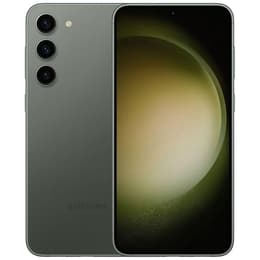


Galaxy S23+ • Unlocked vs Google Pixel 7 • Unlocked

Galaxy S23+ • Unlocked
Starting at

Refurbished price:$259.99

Versus $999.99 new

See options
Google Pixel 7 • Unlocked
Starting at

Refurbished price:$185.00

Versus $599.99 new

See options

Ratings

The Samsung Galaxy S23 Plus, released in February 2023, and the Google Pixel 7, launched in October 2022, are both prominent Android smartphones offering distinct user experiences. While the Galaxy S23 Plus emphasizes a refined hardware package and a versatile camera system, the Pixel 7 focuses on advanced computational photography and a streamlined software experience. Both devices run on the Android operating system, providing access to a vast ecosystem of applications and services.

Scores

Durability

When considering the long-term usability of these devices, their release timelines and software support policies are key factors.

  • Release Timeline: The Google Pixel 7 arrived in October 2022, preceding the Samsung Galaxy S23 Plus, which launched in February 2023. This difference in release date means the Galaxy S23 Plus benefits from a slightly newer hardware generation.
  • Software Longevity: Google typically provides several years of major Android version updates and security patches for its Pixel devices, with the Pixel 7 expected to receive approximately five years of security updates. Samsung also offers a robust update policy, with the Galaxy S23 Plus anticipated to receive multiple Android OS upgrades and extended security support.
  • Repairability: The Pixel 7 has been noted for its relative repairability, with some assessments giving it a score around 5.5 to 7 out of 10, indicating that it is somewhat easier to fix compared to some other modern smartphones. The Galaxy S23 Plus, while built with durable materials, generally aligns with industry standards for repair complexity.

Release Year

2023

2022

Last OS Compatibility

Yes

Yes

OS

Android

Android

Foldable

No

No

Performance

Both the Galaxy S23 Plus and the Pixel 7 deliver capable performance for daily tasks, though they approach it with different underlying architectures.

  • Everyday Responsiveness: The Galaxy S23 Plus handles demanding applications and multitasking smoothly, providing a fluid user experience even with intensive workloads. The Pixel 7 also offers reliable performance for everyday use, with apps opening quickly and smooth transitions between tasks.
  • Multitasking and Storage: The Galaxy S23 Plus comes with 8GB of RAM and offers storage options of 256GB or 512GB, utilizing UFS 4.0 for faster data access. The Pixel 7 also features 8GB of RAM and is available with 128GB or 256GB of storage.
  • Battery Behavior: The Galaxy S23 Plus is equipped with a 4700 mAh battery, which generally provides extended usage times, with some users reporting it lasting through a full day of heavy use. The Pixel 7 has a 4355 mAh battery, and its adaptive battery features aim to optimize power consumption, often allowing it to last over 24 hours on a single charge.

Memory (GB)

8 GB

8 GB

Screen quality

The visual experience on both devices is characterized by vibrant displays, though with some differences in technology and specifications.

  • Display Technology and Clarity: The Galaxy S23 Plus features a 6.6-inch Dynamic AMOLED 2X display, offering rich colors and deep blacks with an FHD+ resolution (2340 x 1080 pixels). The Pixel 7 has a 6.3-inch AMOLED display, also providing vibrant colors and deep blacks with an FHD+ resolution (2400 x 1080 pixels).
  • Brightness and Outdoor Visibility: The Galaxy S23 Plus boasts a high peak brightness of 1750 nits, ensuring excellent visibility even in bright outdoor conditions. The Pixel 7 offers a peak brightness of 1400 nits, which also provides good visibility outdoors.
  • Refresh Rate and Smoothness: The Galaxy S23 Plus features an adaptive refresh rate that can range from 48Hz to 120Hz, contributing to smooth scrolling and responsive interactions. The Pixel 7 has a 90Hz refresh rate, which provides a smooth experience for most content and navigation.

Resolution

1080 x 2340

1080 x 2400

Screen type

Dynamic AMOLED 2X

AMOLED

Audiovisual

Both smartphones offer advanced camera systems, leveraging both hardware and software to produce high-quality images and videos.

  • Rear Camera System: The Galaxy S23 Plus is equipped with a triple-camera setup: a 50MP main sensor with optical image stabilization (OIS), a 12MP ultrawide lens, and a 10MP telephoto lens capable of 3x optical zoom. The Pixel 7 features a dual-camera system with a 50MP main sensor (OIS) and a 12MP ultrawide lens.
  • Photography Performance: The Galaxy S23 Plus delivers detailed and vibrant photos across various lighting conditions, with its telephoto lens offering versatility for zoomed shots. The Pixel 7 is highly regarded for its computational photography, excelling in areas like low-light performance with its Night Sight mode and accurate color reproduction, particularly for skin tones.
  • Video Recording: The Galaxy S23 Plus supports video recording up to 8K at 30 frames per second, with improved video stabilization. The Pixel 7 records video at up to 4K at 60 frames per second and includes features like Cinematic Blur for creative effects.

Main camera

50 megapixels

50 megapixels

Front camera

12 megapixels

10.8 megapixels

Miscellaneous

Beyond core features, several practical elements differentiate the user experience of these two devices.

  • Connectivity: Both devices support 5G connectivity and Wi-Fi 6E for fast wireless internet. The Galaxy S23 Plus uses Bluetooth 5.3, while the Pixel 7 uses Bluetooth 5.2. Both include NFC for contactless payments.
  • Ports and Biometrics: Both smartphones feature a USB-C port for charging and data transfer, with the Galaxy S23 Plus supporting USB 3.2 and the Pixel 7 supporting USB 3.2. Neither device includes a traditional 3.5mm headphone jack. Both offer in-display fingerprint sensors for secure unlocking, and the Pixel 7 also includes face unlock.
  • Design and Handling: The Galaxy S23 Plus has dimensions of 157.8 x 76.2 x 7.6 mm and weighs 196g, featuring an Armor Aluminum frame and Gorilla Glass Victus 2 on both the front and back. The Pixel 7 measures 155.6 x 73.2 x 8.7 mm and weighs 197g, with Gorilla Glass Victus protecting its display and back. The Pixel 7's design includes a distinctive camera bar across the back.

Weight

7 oz

6 oz

Screen size (inches)

6.6

6.3

Network

5G

5G

SIM card

Physical SIM + eSIM

Physical SIM + eSIM

Carrier compatibility

Unlocked

Unlocked

User feedback for the Samsung Galaxy S23 Plus often highlights its robust performance, bright display, and versatile camera system, particularly praising its telephoto capabilities and improved battery life over previous models. Some users appreciate its refined design and the comprehensive feature set offered by Samsung's One UI. Criticisms sometimes point to the iterative nature of its upgrades compared to its predecessor, and some desire a higher refresh rate for the display to match the Ultra model.

The Google Pixel 7 receives frequent praise for its exceptional camera quality, especially in low-light conditions, and its clean, intuitive Android experience with timely software updates. Users also value its unique AI-driven features and overall system responsiveness. Common concerns include its 90Hz refresh rate, which some find less fluid than 120Hz displays on competing devices, and occasional reports of heating during intensive tasks.

Users prioritizing a comprehensive camera system with optical zoom and a very bright, adaptive refresh rate display may find the Galaxy S23 Plus well-suited to their needs. Those who value cutting-edge computational photography, a pure Android experience, and consistent software updates might lean towards the Pixel 7. Both devices offer a quality-assured refurbished option, providing an eco-friendly alternative for consumers seeking reliable technology. The choice ultimately depends on individual preferences for camera versatility versus computational prowess, and a slightly larger, brighter screen versus a more compact form factor with a focus on software intelligence.
See all articles

Our recent comparisons