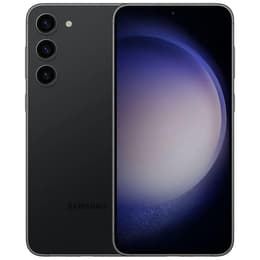
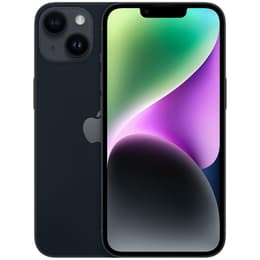
Galaxy S23+ • Unlocked vs iPhone 14 • Unlocked

Galaxy S23+ • Unlocked
Starting at

Refurbished price:$259.99

Versus $999.99 new

See options
iPhone 14 • Unlocked
Starting at

Refurbished price:$256.00

Versus $629.00 new

See options

Ratings

The Samsung Galaxy S23 Plus, released in February 2023, and the Apple iPhone 14, launched in September 2022, represent two distinct approaches to the premium smartphone experience. While both offer robust performance and advanced camera systems, they differ significantly in their operating systems, display technology, and overall design philosophy. The Galaxy S23 Plus runs on Android, providing extensive customization, whereas the iPhone 14 operates on Apple's iOS, known for its streamlined user experience and tight ecosystem integration.

Scores

Durability

When considering the long-term usability of these devices, several factors contribute to their expected practical lifespan, including software support and physical resilience.

  • Software Longevity: The Samsung Galaxy S23 Plus is expected to receive four years of major Android operating system updates and five years of security updates from its release date. The iPhone 14 typically receives iOS updates for approximately five to six years from its launch. [Example Output]
  • Physical Durability: Both devices feature robust construction. The Galaxy S23 Plus is protected by Gorilla Glass Victus 2 on both the front and back, encased in an Armor Aluminum frame. [9, 25] The iPhone 14 utilizes Apple's Ceramic Shield front cover and a glass back with an aluminum frame. [Example Output] Both models carry an IP68 rating for water and dust resistance, indicating they can withstand submersion in up to 6 meters of water for up to 30 minutes. [39]
  • Repairability: While specific repairability scores can vary, both manufacturers design their devices with certain repair considerations. Users seeking maximum software longevity will find the iPhone 14's extended update timeline beneficial, while the Galaxy S23 Plus offers a strong commitment to updates within the Android ecosystem.

Release Year

2023

2022

Last OS Compatibility

Yes

Yes

OS

Android

iOS

Foldable

No

No

Performance

The performance of a smartphone is crucial for daily tasks, from navigating applications to engaging in demanding multimedia activities. Both the Galaxy S23 Plus and the iPhone 14 deliver smooth and responsive experiences, though they achieve this with different internal architectures.

  • Processing Power: The Galaxy S23 Plus is equipped with a custom-tuned current-generation processor, designed specifically for Samsung devices, which provides enhanced CPU and GPU speeds. [1, 17, 29, 42, 44] This allows for efficient handling of demanding applications and multitasking. The iPhone 14 features a powerful processor from the previous year's Pro models, which still offers strong performance for everyday use and gaming. [18, 20, 36]
  • Multitasking and Responsiveness: The Galaxy S23 Plus comes with 8GB of RAM, contributing to smooth multitasking and quick app switching. [7, 19] The iPhone 14, with 6GB of RAM, also provides a fluid user experience within the iOS environment. [18, 20] Users of both devices generally report fast and snappy performance, with apps launching instantly and smooth navigation. [28, 41]
  • Battery Behavior: The Galaxy S23 Plus houses a 4700 mAh battery, with users frequently reporting it can last a full day, and sometimes even a day and a half, with moderate usage. [14, 25, 26, 28, 44] The iPhone 14 is noted for its efficient power management, with many users experiencing all-day battery life. [6, 27, 35]

Memory (GB)

8 GB

6 GB

Screen quality

The display is a primary interface for any smartphone, and both the Galaxy S23 Plus and iPhone 14 offer vibrant and clear viewing experiences, albeit with some key differences in technology and features.

  • Display Technology and Clarity: The Galaxy S23 Plus features a 6.6-inch Dynamic AMOLED 2X display, offering deep blacks, vibrant colors, and a resolution of 2340 x 1080 pixels, resulting in a pixel density of approximately 393 ppi. [1, 9, 12] The iPhone 14 sports a 6.1-inch Super Retina XDR OLED display with a resolution of 2532 x 1170 pixels, providing a pixel density of about 460 ppi. [2, 13, 21] Both displays support HDR content for enhanced contrast and color.
  • Refresh Rate and Smoothness: A notable difference lies in the refresh rate. The Galaxy S23 Plus boasts an adaptive refresh rate that can scale up to 120Hz, providing smoother scrolling and more fluid animations, particularly noticeable in fast-paced content and gaming. [1, 9, 12] The iPhone 14 maintains a standard 60Hz refresh rate. [2, 13, 20]
  • Brightness for Outdoor Use: Both devices offer excellent brightness levels for visibility in various lighting conditions. The Galaxy S23 Plus can reach a peak brightness of 1750 nits. [1, 12] The iPhone 14 has a typical brightness of 800 nits and can reach a peak of 1200 nits for HDR content. [2]

Resolution

1080 x 2340

1170 x 2532

Screen type

Dynamic AMOLED 2X

Super Retina XDR OLED

Audiovisual

Both smartphones offer capable camera systems designed to capture high-quality photos and videos, catering to different user preferences and photographic styles.

  • Rear Camera Systems: The Galaxy S23 Plus features a versatile triple-camera setup on the rear, including a 50MP wide-angle lens with optical image stabilization, a 12MP ultrawide lens with a 120-degree field of view, and a 10MP telephoto lens capable of 3x optical zoom. [1, 11, 12] This configuration allows for a range of photographic options, from expansive landscapes to detailed zoomed-in shots. The iPhone 14 comes with a dual-camera system, comprising a 12MP wide-angle lens with sensor-shift optical image stabilization and a 12MP ultrawide lens with a 120-degree field of view. [2, 3, 6]
  • Photography Features and Performance: The Galaxy S23 Plus includes features like Nightography for improved low-light performance and an AI Image Enhancer. [15] It can record video at up to 8K resolution at 30 frames per second. [11, 32] The iPhone 14 introduces features such as Photonic Engine for better low-light performance, Cinematic Mode for video with shallow depth of field, and Action Mode for stabilized video capture. [2, 3, 6] Its video recording capabilities extend to 4K HDR at 60 frames per second. [3]
  • Front-Facing Camera: For selfies and video calls, the Galaxy S23 Plus has a 12MP front camera. [12] The iPhone 14 also features a 12MP TrueDepth front camera, which includes autofocus for clearer self-portraits. [3, 6]

Main camera

50 megapixels

12 megapixels

Front camera

12 megapixels

12 megapixels

Miscellaneous

Beyond core features, several practical elements contribute to the overall user experience and daily convenience of these devices.

  • Connectivity and Ports: Both the Galaxy S23 Plus and the iPhone 14 support 5G connectivity for fast mobile data speeds. [20, 39] The Galaxy S23 Plus utilizes a USB-C port for charging and data transfer, offering broad compatibility with modern accessories. [39] The iPhone 14 continues to use Apple's proprietary Lightning port. [2, 21]
  • Biometric Security: The Galaxy S23 Plus incorporates an ultrasonic in-display fingerprint sensor for secure unlocking. [1] The iPhone 14 relies on Face ID, Apple's facial recognition system, for biometric authentication. [16, 27]
  • Design and Handling: The Galaxy S23 Plus has a 6.6-inch display, making it a larger device, while the iPhone 14 features a more compact 6.1-inch display. [2, 12] The choice between these sizes often comes down to personal preference for screen real estate versus one-handed usability. Both devices feature premium build materials, contributing to a solid in-hand feel.

Weight

7 oz

6 oz

Width

3,43 in

2.82 in

Height

6.6 in

5.78 in

Depth

0.3 in

0.31 in

Screen size (inches)

6.6

6.1

Network

5G

5G

SIM card

Physical SIM + eSIM

eSIM

Carrier compatibility

Unlocked

Unlocked

The Samsung Galaxy S23 Plus and the iPhone 14 each offer compelling features, catering to different user priorities. User feedback for the Galaxy S23 Plus often highlights its fast and smooth performance, excellent battery life, and the flexibility of the Android operating system with its extensive customization options. [14, 26, 28, 34] Some users have noted that its camera, while capable, can be less consistent in certain scenarios compared to some competitors, and post-processing might sometimes over-sharpen images. [26, 28, 31]

For the iPhone 14, users frequently praise its consistently smooth performance, reliable battery life, and the intuitive, polished experience of iOS. [16, 27, 35] Common criticisms include the 60Hz display, which some find less fluid than higher refresh rate screens, and the continued use of the Lightning port instead of USB-C. [13, 43] Some users have also reported minor cosmetic issues around the camera area over time. [16]

Users who prioritize a larger, high-refresh-rate display, extensive customization, and a versatile camera system with optical zoom may find the Galaxy S23 Plus well-suited to their needs. Conversely, users who value a compact design, a highly integrated ecosystem, and a strong focus on video features and consistent performance will likely lean towards the iPhone 14. Both devices represent quality choices, and for those considering a sustainable option, a quality-assured refurbished alternative can be an excellent eco-friendly choice.


See all articles

Our recent comparisons