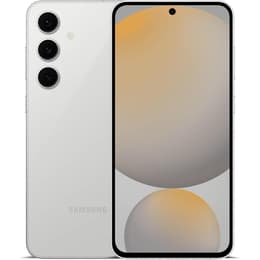
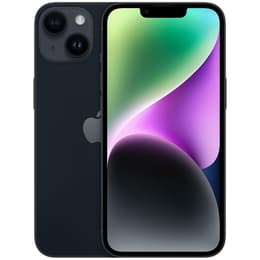
Galaxy S24 FE • Unlocked vs iPhone 14 • Locked Verizon

Galaxy S24 FE • Unlocked
Starting at

Refurbished price:$290.21

Versus $589.99 new

See options
iPhone 14 • Locked Verizon
Starting at

Refurbished price:$300.94

Versus $599.00 new

See options

Ratings

The Samsung Galaxy S24 FE, released in late 2024, and the Apple iPhone 14, launched in late 2022, represent distinct approaches to smartphone design and functionality. While both offer robust performance for daily tasks, they differ significantly in their operating systems, display technology, and camera capabilities. This comparison aims to highlight the practical distinctions between these two devices to assist users in making an informed decision based on their individual needs.

Scores

Durability

When considering the longevity of a smartphone, several factors come into play, including software support, physical durability, and ease of repair.

  • Software Support: The Galaxy S24 FE launched with Android 14 and is notable for Samsung's commitment to providing up to seven years of OS and security updates, extending its software lifespan significantly into the future. [5, 10] The iPhone 14, running iOS, typically receives major software updates for approximately five to six years from its release.
  • Physical Durability: The Galaxy S24 FE features Corning Victus glass and an aluminum frame, contributing to its overall resilience. [20] The iPhone 14 incorporates a Ceramic Shield front cover and a glass back within an aluminum design, offering a durable build. [4, 9] Both devices carry an IP68 rating for dust and water resistance. [9, 14]
  • Repairability: The iPhone 14 initially received a favorable repairability score from iFixit due to its internal redesign, making certain repairs more accessible. However, this score was later downgraded due to Apple's part-pairing procedures, which can complicate unauthorized repairs. [2, 3, 7, 13, 18] Information regarding the specific repairability score for the Galaxy S24 FE is not as widely detailed, but Samsung's commitment to extended support may imply better long-term parts availability.

Release Year

2024

2022

Last OS Compatibility

Yes

Yes

OS

Android

iOS

Foldable

No

No

Performance

The performance of a smartphone is influenced by its internal components, affecting everything from app loading times to multitasking efficiency and battery endurance.

  • Processing Power: The Galaxy S24 FE is equipped with an Exynos 2400e processor, designed to handle demanding applications and multitasking smoothly. [8, 17] The iPhone 14 utilizes the A15 Bionic chip, which provides responsive performance for everyday use and graphically intensive tasks. [12, 14, 15]
  • Multitasking and Storage: The Galaxy S24 FE comes with 8GB of RAM, supporting efficient multitasking across various applications. [1, 8] It offers storage options of 128GB, 256GB, and 512GB. [8] The iPhone 14 features 6GB of RAM, providing ample capacity for typical user workflows, and is available with 128GB, 256GB, or 512GB of internal storage. [4, 14, 15]
  • Battery Behavior: The Galaxy S24 FE houses a 4700mAh battery, supporting proprietary fast charging. [1, 8] The iPhone 14 has a 3279mAh battery, with user reports indicating it can last a full day for many, though some heavy users may find themselves charging more frequently. [15, 22, 24, 32]

Memory (GB)

8 GB

6 GB

Screen quality

The display is a primary interface for smartphone interaction, and both devices offer distinct visual experiences.

  • Display Technology and Size: The Galaxy S24 FE features a larger 6.7-inch Dynamic AMOLED 2X display with a 120 Hz refresh rate, providing a smooth visual experience, particularly during scrolling and gaming. [1, 6, 8] The iPhone 14 has a 6.1-inch Super Retina XDR OLED display with a standard 60 Hz refresh rate. [4, 12, 14]
  • Resolution and Clarity: The Galaxy S24 FE offers a resolution of 1080x2340 pixels (FHD+). [1, 6] The iPhone 14 provides a higher resolution of 2532x1170 pixels at 460 ppi, contributing to sharp text and detailed images. [4, 12, 14]
  • Brightness and Viewing: Both displays offer vibrant colors and deep blacks characteristic of OLED technology. The iPhone 14 can reach 800 nits typical brightness and 1200 nits peak brightness for HDR content. [4, 14] The Galaxy S24 FE's Dynamic AMOLED 2X display also offers good brightness, though some reports suggest its peak brightness is lower than the flagship S24 models. [17]

Resolution

1080 x 2340

1170 x 2532

Screen type

Dynamic AMOLED 2X

Super Retina XDR OLED

Audiovisual

Camera systems are a key differentiator, with both devices offering capabilities for capturing photos and videos in various conditions.

  • Rear Camera Systems: The Galaxy S24 FE features a versatile triple camera setup, including a 50-megapixel main sensor, a 12-megapixel ultrawide camera, and an 8-megapixel telephoto lens with 3x optical zoom. [1, 6, 17] This telephoto lens allows for clearer zoomed-in shots. The iPhone 14 has a dual-camera system with a 12-megapixel main camera and a 12-megapixel ultrawide camera. [4, 12]
  • Photography Performance: The Galaxy S24 FE's larger main sensor and telephoto lens contribute to detailed images and improved zoom capabilities. [17] The iPhone 14's camera system, enhanced by its Photonic Engine, delivers strong performance in various lighting conditions, with good detail and color accuracy, particularly in everyday photography. [12, 27, 30]
  • Video Recording: Both devices are capable of high-quality video recording. The Galaxy S24 FE supports UHD 8K video recording at 30fps. [6] The iPhone 14 offers 4K Dolby Vision video recording at up to 60fps and features like Cinematic mode for depth-of-field effects and Action mode for stabilized video. [4, 12, 15]
  • Front Camera: The Galaxy S24 FE has a 10-megapixel front camera. [6] The iPhone 14 features a 12-megapixel TrueDepth front camera with autofocus, enhancing selfie quality and video calls. [4, 12]

Main camera

50 megapixels

12 megapixels

Front camera

10 megapixels

12 megapixels

Miscellaneous

Beyond core specifications, several practical features contribute to the overall user experience and device utility.

  • Connectivity: Both the Galaxy S24 FE and iPhone 14 support 5G connectivity for fast mobile data. [4, 6] The Galaxy S24 FE includes Wi-Fi 6E and Bluetooth 5.3. [8] The iPhone 14 supports Wi-Fi 6 and Bluetooth 5.3. [4]
  • Ports and Biometrics: The Galaxy S24 FE utilizes a USB-C port for charging and data transfer and features an in-display fingerprint sensor for secure unlocking. [8, 17] The iPhone 14 uses a Lightning port and relies on Face ID for biometric authentication. [4, 12]
  • Design and Handling: The Galaxy S24 FE has dimensions of 162 x 77.3 x 8 mm and weighs 213g. [8] The iPhone 14 measures 146.7 x 71.5 x 7.80 mm and weighs 172 grams, offering a more compact and lighter form factor. [4]

Weight

7 oz

6 oz

Width

3.04 in

2.82 in

Height

6.3 in

5.78 in

Depth

0.3 in

0.31 in

Screen size (inches)

6.7

6.1

Network

5G

5G

SIM card

Physical SIM

eSIM

Carrier compatibility

Unlocked

Verizon

The Samsung Galaxy S24 FE and iPhone 14 cater to users with differing priorities and preferences. User feedback for the iPhone 14 often praises its consistent performance, intuitive iOS experience, and capable camera system, particularly for general photography and video. [21, 23, 25, 31] Some common criticisms include its 60Hz display and the continued use of the Lightning port. [29] For the Galaxy S24 FE, initial reception highlights its long-term software support, versatile camera with optical zoom, and vibrant 120Hz display. [10, 17, 20]

Users prioritizing a smoother display experience, a telephoto camera with optical zoom, and extended software support may find the Galaxy S24 FE well-suited to their needs. Its larger screen also offers a more expansive viewing area. Conversely, users who prefer the iOS ecosystem, a more compact device, and robust video features might lean towards the iPhone 14. Its established performance and strong integration within the Apple ecosystem remain key attractions. Both devices offer a quality smartphone experience, and considering refurbished options for either model can provide an eco-friendly and quality-assured alternative for consumers.


See all articles

Our recent comparisons