
Galaxy S25 Ultra • Unlocked vs Google Pixel Fold • Unlocked

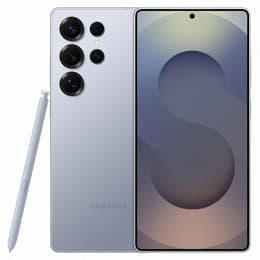
Galaxy S25 Ultra • Unlocked
Starting at

Refurbished price:$749.99

Versus $1,299.00 new

See options
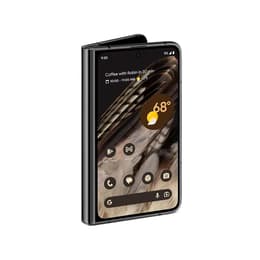
Google Pixel Fold • Unlocked
Starting at

Refurbished price:$590.00

Versus $1,799.00 new

See options

Ratings

The Samsung Galaxy S25 Ultra, released in February 2025, represents a traditional flagship smartphone experience, while the Google Pixel Fold, launched in June 2023, offers a distinct foldable design. These devices cater to different user preferences, with the Galaxy S25 Ultra focusing on cutting-edge performance and an advanced camera system in a conventional form factor, and the Pixel Fold prioritizing a versatile, expansive screen experience through its unique folding mechanism. Both run on the Android operating system, but offer different interpretations of the software experience.

Scores

Durability

The expected practical lifespan of a smartphone is influenced by its build quality, software support, and the longevity of its components. The Galaxy S25 Ultra, being a newer device, benefits from a more extended support window compared to the Pixel Fold.

  • Release Timeline and Software Support: The Galaxy S25 Ultra, released in early 2025, is expected to receive software updates for a longer duration than the Pixel Fold, which launched in mid-2023. Google has committed to five years of OS and security updates for the Pixel Fold, extending its support until June 2028. Samsung typically offers a similar long-term support for its flagship devices, meaning the S25 Ultra will likely receive updates for several years beyond the Pixel Fold's cutoff.
  • Physical Durability: The Galaxy S25 Ultra features Gorilla Glass Armor 2 on its front display and a titanium frame, contributing to its robust build. While some tests suggest a trade-off in scratch resistance for improved drop resistance compared to its predecessor, it maintains an IP68 rating for dust and water resistance. The Pixel Fold, with its innovative folding design, uses Gorilla Glass Victus for its cover screen and Ultra Thin Glass for its inner, foldable display. Early durability assessments for the Pixel Fold indicated that while its hinge was considered robust, the internal screen and overall frame showed some fragility under stress.
  • Repairability: Both devices are complex pieces of technology, and repairability can vary. The S25 Ultra has shown high scores for repairability, which can contribute to a longer practical lifespan. The Pixel Fold's unique design, particularly its hinge and foldable screen, may present different challenges for repairs.

Release Year

2025

2023

Last OS Compatibility

Yes

Yes

OS

Android

Android

Foldable

No

Yes

Performance

Performance in both devices is driven by their respective processors, influencing everything from app responsiveness to gaming capabilities and multitasking efficiency.

  • Processor Capabilities: The Galaxy S25 Ultra is equipped with a current-generation flagship processor, designed to handle demanding applications and intensive multitasking with ease. This results in smooth operation, quick app loading times, and efficient processing for complex tasks like advanced AI features and computational photography. The Pixel Fold utilizes a previous-generation processor, which provides a capable experience for daily tasks, web browsing, and general app usage. While it performs well in everyday scenarios, it may not match the raw processing power of the newer chip found in the S25 Ultra, particularly in highly demanding applications or gaming.
  • Multitasking and Responsiveness: Both devices come with 12GB of RAM, allowing for efficient multitasking. The S25 Ultra's more powerful processor ensures that switching between numerous applications and running multiple demanding processes simultaneously remains fluid and responsive. The Pixel Fold also handles multitasking effectively, especially with its larger internal display, though the overall system responsiveness for very heavy workloads might be slightly less immediate compared to the S25 Ultra due to its older processor.
  • Battery Behavior: The Galaxy S25 Ultra features a 5000 mAh battery, offering extended usage times, with tests showing over 17 hours of continuous use in adaptive display mode. The Pixel Fold has a 4821 mAh battery, and its battery life has been noted to be around 8 hours in some tests, which is less than the S25 Ultra. This difference suggests that the S25 Ultra is better suited for users who require longer periods away from a charger.

Memory (GB)

12 GB

12 GB

Screen quality

The display experience is a primary differentiator, with the Galaxy S25 Ultra offering a premium traditional screen and the Pixel Fold providing a versatile dual-screen foldable setup.

  • Display Technology and Clarity: The Galaxy S25 Ultra features a 6.9-inch Dynamic LTPO AMOLED 2X display with a high resolution of 3120x1440 pixels, delivering sharp images and vibrant colors. The Pixel Fold offers a 5.8-inch OLED cover display and a larger 7.6-inch foldable OLED inner display, both providing good clarity and color reproduction. The inner display's resolution is 1840x2208 pixels.
  • Brightness and Refresh Rate: Both devices offer a 120Hz refresh rate for smooth scrolling and animations. The S25 Ultra's display can reach a peak brightness of 2600 nits, making it highly visible in bright outdoor conditions. The Pixel Fold's cover display reaches up to 1550 nits peak brightness, and its inner display up to 1450 nits, which are also bright enough for most environments.
  • Screen Size and Viewing Experience: The S25 Ultra provides a large, immersive single-screen experience. The Pixel Fold's main advantage is its ability to unfold into a tablet-like display, offering significantly more screen real estate for multitasking, media consumption, and productivity. The wider aspect ratio of the Pixel Fold's cover screen also makes it more usable as a traditional smartphone when folded.

Resolution

1440x3120

1840 x 2208

Screen type

Dynamic LTPO AMOLED 2X

Foldable OLED

Audiovisual

Both smartphones offer advanced camera systems, but they approach photography with different hardware configurations and software philosophies.

  • Rear Camera Systems: The Galaxy S25 Ultra boasts a versatile quad-camera setup, including a 200MP main sensor, a 50MP ultrawide, a 10MP telephoto with 3x optical zoom, and a 50MP periscope telephoto with 5x optical zoom. This system provides extensive zoom capabilities and high-resolution imaging. The Pixel Fold features a triple rear camera system with a 48MP main sensor, a 10.8MP ultrawide, and a 10.8MP telephoto with 5x optical zoom.
  • Photography Performance: The S25 Ultra's camera system, enhanced by its ProVisual Engine and AI imaging, excels in capturing detailed images across various lighting conditions, including low light, and offers advanced features like Expert RAW mode. The Pixel Fold leverages Google's computational photography strengths, offering features like Real Tone for accurate skin tones and Night Sight for impressive low-light performance, often producing pleasing results even with slightly less powerful hardware.
  • Video Recording and Front Cameras: The S25 Ultra supports 8K video recording at 30fps and has a 12MP front-facing camera with autofocus. The Pixel Fold records video at up to 4K 60fps and includes two front cameras: a 9.5MP on the cover screen and an 8MP on the inner display, allowing for flexible selfie options, including using the main rear cameras for high-quality selfies.

Miscellaneous

Beyond the core specifications, several practical elements contribute to the overall user experience and daily usability of these devices.

  • Connectivity and Ports: Both devices support modern connectivity standards, including 5G and advanced Wi-Fi. The Galaxy S25 Ultra features a USB-C port and supports various Bluetooth standards. The Pixel Fold also uses a USB-C port for charging and data transfer.
  • Biometric Security: The Galaxy S25 Ultra typically includes an in-display fingerprint sensor and facial recognition for secure unlocking. The Pixel Fold features a side-mounted fingerprint reader, which some users find faster and more convenient, alongside facial recognition.
  • Design and Handling: The S25 Ultra is a large, premium slab phone with a titanium frame, weighing around 218g. Its design is refined for comfortable handling despite its size. The Pixel Fold, when folded, is thicker but has a wider aspect ratio for its cover screen, making it feel more like a traditional phone. When unfolded, it offers a thin, expansive display. Its weight is around 283g, making it heavier than the S25 Ultra.

Weight

8 oz

7 oz

Screen size (inches)

6.9

7.6

Network

5G

5G

SIM card

Physical SIM + eSIM

Physical SIM + eSIM

Carrier compatibility

Unlocked

Unlocked

Connector

USB-C

USB-C

The Samsung Galaxy S25 Ultra and Google Pixel Fold offer distinct smartphone experiences, each with its own set of advantages tailored to different user needs. Users often praise the S25 Ultra for its powerful performance, long-lasting battery, and highly versatile camera system, particularly its zoom capabilities. Its traditional form factor and robust build are also frequently highlighted as strong points. Some users, however, might find its size substantial.

The Pixel Fold is often lauded for its innovative foldable design, which provides a large, immersive inner display for productivity and media consumption. Its pure Android experience and computational photography prowess are also common points of praise. Criticisms sometimes revolve around its durability concerns, particularly regarding the inner screen and hinge, and its battery life compared to traditional flagships.

Users prioritizing a cutting-edge, high-performance device with a top-tier camera system and extended battery life in a conventional, durable form factor will find the Galaxy S25 Ultra well-suited to their needs. Conversely, users who value an expansive, versatile screen for multitasking and media, coupled with Google's software experience and computational photography, may lean towards the Pixel Fold, understanding the trade-offs inherent in a foldable design. Both devices represent premium options in the Android ecosystem, and considering a quality-assured refurbished option for either can be a sustainable choice for consumers.

See all articles

Our recent comparisons