
Galaxy S25 • Unlocked vs Galaxy S25+ • Unlocked

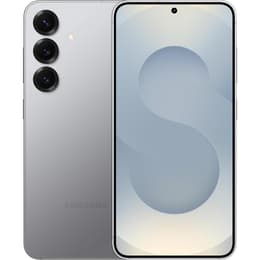
Galaxy S25 • Unlocked
Starting at

Refurbished price:$425.00

Versus $1,299.00 new

See options
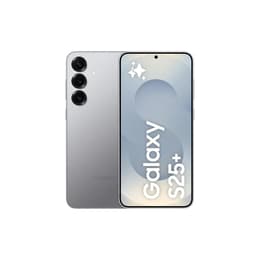
Galaxy S25+ • Unlocked
Starting at

Refurbished price:$570.79

Versus $999.99 new

See options

Ratings

The Samsung Galaxy S25 and Galaxy S25 Plus, both released in February 2025, represent Samsung's core flagship smartphone offerings. While sharing a common operating system and many internal components, the primary distinctions lie in their physical dimensions, display resolution, and battery capacities. Both devices run on Android 15 with Samsung's One UI 7, providing a consistent software experience across the line.

Scores

Durability

When considering the long-term usability of these devices, both the Galaxy S25 and S25 Plus offer substantial longevity through software support and robust build quality.

  • Software Updates: Both models are part of Samsung's commitment to providing up to seven years of operating system updates and security patches, ensuring they remain current and secure well into the future. This extended support duration means users can expect a practical lifespan that exceeds many other smartphones on the market.
  • Physical Durability: Both the Galaxy S25 and S25 Plus feature an aluminum frame and are protected by Gorilla Glass Victus 2 on both the front and back, offering a good level of resistance against drops and scratches. They also carry an IP68 rating for dust and water resistance, indicating protection against immersion in water.
  • Repairability: While specific repairability scores for the S25 and S25 Plus are not widely detailed, the broader S25 series has shown improvements in ease of repair compared to previous generations, suggesting a more accessible path for component replacement if needed.

Release Year

2025

2025

Last OS Compatibility

Yes

No

OS

Android

Android

Foldable

No

No

Performance

Both the Galaxy S25 and S25 Plus are equipped with the same core processing power, delivering a consistent experience in handling demanding applications and multitasking.

  • Processing Capabilities: Both devices are powered by a current-generation, custom-tuned processor designed for the Galaxy series. This hardware enables smooth operation for everyday tasks, from browsing and social media to more intensive activities like high-fidelity mobile gaming and video editing. Users will experience quick app loading times and fluid transitions between applications.
  • Multitasking and Responsiveness: Each model comes with 12GB of RAM as standard, facilitating efficient multitasking and ensuring that multiple applications can run simultaneously without significant slowdowns. The integrated graphics processing unit also contributes to responsive visuals and enhanced performance in graphically intensive applications.
  • Storage Options: The Galaxy S25 offers storage configurations of 128GB, 256GB, and 512GB. The Galaxy S25 Plus starts with a higher base storage, available in 256GB and 512GB variants. Both utilize fast storage technology, contributing to overall system responsiveness.

Memory (GB)

12 GB

12 GB

Screen quality

The display experience on the Galaxy S25 and S25 Plus shares many premium characteristics, though they differ in size and resolution, impacting the overall viewing experience.

  • Display Technology and Brightness: Both smartphones feature a Dynamic LTPO AMOLED 2X display with HDR10+ support and an adaptive refresh rate that can scale from 1Hz to 120Hz, providing smooth visuals and efficient power consumption. Both displays can reach a peak brightness of 2600 nits, ensuring good visibility even in bright outdoor conditions.
  • Size and Resolution: The Galaxy S25 features a 6.2-inch display with a 2340 x 1080 pixel (FHD+) resolution, resulting in a pixel density of approximately 416 pixels per inch (ppi). The Galaxy S25 Plus offers a larger 6.7-inch display with a higher 3120 x 1440 pixel (QHD+) resolution, yielding a sharper pixel density of around 513 ppi.
  • Clarity and Viewing Experience: The higher resolution and larger screen of the S25 Plus provide a more expansive and detailed viewing area, which can be particularly noticeable when consuming high-resolution media or engaging in productivity tasks. The S25 Plus also includes a ProScaler feature, designed to enhance lower-resolution content by upscaling it to its native QHD+ resolution, improving visual consistency.

Resolution

1080x2340

1440x3120

Screen type

Dynamic LTPO AMOLED 2X

Dynamic LTPO AMOLED 2X

Audiovisual

The camera systems on the Galaxy S25 and S25 Plus are identical, offering a versatile setup for various photography and videography needs.

  • Rear Camera System: Both devices are equipped with a triple-camera array on the rear. This includes a 50 MP wide-angle main camera with optical image stabilization (OIS) and phase-detection autofocus (PDAF), a 12 MP ultra-wide camera with a 120-degree field of view, and a 10 MP telephoto camera capable of 3x optical zoom, also featuring OIS and PDAF. This configuration allows for flexibility in capturing different perspectives, from expansive landscapes to detailed zoomed-in shots.
  • Photography and Video Features: Both models benefit from Samsung's ProVisual Engine, an AI-driven imaging system that enhances adaptive scene optimization, reduces noise, and improves color reproduction, particularly in challenging lighting conditions. They can record video at up to 8K resolution at 30 frames per second and include a Super Steady video mode for enhanced stabilization. The front-facing camera on both is a 12 MP sensor with autofocus, suitable for selfies and video calls.
  • Audio Experience: While specific microphone and speaker details are not extensively highlighted as differentiators, both devices are designed to provide clear audio for calls and a capable output for media consumption, consistent with flagship smartphone standards.

Miscellaneous

Beyond their core functionalities, several practical elements differentiate the user experience between the Galaxy S25 and S25 Plus, primarily related to their physical form and power management.

  • Dimensions and Handling: The Galaxy S25 is the more compact option, measuring 146.9 x 70.5 x 7.2 mm and weighing 162 g, making it easier for one-handed use and pocketability. The Galaxy S25 Plus is larger, with dimensions of 158.4 x 75.8 x 7.3 mm and a weight of 190 g, offering a more substantial feel in hand.
  • Battery Capacity and Charging: The S25 houses a 4000 mAh battery, supporting 25W wired charging. The S25 Plus features a larger 4900 mAh battery and supports faster 45W wired charging, allowing for quicker replenishment of its greater capacity. Both models support 15W wireless charging and 4.5W reverse wireless charging.
  • Connectivity and Sensors: Both devices offer modern connectivity options, including 5G, Wi-Fi 7, and Bluetooth 5.4. They both feature a USB Type-C port for charging and data transfer and an ultrasonic in-screen fingerprint sensor for secure authentication.

Weight

8 oz

7 oz

Screen size (inches)

6.2

6.7

Network

5G

5G

SIM card

Physical SIM + eSIM

Physical SIM + eSIM

Carrier compatibility

Unlocked

Unlocked

User feedback and expert reviews indicate that both the Galaxy S25 and S25 Plus are well-regarded for their strong performance and comprehensive software support. Common praise points for both models include their smooth operation, vibrant displays, and the long-term commitment to software updates. The inclusion of a custom-tuned processor ensures that demanding applications and multitasking are handled efficiently across both devices.

However, some users have noted that the camera hardware, while capable, represents an incremental update from previous generations. The Galaxy S25 Plus, in particular, has been highlighted as a 'sweet spot' in the lineup, offering a larger, higher-resolution display and a more substantial battery compared to the standard S25, without the increased size of the Ultra model. The standard S25 is often praised for its more compact form factor, making it a preferred choice for those who prioritize portability.

Users prioritizing a larger screen for media consumption and a longer battery life with faster charging capabilities may find the Galaxy S25 Plus better suited to their needs. Conversely, individuals who prefer a more compact device that is easier to handle with one hand and carry in a pocket will likely lean towards the standard Galaxy S25. Both devices offer a premium Android experience, and choosing between them largely comes down to personal preference regarding size, display resolution, and battery endurance. For those considering a sustainable choice, quality-assured refurbished options for both models are available, providing an eco-friendly alternative.


See all articles

Our recent comparisons