Galaxy S25 • Unlocked vs Galaxy Z Fold6 • Unlocked

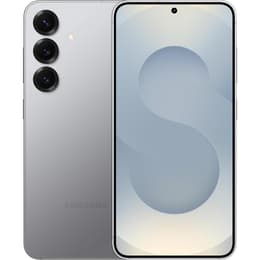
Galaxy S25 • Unlocked
Starting at

Refurbished price:$409.00

Versus $899.00 new

See options
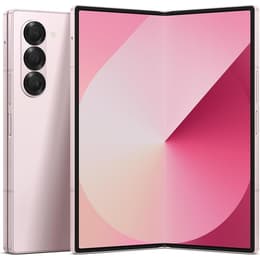
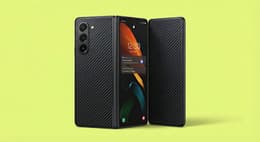
Galaxy Z Fold6 • Unlocked
Starting at

Refurbished price:$549.99

Versus $1,499.00 new

See options

Ratings

The Samsung Galaxy S25, released in February 2025, represents a traditional flagship smartphone experience, while the Samsung Galaxy Z Fold6, launched in July 2024, offers a unique foldable design. These devices cater to different user preferences, primarily distinguished by their form factor and display configurations. Both run on the Android operating system with Samsung's One UI, providing a consistent software experience, but their hardware designs lead to distinct practical applications.

Scores

Durability

When considering the long-term usability of these devices, both Samsung models offer substantial software support, a key factor in their practical lifespan.

  • Release Timeline and OS Support: The Galaxy S25, being a 2025 release, benefits from Samsung's commitment to seven years of major Android OS upgrades and security updates, extending its support until 2032. The Galaxy Z Fold6, released in 2024, also receives seven years of software upgrades, ensuring it remains current for an extended period.
  • Physical Durability: The Galaxy S25 features a robust build with Gorilla Glass Victus 2 on both the front and back, encased in an aluminum frame, and boasts an IP68 rating for dust and water resistance. The Galaxy Z Fold6, with its complex foldable design, uses Gorilla Glass Victus on its cover screen and has an IP48 rating, indicating water resistance but less protection against dust compared to the S25. The foldable display itself has a plastic front, and while the hinge system has seen improvements, the crease remains a characteristic of the design.
  • Expected Practical Lifespan: Both devices are designed for extended use, with their long software support ensuring access to new features and security patches. The S25's traditional form factor may offer a more straightforward long-term physical durability, while the Z Fold6's innovative design requires careful handling, particularly regarding its folding screen and hinge mechanism.

Release Year

2025

2024

Last OS Compatibility

Yes

Yes

OS

Android

Android

Foldable

No

Yes

Performance

Both the Galaxy S25 and Galaxy Z Fold6 are equipped with high-performance processors, delivering smooth operation for demanding tasks, though their power management differs due to their distinct designs.

  • Processing Power: The Galaxy S25 is powered by the Snapdragon 8 Elite chipset, a 3nm processor designed for efficient and powerful performance across all global variants. The Galaxy Z Fold6 utilizes the Qualcomm Snapdragon 8 Gen 3 for Galaxy processor. Both chipsets enable responsive app loading, seamless multitasking, and smooth gaming experiences, handling resource-intensive applications with ease.
  • Memory and Storage: The Galaxy S25 comes with 12GB of RAM across all models, with storage options starting at 128GB and going up to 512GB. The Galaxy Z Fold6 also features 12GB of LPDDR5X RAM and offers storage configurations up to 1TB. These memory configurations ensure efficient multitasking and ample space for applications and media.
  • Battery Behavior: The Galaxy S25 houses a 4000 mAh battery. The Galaxy Z Fold6 is equipped with a larger 4400 mAh battery, split into two cells. Despite the larger capacity, the Z Fold6 powers two displays, and user reports indicate its battery life is comparable to or slightly less than its predecessor, averaging around 10 hours and 35 minutes in some tests. The S25, with its single display, generally offers a full day of use for most users.

Memory (GB)

12 GB

12 GB

Screen quality

The display experience is a primary differentiator between these two devices, with the S25 offering a traditional premium screen and the Z Fold6 providing a versatile dual-screen setup.

  • Display Technology and Clarity: The Galaxy S25 features a 6.2-inch Dynamic LTPO AMOLED 2X display with a resolution of 2340 x 1080 pixels, delivering sharp visuals and vibrant colors. The Galaxy Z Fold6 offers a 6.3-inch Dynamic AMOLED 2X cover display and a larger 7.6-inch foldable Dynamic AMOLED 2X main display, both providing high resolution and clarity for their respective sizes.
  • Brightness and Refresh Rate: Both devices boast a 120Hz adaptive refresh rate for smooth scrolling and responsiveness, and both displays can reach a peak brightness of up to 2600 nits, ensuring good visibility even in bright outdoor conditions.
  • Viewing Experience: The S25 provides a consistent, high-quality viewing experience on a single, flat screen. The Z Fold6 offers the flexibility of a compact cover screen for quick interactions and a large, immersive inner screen for media consumption, productivity, and gaming. The crease on the foldable display is still present but has become less noticeable with each generation.

Resolution

1080x2340

1856 x 2160

Screen type

Dynamic LTPO AMOLED 2X

Foldable Dynamic LTPO AMOLED 2X

Audiovisual

Both smartphones offer capable camera systems, but their design philosophies lead to different strengths and user experiences in photography and videography.

  • Rear Camera Systems: The Galaxy S25 features a triple rear camera setup with a 50 MP main wide-angle lens, a 12 MP ultra-wide lens, and a 10 MP telephoto lens with 3x optical zoom. The Galaxy Z Fold6 also has a triple rear camera system, including a 50 MP wide-angle main lens, a 12 MP ultra-wide lens, and a 10 MP telephoto lens with 3x optical zoom.
  • Photography Performance: The S25's main camera performs well in daylight, producing natural colors and balanced dynamic range, with good portrait shots. Its ultra-wide camera is considered average, particularly in low light. The Z Fold6's camera system is noted for its ability to capture vibrant scenery with good dynamic range and detail, and it excels in selfies and landscape photography. While competent in most situations, some users note that its low-light performance, especially with the ultra-wide lens, can be noisy, and its overall camera capabilities are often seen as a compromise compared to the S series.
  • Video and Front Cameras: Both devices offer smooth and stable 4K video recording. The S25 has a 12 MP front camera. The Z Fold6 includes a 10 MP front-facing camera on its cover screen and a 4 MP under-display camera on the main foldable screen, which is primarily for video calls and facial recognition.

Miscellaneous

Beyond the core features, several practical elements contribute to the overall user experience and differentiate these two Samsung devices.

  • Connectivity and Ports: Both the Galaxy S25 and Galaxy Z Fold6 support 5G connectivity, along with modern Wi-Fi standards (Wi-Fi 7 for S25, Wi-Fi 6E for Z Fold6) and Bluetooth 5.4, ensuring fast and reliable wireless connections. Both devices utilize a USB-C port for charging and data transfer, and neither includes a traditional headphone jack.
  • Biometrics and Stylus Support: Both smartphones feature an ultrasonic in-screen fingerprint sensor for secure unlocking. The Galaxy Z Fold6 supports S Pen input, offering enhanced productivity and creative possibilities on its large inner display, though it does not have a built-in slot for the stylus. The S25 does not offer S Pen support.
  • Physical Characteristics: The Galaxy S25 is a more compact device, weighing 162g with dimensions of 146.9 x 70.5 x 7.2 mm. The Galaxy Z Fold6 is heavier at 239g and has different dimensions when folded (153.5 x 68.1 x 12.1 mm) and unfolded (153.5 x 132.6 x 5.6 mm), offering a larger screen in a thicker, but still manageable, form factor. The Z Fold6's wider cover screen is noted for improved usability compared to previous foldable generations.

Weight

6 oz

8 oz

Screen size (inches)

6.2

7.6

Network

5G

5G

SIM card

Physical SIM + eSIM

Physical SIM + eSIM

Carrier compatibility

Unlocked

Unlocked

The Samsung Galaxy S25 and Galaxy Z Fold6 cater to distinct user needs, primarily defined by their form factors. User sentiment often praises the Galaxy S25 for its consistent performance, robust build, and reliable camera system, making it a strong choice for those seeking a traditional, high-end smartphone experience. Some common criticisms for the S25 revolve around its camera not always being a significant leap from previous generations, with the ultra-wide camera sometimes struggling in low light.

The Galaxy Z Fold6, on the other hand, is frequently lauded for its innovative foldable design, offering the versatility of a compact phone and a large tablet-like display. Users appreciate the enhanced productivity and immersive viewing experience provided by the inner screen, along with its improved hinge and wider cover display. However, common concerns for the Z Fold6 include its battery life, which, despite a larger capacity, can be challenged by powering two displays, and its camera system, while good for a foldable, is often considered a step below the S series in overall quality, particularly in challenging lighting conditions.

Users prioritizing a compact, durable device with a consistently strong camera and extended software support will find the Galaxy S25 well-suited to their needs. Those who value a large, adaptable screen for multitasking, media consumption, and a unique user experience, and are willing to manage the specific durability considerations of a foldable device, may lean toward the Galaxy Z Fold6. Both devices represent quality options within the Android ecosystem, and considering a quality-assured refurbished option for either model can be a sustainable choice for consumers.

See all articles

Our recent comparisons