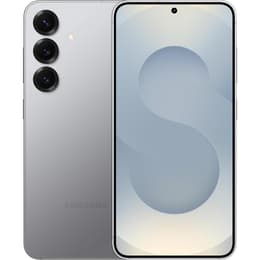

Galaxy S25 • Unlocked vs Google Pixel 7a • Unlocked

Galaxy S25 • Unlocked
Starting at

Refurbished price:$409.00

Versus $899.00 new

See options
Google Pixel 7a • Unlocked
Starting at

Refurbished price:$163.00

Versus $899.99 new

See options

Ratings

The Samsung Galaxy S25, released in early 2025, and the Google Pixel 7a, launched in May 2023, represent distinct approaches to the smartphone experience. While the Galaxy S25 is a recent flagship device, the Pixel 7a offers a compelling set of features in the upper-midrange segment. The primary differentiators between these two Android smartphones lie in their release timelines, processing power, and camera versatility, catering to different user priorities.

Scores

Durability

The expected practical lifespan of a smartphone is significantly influenced by its release date and the manufacturer's commitment to software updates and physical durability.

  • Release Timeline and Software Support: The Galaxy S25, released in February 2025, benefits from a more extended software support period, with Samsung promising seven years of operating system and security updates, likely extending support until 2032. In contrast, the Pixel 7a, launched in May 2023, is expected to receive five years of major OS upgrades and security updates, with support anticipated until May 2028. This difference means the Galaxy S25 offers a longer period of official software longevity.
  • Build Materials and Durability: The Galaxy S25 features a premium construction with an aluminum body and Gorilla Glass Victus 2 on both the front display and rear glass panel, contributing to enhanced scratch and drop resistance. It also carries a high IP rating for dust and water resistance, typically IP68. The Pixel 7a utilizes an aluminum frame with a thermoformed plastic back and Corning Gorilla Glass 3 for its display, offering a good level of protection with an IP67 rating for dust and water resistance.
  • Repairability: While specific repairability scores can vary, both devices are designed with modern smartphone construction, where professional repair is generally recommended for significant damage. The choice of materials and internal design can influence the ease and cost of repairs.

Release Year

2025

2023

Last OS Compatibility

Yes

Yes

OS

Android

Android

Foldable

No

No

Performance

Performance is a key area where these two devices diverge, primarily due to their different release cycles and target segments, impacting how they handle demanding applications and multitasking.

  • Processing Power: The Galaxy S25 is equipped with a current-generation flagship processor, the Snapdragon 8 Elite, which provides substantial power for intensive tasks, advanced gaming, and efficient handling of complex AI features. The Pixel 7a, powered by the Google Tensor G2, offers smooth and fluid performance for daily tasks, including mobile gaming, app scrolling, and photography, performing comparably to other devices in its segment. Users engaging in highly demanding applications or graphic-intensive games will likely experience more consistent and higher performance on the Galaxy S25.
  • Multitasking and Responsiveness: The Galaxy S25 typically comes with 12GB of RAM, providing ample capacity for seamless multitasking and keeping numerous applications open in the background without slowdowns. The Pixel 7a includes 8GB of RAM, which is sufficient for most users' multitasking needs, allowing for smooth transitions between apps. Both devices offer responsive user interfaces, but the Galaxy S25's newer processor and higher RAM capacity provide more headroom for future software updates and increasingly demanding applications.
  • Storage Options: The Galaxy S25 is available with storage options of 128GB and 256GB. The Pixel 7a comes with 128GB of non-expandable UFS 3.1 internal storage.

Memory (GB)

12 GB

8 GB

Screen quality

The visual experience on a smartphone is largely defined by its display, and both devices offer vibrant screens, though with notable differences in technology and capabilities.

  • Display Technology and Clarity: The Galaxy S25 features a 6.2-inch Dynamic LTPO AMOLED 2X display, known for its vibrant colors, deep blacks, and excellent contrast. It offers a Full HD+ resolution (2340 x 1080 pixels), resulting in sharp and clear visuals. The Pixel 7a sports a 6.1-inch OLED display with a Full HD+ resolution (2400 x 1080 pixels), providing rich colors and good clarity for everyday viewing.
  • Refresh Rate and Brightness: The Galaxy S25 boasts an adaptive 120Hz refresh rate, which contributes to smoother scrolling and more fluid animations, and can reach a peak brightness of 2600 nits, ensuring excellent visibility even in bright outdoor conditions. The Pixel 7a offers a 90Hz refresh rate, providing a noticeably smoother experience than standard 60Hz displays, and its display offers good brightness for various lighting environments.
  • Screen Size and Viewing Experience: With a 6.2-inch display, the Galaxy S25 offers a slightly larger viewing area compared to the Pixel 7a's 6.1-inch screen. Both sizes are generally comfortable for one-handed use, with the Galaxy S25 providing a marginally more expansive canvas for media consumption and productivity.

Resolution

1080x2340

1080 x 2400

Screen type

Dynamic LTPO AMOLED 2X

OLED

Audiovisual

Both the Galaxy S25 and Pixel 7a are capable photography tools, but they approach imaging with different hardware configurations and software philosophies.

  • Rear Camera Systems: The Galaxy S25 features a versatile triple-camera setup on the rear, including a 50MP wide-angle main camera with optical image stabilization (OIS), a 12MP ultra-wide camera with a 120-degree field of view, and a 10MP telephoto lens offering 3x optical zoom and OIS. This configuration provides flexibility for various shooting scenarios, including distant subjects. The Pixel 7a comes with a dual-camera system, comprising a 64MP wide-angle main camera with OIS and a 13MP ultrawide camera with a 120-degree field of view. While it lacks a dedicated telephoto lens, Google's computational photography excels at digital zoom.
  • Photography Performance: The Galaxy S25 benefits from its advanced hardware and the latest image processing capabilities, delivering detailed and vibrant photos across different lighting conditions, with strong performance in low-light scenarios. The Pixel 7a is highly regarded for its computational photography, producing excellent photo quality with natural colors and impressive dynamic range, particularly in everyday and challenging lighting, often outperforming devices with higher megapixel counts.
  • Video Recording and Front Camera: The Galaxy S25 supports video recording at up to 8K resolution at 30 frames per second, offering high-resolution video capture. Its front-facing camera is 12MP. The Pixel 7a can record 4K video at 30 or 60 frames per second with its main camera, and 4K at 30 frames per second with its ultrawide and 13MP front-facing camera, providing good video quality and stabilization.

Miscellaneous

Beyond core performance and camera, several practical elements contribute to the overall user experience and differentiate these two smartphones.

  • Connectivity and Ports: Both devices support 5G connectivity for fast mobile data speeds. The Galaxy S25 is equipped with the latest Wi-Fi standards and Bluetooth for robust wireless connections. The Pixel 7a supports Wi-Fi 6E and Bluetooth 5.3. Both phones utilize a USB-C port for charging and data transfer.
  • Biometric Security: The Galaxy S25 features an ultrasonic in-screen fingerprint sensor for secure and convenient unlocking. The Pixel 7a also includes an in-display fingerprint sensor and offers face unlock functionality.
  • Dimensions and Handling: The Galaxy S25 measures 146.9 mm in height, 70.5 mm in width, and 7.2 mm in thickness, weighing 162 grams, making it a relatively compact and lightweight device. The Pixel 7a is slightly larger and heavier at 152 mm in height, 72.9 mm in width, and 9 mm in thickness, weighing 193.5 grams. The Galaxy S25's slimmer profile and lighter weight may offer a more comfortable in-hand feel for some users.

Weight

6 oz

7 oz

Screen size (inches)

6.2

6.1

Network

5G

5G

SIM card

Physical SIM + eSIM

Physical SIM + eSIM

Carrier compatibility

Unlocked

Unlocked

User feedback often highlights the Galaxy S25's advanced processing power and comprehensive camera system as significant strengths, particularly for those who demand high performance for gaming, demanding applications, and versatile photography. Its extended software support is also a frequently praised aspect, offering long-term usability. Some users appreciate its premium build materials and bright, fluid display. Conversely, the Pixel 7a consistently receives acclaim for its exceptional camera capabilities, often rivaling more expensive phones through its computational photography. Users also value its clean Android experience and consistent performance for everyday tasks. Some common criticisms for the Pixel 7a have included its slightly thicker bezels and a refresh rate that, while improved, isn't as high as some competitors.

Users prioritizing the latest technology, a highly versatile camera system with optical zoom, and the longest possible software support will find the Samsung Galaxy S25 well-suited to their needs. Its powerful processor and premium display cater to those who engage in intensive mobile gaming or professional-grade content creation. On the other hand, users who value an outstanding point-and-shoot camera experience, a streamlined Android interface, and reliable performance for daily use will likely lean towards the Google Pixel 7a. It offers a strong balance of features for its segment, particularly for photography enthusiasts. Both devices are available as quality-assured refurbished options, providing an eco-friendly alternative for consumers seeking to make informed and sustainable choices.


See all articles

Our recent comparisons