
Galaxy S25 • Unlocked vs iPhone 14 Pro Max • Locked T-Mobile

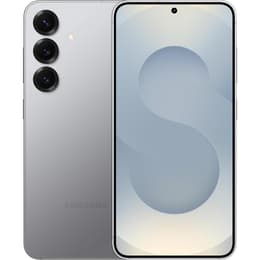
Galaxy S25 • Unlocked
Starting at

Refurbished price:$425.00

Versus $1,299.00 new

See options
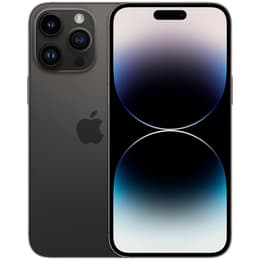
iPhone 14 Pro Max • Locked T-Mobile
Starting at

Refurbished price:$413.00

Versus $1,099.00 new

See options

Ratings

The Samsung Galaxy S25 (2025) and the Apple iPhone 14 Pro Max (2022) are both high-end smartphones, yet they represent different generations of mobile technology. While the iPhone 14 Pro Max offers a robust iOS experience with a focus on its camera system and display, the more recently released Galaxy S25 brings updated Android features, enhanced durability, and a longer software support commitment. These differences cater to distinct user preferences regarding operating system, device age, and specific feature priorities.

Scores

Durability

The longevity of a smartphone is influenced by its release date, software support, and physical resilience. The Galaxy S25, being a newer device, benefits from a more extended support window.

  • Release Timeline: The Galaxy S25 was announced in January 2025 and released in February 2025, making it a current-generation device. The iPhone 14 Pro Max was released in September 2022, positioning it as an older model in the product cycle.
  • Software Longevity: Samsung has committed to providing up to seven years of operating system updates for the Galaxy S25, ensuring it remains current with the latest Android features and security patches for an extended period. The iPhone 14 Pro Max, while known for strong software support, will likely receive updates for a shorter duration compared to the Galaxy S25's extended commitment, typically around five to six years from its release.
  • Physical Durability: The Galaxy S25 features an aluminum frame and Corning Gorilla Glass Victus 2 on both the front and back for enhanced protection. The iPhone 14 Pro Max utilizes a stainless steel frame and Ceramic Shield on the front, which offers notable drop performance. Both devices carry an IP68 rating for water and dust resistance, indicating they can withstand submersion in up to 1.5 meters of water for 30 minutes.

Release Year

2025

2022

Last OS Compatibility

Yes

Yes

OS

Android

iOS

Foldable

No

No

Performance

Performance in daily use is a critical factor for smartphones, affecting everything from app responsiveness to multitasking capabilities. Both devices offer capable performance for their respective generations.

  • System Responsiveness: The Galaxy S25 is equipped with a current-generation processor, which provides smooth operation for demanding applications and efficient multitasking. The iPhone 14 Pro Max, powered by its A16 Bionic chip, delivers a highly responsive user experience, handling complex tasks and graphics-intensive games with ease.
  • Multitasking and Storage: The Galaxy S25 comes with 12GB of RAM, which supports extensive multitasking and keeps numerous applications active in the background without slowdowns. The iPhone 14 Pro Max features 6GB of RAM, optimized by its operating system to manage applications effectively for a fluid user experience. Storage options for the Galaxy S25 include 128GB, 256GB, and 512GB, while the iPhone 14 Pro Max offers a wider range from 128GB up to 1TB.
  • Battery Behavior: The Galaxy S25 houses a 4000 mAh battery, designed to provide a full day of typical usage. The iPhone 14 Pro Max is equipped with a 4323 mAh battery, known for its strong endurance, often lasting through a full day of heavy use for many users.

Memory (GB)

12 GB

6 GB

Screen quality

The display is a primary interface for smartphone interaction, and both models offer high-quality viewing experiences with distinct characteristics.

  • Display Technology and Clarity: The Galaxy S25 features a 6.2-inch Dynamic LTPO AMOLED 2X display, offering vibrant colors and deep blacks with a resolution of 2340 x 1080 pixels. The iPhone 14 Pro Max boasts a 6.7-inch Super Retina XDR OLED display, providing excellent clarity with a resolution of 2796 x 1290 pixels at 460 pixels per inch.
  • Brightness and Refresh Rate: Both devices offer high brightness levels for outdoor visibility. The Galaxy S25 can reach a peak brightness of 2600 nits. The iPhone 14 Pro Max achieves a typical brightness of 1000 nits, with peak HDR brightness of 1600 nits and an impressive 2000 nits for outdoor use. Both phones feature an adaptive refresh rate of up to 120Hz, ensuring smooth scrolling and fluid animations.
  • Special Features: The iPhone 14 Pro Max includes ProMotion technology, which dynamically adjusts the refresh rate, and an Always-On display feature. The Galaxy S25 also incorporates an Always-On display and utilizes Samsung's HOP 3.0 LTPO technology for improved efficiency and touch response.

Resolution

1080x2340

1290 x 2796

Screen type

Dynamic LTPO AMOLED 2X

LTPO Super Retina XDR OLED

Audiovisual

Camera capabilities are a significant consideration for many users, and both the Galaxy S25 and iPhone 14 Pro Max offer advanced photographic and videographic tools.

  • Rear Camera Systems: The Galaxy S25 features a triple-camera setup with a 50MP main sensor, a 12MP ultrawide lens, and a 10MP telephoto lens with 3x optical zoom. The iPhone 14 Pro Max also has a versatile triple-camera system, including a 48MP main sensor, a 12MP ultrawide lens, and two telephoto options: a 12MP 2x telephoto and a 12MP 3x telephoto lens, offering a 6x optical zoom range.
  • Photography Performance: The Galaxy S25's camera system is designed to capture detailed photos with accurate color reproduction, even in challenging lighting conditions, supported by AI enhancements. The iPhone 14 Pro Max excels in low-light photography with its Photonic Engine and offers advanced features like Smart HDR 4 and Portrait mode with depth control. The iPhone 14 Pro Max can also capture full 48MP photos in ProRAW format for greater editing flexibility.
  • Video Recording: Both devices are capable of high-quality video recording. The Galaxy S25 supports up to 8K video recording at 30 frames per second. The iPhone 14 Pro Max records 4K video at up to 60 frames per second and includes Cinematic mode for a shallow depth of field effect, and ProRes video recording for professional-grade footage.

Miscellaneous

Beyond core features, several practical elements contribute to the overall user experience and differentiate these two smartphones.

  • Connectivity and Ports: The Galaxy S25 supports the latest Wi-Fi 7 standard and Bluetooth 5.4, along with 5G connectivity. It features a USB Type-C 3.2 port for fast data transfer and charging. The iPhone 14 Pro Max supports Wi-Fi 6 and Bluetooth 5.3, also with 5G capabilities. It uses Apple's proprietary Lightning port, which operates at USB 2.0 speeds. Both devices offer satellite connectivity for emergency situations.
  • Biometric Security and Design: The Galaxy S25 incorporates an ultrasonic in-screen fingerprint sensor for secure unlocking. The iPhone 14 Pro Max relies on Face ID for facial recognition. In terms of physical design, the Galaxy S25 measures 146.9 x 70.5 x 7.2 mm and weighs 162 grams. The iPhone 14 Pro Max is larger and heavier at 160.7 x 77.6 x 7.85 mm and 240 grams.
  • Operating System Ecosystem: The Galaxy S25 runs on Android 15 with Samsung's One UI, offering extensive customization and integration with Google services. The iPhone 14 Pro Max operates on iOS, providing a streamlined and integrated ecosystem with Apple's services and hardware.

Weight

8 oz

8 oz

Screen size (inches)

6.2

6.7

Network

5G

5G

SIM card

Physical SIM + eSIM

eSIM

Carrier compatibility

Unlocked

T-Mobile

Connector

USB-C

Lightning

The choice between the Samsung Galaxy S25 and the iPhone 14 Pro Max depends largely on individual priorities and ecosystem preference. Users often praise the Galaxy S25 for its cutting-edge Android features, extended software support, and modern connectivity options like Wi-Fi 7 and USB-C. Its lighter weight and slightly more compact design compared to the Pro Max might appeal to those seeking a more manageable device. Some users, however, might find its incremental upgrades from previous Samsung models less compelling if they are seeking revolutionary changes.

The iPhone 14 Pro Max is frequently lauded for its highly optimized iOS experience, robust camera system with advanced video capabilities, and its bright, high-quality display. Its strong battery life and the established Apple ecosystem are also significant drawcards for many. Potential criticisms sometimes revolve around its larger size and weight, and the use of the Lightning port rather than the more universal USB-C.

Users prioritizing the latest Android innovations, a longer software update commitment, and universal USB-C connectivity may find the Galaxy S25 well-suited to their needs. Conversely, individuals deeply integrated into the Apple ecosystem, who value a highly refined user experience, advanced video recording features, and a slightly larger, exceptionally bright display, may lean towards the iPhone 14 Pro Max. Both devices offer a premium smartphone experience, and considering a quality-assured refurbished option for either model can be an eco-friendly alternative to purchasing new.

See all articles

Our recent comparisons