Galaxy S25+ • Unlocked vs Google Pixel Fold • Unlocked

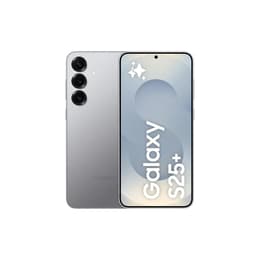
Galaxy S25+ • Unlocked
Starting at

Refurbished price:$570.79

Versus $999.99 new

See options
Google Pixel Fold • Unlocked
Starting at

Refurbished price:$591.00

Versus $1,799.00 new

See options

Ratings

The Samsung Galaxy S25 Plus, released in early 2025, represents a modern iteration of the traditional flagship smartphone, offering a powerful and refined experience. In contrast, the Google Pixel Fold, launched in mid-2023, stands out with its innovative foldable design, transforming from a compact device into a larger, tablet-like display. While both devices operate on the Android platform, they cater to different user preferences through their distinct form factors and hardware generations.

Scores

Durability

The practical lifespan and software support for these devices differ, largely influenced by their respective release timelines and design philosophies. The Galaxy S25 Plus, being a more recent release, benefits from a longer guaranteed software support period, while the Pixel Fold, with its unique construction, presents different considerations for long-term physical durability.

  • Software Longevity: The Galaxy S25 Plus is designed to receive an extended period of major Android OS updates and security patches, with support expected to last for seven years from its release, ending within 2032. The Pixel Fold, released earlier, is guaranteed five years of OS and security updates, with OS updates until at least June 2026 and security updates until at least June 2028.
  • Physical Durability: The S25 Plus features a traditional, robust slab design with Gorilla Glass Victus 2 on both the front and back, along with an aluminum frame and an IP68 water and dust resistance rating. The Pixel Fold, while offering an IPX8 water resistance rating, incorporates a folding screen and hinge mechanism, which introduces different long-term durability considerations compared to a non-folding device. The inner foldable display of the Pixel Fold has a plastic screen protector that is more susceptible to scratches than glass.
  • Repairability: Repairing a traditional smartphone like the S25 Plus is generally more straightforward, with the S25 Plus having a higher repairability score than its predecessor and an easier battery replacement process. The Pixel Fold, with its intricate hinge and dual-screen components, can be more complex to repair, particularly the foldable display.

Release Year

2025

2023

Last OS Compatibility

No

Yes

OS

Android

Android

Foldable

No

Yes

Performance

Performance capabilities are a significant differentiator between these two devices, primarily due to their differing release dates and the advancements in mobile processing technology. The newer Galaxy S25 Plus benefits from a more recent processor, impacting overall speed and efficiency, especially for demanding tasks.

  • Processing Power: The Galaxy S25 Plus is equipped with a current-generation processor, enabling it to handle demanding applications, intensive multitasking, and high-fidelity gaming with notable smoothness and efficiency. This ensures a responsive experience for a longer duration. The Pixel Fold features a processor from 2023, providing a capable and smooth experience for daily tasks, web browsing, and moderate gaming.
  • Everyday Responsiveness: Users of the Galaxy S25 Plus can expect rapid app loading and fluid transitions, even when managing multiple applications simultaneously. The Pixel Fold delivers a generally smooth experience for everyday use, though it may exhibit slightly slower loading times or less fluid performance when running the most resource-intensive applications or managing many apps concurrently compared to the S25 Plus.
  • Multitasking and RAM: Both devices come with 12GB of RAM, which supports efficient multitasking. The Galaxy S25 Plus's newer processor, however, contributes to more optimized RAM management for sustained heavy usage.

Memory (GB)

12 GB

12 GB

Screen quality

The display experience is fundamentally different between these two devices, primarily due to their distinct form factors. The Galaxy S25 Plus offers a single, high-quality flat display, while the Pixel Fold provides the versatility of two screens, one of which is foldable.

  • Display Technology and Clarity: The Galaxy S25 Plus features a 6.7-inch Dynamic LTPO AMOLED 2X display with a 3120x1440 resolution, known for its vibrant colors, deep blacks, and excellent clarity. The Pixel Fold offers two OLED displays: a 5.8-inch outer screen with a 1080 x 2092 resolution and a 7.6-inch foldable inner screen with an 1840 x 2208 resolution.
  • Brightness and Refresh Rate: Both devices feature a 120Hz variable refresh rate for smooth scrolling and responsiveness. The Galaxy S25 Plus boasts a peak brightness of 2600 nits, enhancing outdoor visibility. The Pixel Fold's outer screen can reach up to 1550 nits peak brightness, and its inner screen up to 1450 nits.
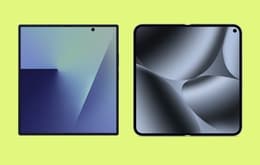
  • Viewing Experience and Form Factor: The S25 Plus provides a consistent, expansive viewing area ideal for traditional smartphone use. The Pixel Fold's dual-screen setup allows for a conventional smartphone experience when folded and a larger, tablet-like canvas when unfolded, which is beneficial for immersive media viewing, productivity, and split-screen multitasking. The Pixel Fold's wider aspect ratio for its cover screen can feel less cramped than some other foldable devices.

Resolution

1440x3120

1840 x 2208

Screen type

Dynamic LTPO AMOLED 2X

Foldable OLED

Audiovisual

Both the Galaxy S25 Plus and the Google Pixel Fold offer advanced camera systems, but they approach photography with different strengths, influenced by their hardware and software optimizations. The Pixel Fold leverages its unique form factor for creative shooting modes, while the S25 Plus focuses on a refined traditional camera experience.

  • Rear Camera System: The Galaxy S25 Plus features a triple rear camera system with a 50 MP wide-angle main sensor, a 12 MP ultra-wide camera, and a 10 MP telephoto lens offering 3x optical zoom. The Pixel Fold also has a triple rear camera setup, including a 48 MP main sensor, a 10.8 MP ultrawide, and a 10.8 MP telephoto lens with 5x optical zoom.
  • Photography Performance: The S25 Plus benefits from Samsung's ProVisual Engine and AI imaging system, enhancing image processing, object recognition, and color reproduction, particularly in varying lighting conditions. The Pixel Fold is known for Google's computational photography, offering features like Night Sight for low-light conditions and Super Res Zoom for extended digital reach. The Pixel Fold's 5x optical zoom provides greater reach for distant subjects.
  • Video and Unique Features: The Galaxy S25 Plus supports 8K video recording at 30 fps and includes features like Portrait Video and Super Steady video mode. The Pixel Fold records video at up to 4K at 60fps and offers unique foldable-specific camera modes such as Dual screen preview, allowing subjects to see themselves, and Rear Camera Selfie, utilizing the higher-quality rear cameras for selfies.

Miscellaneous

Beyond their core functionalities, both devices offer a range of practical features that contribute to their overall user experience, from connectivity and physical design to biometric security and handling. Their distinct form factors also lead to differences in weight and dimensions.

  • Connectivity and Ports: Both devices support 5G connectivity, ensuring access to fast mobile networks. They both utilize USB-C for charging and data transfer. The Galaxy S25 Plus supports physical SIM and eSIM, while the Pixel Fold also offers physical SIM and eSIM capabilities.
  • Biometrics and Sensors: The Galaxy S25 Plus likely features an under-display fingerprint sensor for secure unlocking. The Pixel Fold includes both fingerprint recognition and face recognition for convenient access. Both devices incorporate essential sensors for navigation and interaction.
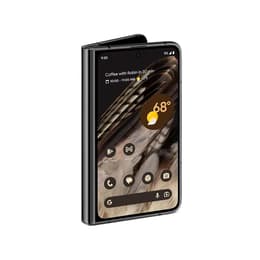
  • Design and Handling: The Galaxy S25 Plus, weighing 190g and measuring 158.4 x 75.8 x 7.3mm, offers a familiar and comfortable single-slab design. The Pixel Fold, at 283g, is heavier due to its foldable nature. When folded, it measures 139.7 x 79.5 x 12.1 mm, and when unfolded, it expands to 139.7 x 158.7 x 5.8 mm, providing a larger screen experience. The Pixel Fold's hinge is designed to allow the two halves to fold shut completely flat.

Weight

7 oz

7 oz

Screen size (inches)

6.7

7.6

Network

5G

5G

SIM card

Physical SIM + eSIM

Physical SIM + eSIM

Carrier compatibility

Unlocked

Unlocked

The Samsung Galaxy S25 Plus and the Google Pixel Fold cater to different user priorities, each excelling in its own domain. The Galaxy S25 Plus is often praised for its robust, traditional smartphone experience, offering a powerful processor, a vibrant and bright display, and a long software support commitment. Users appreciate its consistent performance across demanding applications and its refined camera system, which benefits from advanced AI processing. Criticisms are less frequent for traditional slab phones but generally revolve around incremental updates rather than revolutionary changes.

The Google Pixel Fold, on the other hand, receives commendation for its innovative foldable design, which provides a versatile large screen experience for multitasking and media consumption. Its camera system, powered by Google's computational photography, is highly regarded for its image quality and unique features that leverage the foldable form factor. However, some users have noted concerns regarding its weight and the durability of the inner display's plastic screen protector. Early battery life concerns were largely addressed with software optimizations.

Users prioritizing a cutting-edge, traditional smartphone with a long lifespan and consistent performance will find the Galaxy S25 Plus well-suited to their needs. Those who value the versatility of a large, foldable display for productivity and immersive content, coupled with Google's distinct camera capabilities, may lean toward the Pixel Fold. Both devices represent excellent choices, and considering a quality-assured refurbished option for either model can be an eco-friendly alternative to purchasing new.

See all articles

Our recent comparisons