
Galaxy Tab A7 Lite (8.7", 2021) vs iPad 10 (2022, A14 series)

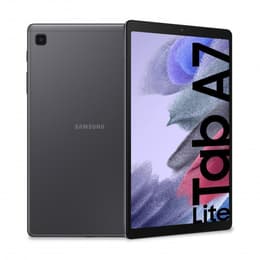
Galaxy Tab A7 Lite (8.7", 2021)
Starting at

Refurbished price:$71.00

Versus $219.00 new

See options
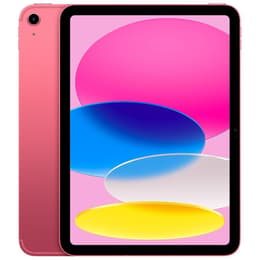
iPad 10 (2022, A14 series)
Starting at

Refurbished price:$282.00

Versus $349.00 new

See options

Ratings

The Samsung Galaxy Tab A7 Lite, released in mid-2021, and the Apple iPad 10th generation, launched in late 2022, represent distinct approaches to the tablet experience. While both devices offer portable computing, they cater to different user needs through their respective operating systems and hardware capabilities. The Galaxy Tab A7 Lite runs on Android, emphasizing a compact form factor and essential functionality, whereas the iPad 10th generation operates on iPadOS, providing a larger display and more robust performance for a broader range of tasks.

Scores

Durability

The longevity of a tablet is influenced by its release timeline, software support, and physical durability. These two tablets offer different expectations in terms of practical lifespan.

  • Release Timeline and Software Support: The Galaxy Tab A7 Lite, released in June 2021, typically receives Android updates for a shorter duration compared to Apple's devices. Samsung's update policy for its A-series tablets often extends to a few years, but not the prolonged support seen in its flagship S-series or Apple's ecosystem [13, 24, 35]. The iPad 10th generation, launched in October 2022, benefits from Apple's consistent and longer-term iPadOS updates, generally receiving software support for 5-6 years from its release date [1, 5]. This means the iPad will likely remain current with the latest features and security patches for a longer period.
  • Repairability and Physical Durability: Both tablets feature solid builds, with the Galaxy Tab A7 Lite offering a metal back for a more durable feel [19]. The iPad 10th generation also presents a well-made, modern design with an aluminum chassis [16]. While specific repairability scores can vary, both devices are generally serviceable by professional technicians, and refurbished options provide an eco-friendly alternative for extending their useful life [22, 23].
  • Expected Practical Lifespan: For users prioritizing the latest software and security, the iPad 10th generation offers a longer expected practical lifespan due to Apple's extended update cycle. The Galaxy Tab A7 Lite remains a functional device for its intended use cases, but its software support window will close sooner.

Release Year

2021

2022

Last OS Compatibility

Yes

Yes

OS

Android

iPadOS

Performance

The performance of a tablet dictates its responsiveness and capability across various applications, with both devices offering different levels of processing power and storage flexibility.

  • Processor Capabilities: The Galaxy Tab A7 Lite is equipped with an octa-core processor that handles everyday tasks like web browsing, email, and video streaming adequately [4, 29, 33]. However, users may experience slowdowns or hitches when running multiple applications simultaneously or engaging in more demanding games [4, 29, 33]. The iPad 10th generation features a more capable processor, providing smoother performance for a wider range of applications, including more intensive productivity tasks and graphically richer games [1, 2, 3, 18].
  • Storage and Multitasking: The Galaxy Tab A7 Lite comes with 32GB or 64GB of internal storage, with the notable advantage of expandable storage via a microSD card up to 1TB [4, 12, 29]. It typically offers 3GB or 4GB of RAM, which is sufficient for basic multitasking [9, 12, 26, 29, 30]. The iPad 10th generation is available with 64GB or 256GB of non-expandable storage and includes 4GB of RAM [1, 5, 17, 18]. This configuration allows for more fluid app switching and handling of several applications concurrently without significant performance degradation.
  • Overall System Responsiveness: The iPad 10th generation generally offers a more responsive and fluid user experience across its iPadOS interface and applications, benefiting from its optimized hardware and software integration [16]. The Galaxy Tab A7 Lite provides a functional experience for its segment, though some users have noted occasional delays in touch response and app loading [33].

Memory (GB)

3 GB

4 GB

Screen quality

The visual experience on a tablet is largely defined by its display, and these two models present different characteristics in terms of size, technology, and clarity.

  • Display Technology and Size: The Galaxy Tab A7 Lite features an 8.7-inch TFT LCD screen, offering a compact viewing area suitable for portability [19, 21, 29]. The iPad 10th generation boasts a larger 10.9-inch Liquid Retina IPS LCD display, providing a more expansive canvas for content consumption and productivity [1, 5, 14, 17]. Both utilize LCD technology, but the iPad's display offers a higher quality panel.
  • Resolution and Clarity: The Tab A7 Lite has a resolution of 1340x800 pixels, resulting in a pixel density of approximately 179 ppi [4, 28, 29]. This resolution is adequate for general viewing but may show less sharpness, particularly with text, when viewed closely [28, 33]. The iPad 10th generation offers a sharper 2360x1640 pixel resolution at 264 ppi, delivering clearer text and more detailed images [1, 14, 16, 17].
  • Brightness and Viewing Experience: The Galaxy Tab A7 Lite's display reaches a maximum brightness of around 315 nits, which can be challenging to view comfortably in bright outdoor conditions due to reflections [4, 28, 33]. The iPad 10th generation provides a brighter experience with 500 nits of typical brightness, making it more versatile for various lighting environments [14, 17]. However, the iPad's screen is not fully laminated, meaning there's a slight gap between the glass and the display panel, which can affect the visual experience compared to higher-end laminated displays [3, 6, 10, 18]. Both devices typically operate at a standard 60Hz refresh rate.

Resolution

800 x 1340

2360 x 1640

Screen type

TFT LCD

Liquid Retina display

Pixel density

180ppp

264ppp

Audiovisual

While tablets are not primarily known for their camera capabilities, both devices include camera systems suitable for video calls and occasional photography, with the iPad offering more advanced features.

  • Rear Camera Performance: The Galaxy Tab A7 Lite is equipped with an 8-megapixel autofocus rear camera [12, 21, 29]. It can capture decent photos in good lighting conditions, but images may appear muted, blurry, or lack fine detail, especially in low-light environments [4, 19, 25, 37]. The iPad 10th generation features a 12-megapixel Wide rear camera with an f/1.8 aperture, capable of recording 4K video [5, 15, 17]. This camera provides sharper images, better low-light performance, and includes Smart HDR 3 for improved dynamic range [7, 11, 16, 32].
  • Front Camera and Video Calls: For video conferencing and selfies, the Tab A7 Lite has a 2-megapixel front camera [12, 21, 29]. While acceptable for basic video calls, images can appear washed out or noisy [4, 19, 25, 37]. The iPad 10th generation significantly upgrades its front camera to a 12-megapixel Ultra Wide lens, positioned on the landscape bezel, which is ideal for video calls [5, 6, 11, 15, 17, 18]. It also supports Center Stage, a feature that keeps the user automatically framed during video calls [6, 11].
  • Audio Experience: The Galaxy Tab A7 Lite offers dual speakers, providing a stereo sound experience, particularly when held in landscape orientation [27, 36]. The iPad 10th generation also features true stereo speakers, positioned on opposite sides, enhancing the audio experience for media consumption [18]. Both devices include microphones suitable for calls and recordings.

Miscellaneous

Beyond core features, practical elements like connectivity, ports, and physical design contribute to the overall user experience of these tablets.

  • Connectivity and Ports: The Galaxy Tab A7 Lite supports Wi-Fi 5 (802.11ac) and Bluetooth 5.0, with optional LTE models available [12, 25, 29]. It includes a USB-C port for charging and data transfer, along with a 3.5mm headphone jack [12, 25, 29]. The iPad 10th generation offers more advanced connectivity with Wi-Fi 6 (802.11ax) and Bluetooth 5.2, and also has optional 5G cellular models [1, 5, 17]. It features a USB-C 2.0 port, marking a transition from Apple's proprietary Lightning connector, but it notably omits a traditional 3.5mm headphone jack [5, 15, 16].
  • Security and Biometrics: The Tab A7 Lite offers facial recognition for unlocking, though some users report it can be slow [27]. The iPad 10th generation integrates Touch ID into its power button, providing a reliable and convenient biometric authentication method [1, 3, 5, 17].
  • Design and Handling: The Galaxy Tab A7 Lite is designed for portability, weighing around 366g (Wi-Fi) and measuring 212.5 x 124.7 x 8.0mm [12, 21, 29, 30]. Its compact size makes it easy to hold in one hand and slip into a bag [19, 33]. The iPad 10th generation, with its larger screen, measures 248.6 x 179.5 x 7mm and weighs 477g (Wi-Fi) [1, 14, 16, 17]. It features a modern design with flatter edges and reduced bezels, resembling higher-end iPad models [5, 16, 18].
  • Accessory Ecosystem: The iPad 10th generation supports the first-generation Apple Pencil (requiring an adapter for charging/pairing) and the Apple Pencil (USB-C), as well as the Magic Keyboard Folio, expanding its utility for creative and productivity tasks [5, 6, 10, 20]. The Tab A7 Lite does not support a stylus.

Weight

12 oz

16 oz

Width

4,91 in

7 in

Height

8,37 in

9.7 in

Depth

0,31 in

0.2 in

Screen size (inches)

8.7

10.9

Network

Wi-Fi + 4G

Wi-Fi

Carrier compatibility

Unlocked

Without SIM Port

User feedback for the Samsung Galaxy Tab A7 Lite often highlights its strong points as a highly portable and functional device for basic media consumption and light tasks. Users appreciate its compact size, making it easy to handle and transport, and its battery life is generally considered sufficient for daily use [19, 27, 29]. Criticisms frequently point to its display, noting the lower resolution and brightness, which can impact the viewing experience, especially in bright environments [28, 33]. Performance for demanding applications or extensive multitasking is also a common area of concern, with some users experiencing slowdowns [4, 33].

The iPad 10th generation is often praised for its modern design, larger and brighter display, and significantly improved camera system, particularly the landscape-oriented front camera for video calls [6, 11, 16, 18]. Its performance is generally well-regarded for everyday use and many productivity tasks, offering a smooth iPadOS experience [16, 18]. Some users note that while the display is good, the lack of lamination and a 60Hz refresh rate are areas where it doesn't match more premium tablets [3, 6, 10, 18]. The accessory support, including the Apple Pencil and Magic Keyboard Folio, is also a significant advantage for many users [5, 6, 10].

Users prioritizing extreme portability, basic media consumption, and expandable storage may find the Galaxy Tab A7 Lite well-suited to their needs. It serves as a straightforward device for casual browsing and video watching. Conversely, users who require a larger, sharper display, more robust performance for productivity and creative applications, and a more advanced camera system for video calls will likely lean towards the iPad 10th generation. Its longer software support also makes it a consideration for those seeking extended device longevity. Both tablets are available as quality-assured refurbished options, providing a sustainable choice for consumers.


See all articles

Our recent comparisons