Galaxy Tab S9 (11.0", 2023) vs iPad 10 (2022, A14 series)

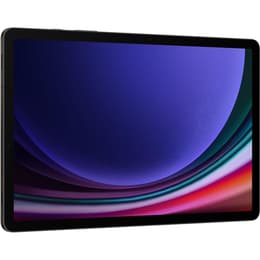
Galaxy Tab S9 (11.0", 2023)
Starting at

Refurbished price:$394.00

Versus $1,099.99 new

See options
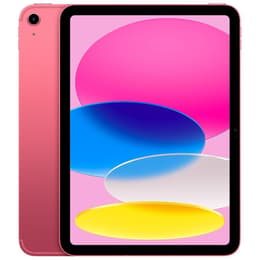
iPad 10 (2022, A14 series)
Starting at

Refurbished price:$275.00

Versus $349.00 new

See options

Ratings

The Samsung Galaxy Tab S9, released in 2023, and the Apple iPad (10th generation), launched in 2022, represent distinct approaches to the tablet experience. While both offer capable performance for a range of tasks, they differ significantly in their operating systems, display technology, and included accessories. The Galaxy Tab S9 runs on Android with Samsung's One UI, providing a customizable interface and a desktop-like DeX mode, whereas the iPad operates on Apple's iPadOS, known for its intuitive design and robust app ecosystem. These core differences influence how users interact with each device and which tasks they are best suited for.

Scores

Durability

When considering the long-term usability of a tablet, software support and physical resilience are key factors. The Galaxy Tab S9, being a 2023 release, benefits from Samsung's commitment to providing four major Android OS updates and five years of security updates from its launch. The iPad (10th generation), released in 2022, typically receives iPadOS updates for five to six years, potentially offering a slightly longer period of major OS support.

  • Software Longevity: The Galaxy Tab S9 is expected to receive major Android updates until Android 17 and security updates for five years. The iPad (10th generation) generally receives iPadOS updates for a similar or slightly longer duration, ensuring continued access to new features and security patches.
  • Physical Durability: The Galaxy Tab S9 features an Armor Aluminum build and is notable for its IP68 rating for dust and water resistance, a feature not commonly found in tablets. The iPad (10th generation) has a robust aluminum enclosure, but does not carry an official IP rating for water and dust resistance.
  • Repairability: Both devices are designed with internal components that can be replaced, though the process can be intricate. The Galaxy Tab S9 has pull tabs for battery removal, which can aid in servicing, but screen removal is a delicate process due to adhesive. Information on the iPad's repairability suggests that battery replacement is possible but can be challenging due to adhesive.

Release Year

2023

2022

Last OS Compatibility

Yes

Yes

OS

Android

iPadOS

Performance

Both tablets offer capable performance for everyday use, but their underlying architectures and available configurations lead to different user experiences, particularly with demanding applications and multitasking.

  • Processing Power: The Galaxy Tab S9 is equipped with a high-performance processor designed for demanding tasks, allowing for smooth operation of complex applications, efficient multitasking, and high-fidelity gaming. The iPad (10th generation) features a capable processor that handles daily tasks, creative applications, and gaming with consistent responsiveness.
  • Multitasking and Responsiveness: The Galaxy Tab S9 offers configurations with higher RAM options, which can contribute to a more seamless experience when switching between numerous applications or running multiple apps simultaneously in split-screen or pop-up view. Users report that the device remains very fast and handles editing smoothly. The iPad (10th generation) provides a fluid user experience for general multitasking and app usage, with its optimized iPadOS ensuring efficient resource management.
  • Storage Options: The Galaxy Tab S9 is available with 128GB or 256GB of internal storage, with the added flexibility of expandable storage via a microSD card slot for users who require more space for media and files. The iPad (10th generation) comes with 64GB or 256GB storage options, without the possibility of external storage expansion.

Memory (GB)

8 GB

4 GB

Screen quality

The visual experience on a tablet is largely defined by its display, and these two devices offer distinct technologies that cater to different preferences.

  • Display Technology: The Galaxy Tab S9 features an 11-inch Dynamic AMOLED 2X display, which is known for producing deep blacks, vibrant colors, and excellent contrast. The iPad (10th generation) utilizes a 10.9-inch Liquid Retina IPS LCD, offering accurate color reproduction and good viewing angles.
  • Refresh Rate and Smoothness: The Galaxy Tab S9 boasts a 120Hz refresh rate, which results in noticeably smoother scrolling, more fluid animations, and a more responsive feel during gaming and general navigation. The iPad (10th generation) has a standard 60Hz refresh rate, providing a consistent visual experience for most content, though not as fluid as higher refresh rate displays.
  • Brightness and Clarity: Both tablets offer good brightness levels suitable for indoor use. The Galaxy Tab S9's AMOLED panel provides excellent visibility in various lighting conditions, including outdoors. The iPad (10th generation) offers a bright display with a resolution that ensures sharp text and clear images for typical viewing distances.

Resolution

1600 x 2560

2360 x 1640

Screen type

Dynamic AMOLED 2X

Liquid Retina display

Pixel density

280ppp

264ppp

Audiovisual

While tablets are not typically primary photography devices, both the Galaxy Tab S9 and iPad (10th generation) are equipped with camera systems suitable for video calls, document scanning, and casual photography.

  • Rear Camera Capabilities: The Galaxy Tab S9 includes a 13-megapixel rear camera, capable of capturing detailed photos and 4K video recording. The iPad (10th generation) features a 12-megapixel wide camera on the rear, also supporting 4K video recording. Both are generally considered sufficient for scanning documents and occasional snapshots.
  • Front Camera and Video Calls: The Galaxy Tab S9 has a 12-megapixel ultrawide front camera, which is well-suited for video calls and selfies, and supports 4K video recording. The iPad (10th generation) features a 12-megapixel ultrawide front camera, uniquely positioned on the longer edge of the display, making it ideal for landscape video calls and supporting Apple's Center Stage feature to keep subjects in frame.
  • Audio Experience: The Galaxy Tab S9 is equipped with a quad-speaker setup, delivering rich and clear audio for media consumption. The iPad (10th generation) offers stereo speakers that provide a good audio experience for videos and music. Both devices have microphones suitable for calls and voice recording.

Miscellaneous

Beyond core performance and display, several practical features contribute to the overall user experience and versatility of these tablets.

  • Connectivity: The Galaxy Tab S9 supports Wi-Fi 6E and Bluetooth 5.3, offering fast and reliable wireless connections, with 5G options available for cellular models. The iPad (10th generation) supports Wi-Fi 6 and Bluetooth 5.2, also with 5G connectivity available on cellular models, ensuring broad network compatibility.
  • Ports and Accessories: Both tablets feature a USB-C port for charging and data transfer. The Galaxy Tab S9 includes the S Pen stylus in the box, which is IP68 water and dust resistant, enhancing its utility for drawing and note-taking. The iPad (10th generation) supports the first-generation Apple Pencil, though an adapter is required for pairing and charging, and it also supports the Apple Pencil (USB-C).
  • Biometric Security and Design: The Galaxy Tab S9 incorporates an in-display fingerprint sensor for secure unlocking. The iPad (10th generation) features Touch ID integrated into the top power button. The Galaxy Tab S9 is slightly thinner and lighter than the iPad (10th generation), contributing to its portability.

Weight

23 oz

16 oz

Screen size (inches)

11.0

10.9

Network

Wi-Fi

Wi-Fi

Carrier compatibility

Without SIM Port

Without SIM Port

User feedback for the Galaxy Tab S9 often highlights its vibrant AMOLED display and the included S Pen as significant advantages, with many appreciating its performance for both productivity and entertainment. Some users note that while battery life is good, it might not always match the longevity of previous LCD models due to the more power-intensive display. The iPad (10th generation) is frequently praised for its consistent performance, the reliability of iPadOS, and its strong ecosystem of apps. Common observations include its capable processor for everyday tasks and the improved front camera placement for video calls. Some users mention that the 60Hz display and the base storage option could be limiting for certain use cases.

Users prioritizing an Android ecosystem, a high-refresh-rate OLED display, and an included, water-resistant stylus may find the Galaxy Tab S9 well-suited to their needs. Its robust build with an IP rating also appeals to those seeking enhanced durability. Conversely, users deeply integrated into the Apple ecosystem, who value the consistent performance of iPadOS, and prefer the landscape-oriented front camera for video conferencing, may lean towards the iPad (10th generation). Both tablets offer compelling experiences, and choosing between them often comes down to operating system preference and specific feature priorities. For those looking for an eco-friendly and quality-assured option, considering a refurbished version of either tablet can be a smart choice.


See all articles

Our recent comparisons