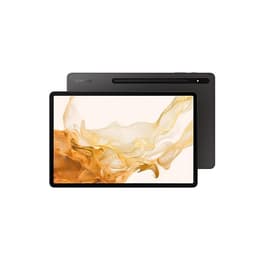
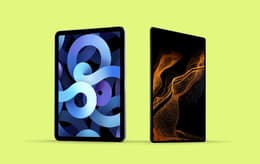
Galaxy Tab S8 (11.0", 2022) vs Galaxy Tab S8+ (12.4", 2022)

Galaxy Tab S8 (11.0", 2022)
Starting at

Refurbished price:$309.00

Versus $655.00 new

See options
Galaxy Tab S8+ (12.4", 2022)
Starting at

Refurbished price:$321.99

Versus $999.99 new

See options

Ratings

The Samsung Galaxy Tab S8 and Galaxy Tab S8+ are Android tablets released in February 2022, offering users a choice between two premium devices. While they share many core features, the primary distinctions lie in their display technology and physical dimensions, catering to different user preferences for portability and visual experience.

Scores

Durability

Both the Galaxy Tab S8 and Tab S8+ were launched in early 2022, placing them in the same generation for software support and expected lifespan. Samsung has committed to providing four major Android OS updates and five years of security updates for the Galaxy Tab S8 series, meaning they are expected to receive OS updates until 2026 and security patches until 2027.

  • Software Longevity: Users can anticipate continued software functionality and security for several years, ensuring access to new features and protection against vulnerabilities.
  • Repairability Considerations: The design of these tablets, like many modern devices, involves fused displays and adhesive, which can make repairs more complex. However, components are generally accessible for professional servicing.
  • Practical Lifespan: With robust build quality and extended software support, both tablets are designed for a practical lifespan that extends well beyond their initial purchase, especially when considering quality-assured refurbished options as a sustainable choice.

Release Year

2022

2022

Compatible with latest Update

Yes

Yes

OS

Android

Android

Performance

Both the Galaxy Tab S8 and Tab S8+ are equipped with the same powerful internal components, ensuring a consistent performance experience across the two models. This means users can expect similar capabilities when handling demanding applications and multitasking.

  • Processing Power: Both tablets feature a current-generation processor designed to manage intensive applications, graphic-rich games, and seamless multitasking without noticeable slowdowns.
  • Multitasking Efficiency: With options for 8GB or 12GB of RAM, both devices are well-suited for running multiple applications simultaneously, allowing users to switch between tasks smoothly.
  • Storage and Expansion: Standard storage configurations include 128GB and 256GB, with the flexibility to expand further using a microSD card, accommodating extensive media libraries and large files.
  • Battery Behavior: The Galaxy Tab S8 houses an 8,000 mAh battery, while the Tab S8+ features a larger 10,090 mAh battery. Despite the difference in capacity, real-world usage tests often show comparable battery life, as the Tab S8+'s larger, more vibrant display consumes more power. Both are generally reported to last a full day with typical use.

Memory (GB)

8 GB

8 GB

Processor

Qualcomm SM8450 Snapdragon 8 Gen 1

Qualcomm SM8450 Snapdragon 8 Gen 1

Screen quality

The display is one of the most significant differentiators between the Galaxy Tab S8 and the Tab S8+, impacting both visual quality and overall user interaction.

  • Display Technology: The Galaxy Tab S8 features an 11-inch TFT LCD panel, offering clear visuals and good color reproduction. In contrast, the Galaxy Tab S8+ boasts a larger 12.4-inch Super AMOLED display, known for its deeper blacks, higher contrast, and more vibrant colors.
  • Resolution and Clarity: The Tab S8 has a resolution of 2560 x 1600 pixels, while the Tab S8+ offers 2800 x 1752 pixels. Both provide sharp images, but the AMOLED panel on the S8+ can offer a more immersive viewing experience, especially for media consumption in darker environments.
  • Refresh Rate and Smoothness: Both tablets feature a 120Hz adaptive refresh rate, which contributes to smooth scrolling and fluid animations, enhancing the overall responsiveness of the interface.
  • Screen Size and Viewing Experience: The 11-inch screen of the Tab S8 is more compact and portable, while the 12.4-inch screen of the Tab S8+ provides a larger canvas for productivity, drawing, and media viewing, allowing for more content to be displayed without scrolling.

Resolution

1600 x 2560

1752 x 2800

Screen type

TFT LCD

Super AMOLED

Pixel density

280ppp

270ppp

Audiovisual

The camera systems on both the Galaxy Tab S8 and Tab S8+ are identical, providing a consistent experience for photography and video calls across both models.

  • Camera System Capabilities: Both tablets are equipped with a dual rear camera setup, featuring a 13-megapixel wide-angle lens and a 6-megapixel ultra-wide-angle lens. For the front, they both include a 12-megapixel ultra-wide-angle camera.
  • Photography Performance: The cameras are suitable for everyday photography, document scanning, and capturing moments, though they are not designed to rival dedicated smartphone cameras. Image quality is generally good for a tablet.
  • Video Recording and Calls: The front-facing ultra-wide camera is particularly useful for video conferencing, offering a wider field of view to include more participants or surroundings. Both tablets support auto-framing, which helps keep subjects centered during video calls.
  • Audio Experience: Both models feature a quad-speaker setup with Dolby Atmos support, delivering a rich and immersive audio experience for media consumption. They also include a three-microphone setup for clear audio capture during calls and recordings.

Miscellaneous

Beyond the core specifications, several practical elements differentiate the user experience between these two tablets, primarily related to their physical design and biometric security.

  • Connectivity Options: Both tablets support modern connectivity standards, including Wi-Fi 6E for fast wireless internet, Bluetooth 5.2 for accessories, and USB-C 3.2 for data transfer and charging. 5G-enabled variants are also available for mobile connectivity.
  • Biometric Security: The Galaxy Tab S8 integrates its fingerprint sensor into the power button, offering a convenient and reliable unlocking method. The Galaxy Tab S8+, on the other hand, features an in-display fingerprint reader, which some users may find more intuitive. Both also support facial recognition.
  • Physical Dimensions and Handling: The Galaxy Tab S8 measures 253.8 x 165.3 x 6.3 mm and weighs 503g, making it more compact and lighter. The Galaxy Tab S8+ is larger at 285 x 185 x 5.7 mm and weighs 567g, being slightly thinner but heavier. The smaller size of the Tab S8 can make it more comfortable for one-handed use or extended reading, while the larger S8+ provides more screen real estate for productivity and media.
  • Build Materials: Both tablets feature a premium metal design with squared edges, contributing to a high-end feel and durability.

Weight

18 oz

1 oz

Screen size (inches)

11.0

12.4

Network

Wi-Fi

Wi-Fi + 5G

Carrier compatibility

Without SIM Port

Unlocked

Connector

USB Type-C

USB Type-C

User feedback for both the Galaxy Tab S8 and Tab S8+ generally highlights their strong performance and versatile capabilities. Many users appreciate the inclusion of the S Pen and the DeX mode, which enhances productivity by offering a desktop-like experience. Common praise points include the smooth operation for demanding apps and games, and the overall premium build quality. Some users have noted minor software update issues across the S8 series, but these are typically resolved with subsequent patches.

Users prioritizing a more compact and portable tablet will find the Galaxy Tab S8 well-suited to their needs. Its 11-inch LCD screen offers a clear viewing experience, making it a good choice for general use, reading, and casual media consumption. Conversely, users who value a larger, more vibrant display for immersive media viewing, graphic design, or extensive multitasking may prefer the Galaxy Tab S8+. Its 12.4-inch Super AMOLED screen provides deeper blacks and richer colors, enhancing the visual experience significantly.

Ultimately, the decision between these two tablets often comes down to the preferred screen size and display technology. Both offer a robust Android tablet experience, and choosing either as a quality-assured refurbished option can provide an eco-friendly alternative for consumers.

See all articles

Our recent comparisons