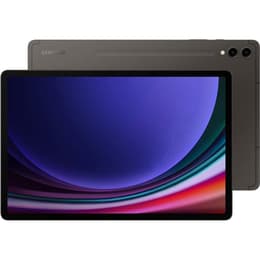

Galaxy Tab S8 (11.0", 2022) vs Galaxy Tab S9+ (12.4", 2023)

Galaxy Tab S8 (11.0", 2022)
Starting at

Refurbished price:$309.00

Versus $655.00 new

See options
Galaxy Tab S9+ (12.4", 2023)
Starting at

Refurbished price:$430.70

Versus $599.99 new

See options

Ratings

The Samsung Galaxy Tab S8, released in 2022, and the Galaxy Tab S9+, launched in 2023, represent two generations of Samsung's premium Android tablet line. While both offer a robust Android experience with Samsung's One UI and come with the versatile S Pen, the Tab S9+ introduces a larger, more advanced display and enhanced durability features. These tablets cater to users seeking powerful devices for productivity, creativity, and entertainment within the Android ecosystem.

Scores

Durability

When considering the longevity of these tablets, several factors come into play, including their release timelines, software support, and physical durability.

  • Release Timeline: The Galaxy Tab S8 was released in February 2022, while the Galaxy Tab S9+ followed in August 2023. This difference in launch date means the Tab S9+ benefits from a longer period of future software support.
  • Software Support: Samsung generally provides four major Android OS updates and five years of security updates for its S-series tablets, starting with the Tab S8 series. Consequently, the Galaxy Tab S9+ will receive software updates for approximately one year longer than the Tab S8, extending its functional lifespan.
  • Build Quality and Durability: Both tablets feature an Armor Aluminum build for a sturdy feel. The Galaxy Tab S9+, however, adds an IP68 rating for water and dust resistance, offering an extra layer of protection against environmental elements that the Tab S8 does not have. This enhanced durability contributes to the potential practical lifespan of the S9+.

Release Year

2022

2023

Compatible with latest Update

Yes

Yes

OS

Android

Android

Performance

The performance of a tablet is crucial for handling various tasks, from everyday browsing to more demanding applications. Both devices offer capable performance, but the newer model brings generational improvements.

  • Processing Power: The Galaxy Tab S9+ features a newer generation processor, which translates to smoother operation, faster app loading times, and more efficient handling of intensive applications and multitasking compared to the Galaxy Tab S8. Users engaging in heavy gaming or professional creative work may notice these performance gains.
  • Multitasking Capabilities: The Galaxy Tab S8 typically comes with 8GB or 12GB of RAM, while the Galaxy Tab S9+ is equipped with 12GB of RAM. This difference in RAM can impact the number of applications that can run simultaneously without slowdowns, with the S9+ offering a slight edge for extensive multitasking.
  • Battery Behavior: The Galaxy Tab S8 houses an 8,000 mAh battery, providing around 12 to 13 hours of web browsing on a single charge. The Galaxy Tab S9+ features a larger 10,090 mAh battery. While the S9+'s larger and more vibrant display can consume more power, its more efficient processor can help manage battery life, with users reporting around eight hours of mixed usage. Both support fast charging, though chargers are sold separately.

Memory (GB)

8 GB

12 GB

Processor

Qualcomm SM8450 Snapdragon 8 Gen 1

Qualcomm SM8550-AC Snapdragon 8 Gen 2

Screen quality

The display is a primary interaction point for tablets, and there are notable differences in the screen technology and size between these two models.

  • Display Technology and Size: The Galaxy Tab S8 features an 11-inch LCD display with a resolution of 2560 x 1600 pixels. In contrast, the Galaxy Tab S9+ boasts a larger 12.4-inch Dynamic AMOLED 2X display with a resolution of 2800 x 1752 pixels. The AMOLED technology on the S9+ offers deeper blacks, higher contrast, and more vibrant colors compared to the LCD panel of the S8.
  • Brightness and Clarity: The Dynamic AMOLED 2X display of the Tab S9+ generally achieves higher peak brightness levels, making it more comfortable for outdoor use and enhancing HDR content viewing. Both tablets offer sharp resolutions suitable for detailed viewing, but the S9+'s larger screen provides a more expansive canvas.
  • Refresh Rate and Smoothness: Both the Galaxy Tab S8 and Tab S9+ feature a 120Hz refresh rate, ensuring smooth scrolling and fluid animations. This high refresh rate contributes to a responsive and enjoyable user experience on both devices.

Resolution

1600 x 2560

1752 x 2800

Screen type

TFT LCD

Dynamic AMOLED 2X

Pixel density

280ppp

270ppp

Audiovisual

While tablets are not typically primary photography devices, their camera systems are important for video calls, document scanning, and occasional photo capture.

  • Rear Camera System: The Galaxy Tab S8 includes a dual rear camera setup with a 13MP main sensor and a 6MP ultrawide sensor. The Galaxy Tab S9+ also features a dual rear camera, with a 13MP main sensor and an upgraded 8MP ultrawide sensor. This slight improvement in the ultrawide lens on the S9+ can capture a broader perspective.
  • Front Camera Performance: Both tablets are equipped with a 12MP ultrawide front-facing camera, which is well-suited for video conferencing and selfies, offering clear images and a wide field of view.
  • Video and Audio Quality: Both models are capable of recording video in 4K resolution. For audio, both tablets feature quad stereo speakers tuned by AKG with Dolby Atmos support, providing a rich and immersive sound experience for media consumption.

Miscellaneous

Beyond core performance and display, several practical elements differentiate these tablets and influence their daily usability.

  • Connectivity Options: Both the Galaxy Tab S8 and S9+ support Wi-Fi 6E for fast wireless internet. The Tab S8 uses Bluetooth 5.2, while the Tab S9+ features the slightly newer Bluetooth 5.3, potentially offering minor improvements in connectivity and efficiency. Both also offer optional 5G connectivity for mobile broadband.
  • Ports and Sensors: Both tablets include a USB-C 3.2 port for charging and data transfer. The Galaxy Tab S8 features a side-mounted fingerprint sensor for security, whereas the Galaxy Tab S9+ integrates an in-display fingerprint sensor.
  • Design and Handling: The Galaxy Tab S8 has an 11-inch display and weighs approximately 503g, with dimensions of 253.8 x 165.3 x 6.3 mm. The Galaxy Tab S9+ is larger and slightly heavier, with a 12.4-inch display, weighing around 581g, and measuring 285.4 x 185.4 x 5.7 mm. The S9+ is also slightly thinner. Both come with an S Pen included, with the S9+'s S Pen also being IP68 water and dust resistant.

Weight

18 oz

23 oz

Screen size (inches)

11.0

12.4

Network

Wi-Fi

Wi-Fi

Carrier compatibility

Without SIM Port

Unlocked

Connector

USB Type-C

USB Type-C

User feedback for both the Galaxy Tab S8 and Tab S9+ highlights their strengths within the Android tablet market. The Galaxy Tab S8 is often praised for its solid performance, reliable battery life, and the inclusion of the S Pen, making it a capable device for both work and entertainment. Some users, however, note its LCD display as a point of differentiation compared to AMOLED screens. The Galaxy Tab S9+, being a newer generation, receives acclaim for its excellent, vibrant Dynamic AMOLED 2X display, powerful performance, and the added benefit of IP68 water and dust resistance. Users appreciate its balanced size, which is large enough for productivity but still portable, and the responsive S Pen experience.

Users prioritizing a slightly more compact form factor, solid performance for everyday tasks, and a good overall Android tablet experience may find the Galaxy Tab S8 well-suited to their needs. It remains a strong contender for general use, note-taking, and media consumption. Conversely, users who value a larger, more vibrant display, enhanced durability with water resistance, and slightly more powerful performance for demanding applications or extended multitasking will likely lean towards the Galaxy Tab S9+. Its newer processor and superior display technology offer a more premium experience for those who require it.

For those considering either model, exploring quality-assured refurbished options can provide an eco-friendly alternative to purchasing new, offering a sustainable choice without compromising on performance or features.

See all articles

Our recent comparisons