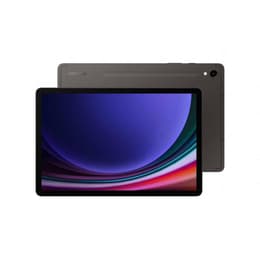
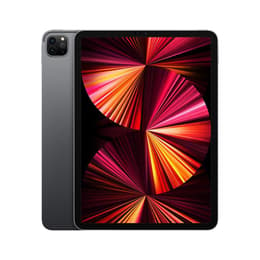

Galaxy Tab S9 Ultra (14.6", 2023) vs iPad Pro (2021, M1 series)

Galaxy Tab S9 Ultra (14.6", 2023)
Starting at

Refurbished price:$580.05

Versus $1,200.00 new

See options
iPad Pro (2021, M1 series)
Starting at

Refurbished price:$434.00

Versus $799.00 new

See options

Ratings

The Samsung Galaxy Tab S9 Ultra, released in August 2023, and the Apple iPad Pro (2021 M1 Series), launched in May 2021, represent two distinct approaches to high-end tablet computing. While both offer powerful performance and expansive displays, they differ significantly in their operating systems and overall user experience. The Tab S9 Ultra runs on Android with Samsung's One UI, while the iPad Pro operates on Apple's iPadOS. These differences influence everything from app availability to multitasking capabilities, catering to varied user preferences.

Scores

Durability

When considering the long-term usability of a tablet, factors like software support, physical durability, and repairability are key. The Galaxy Tab S9 Ultra, being a newer device, generally benefits from a longer expected period of software updates compared to the iPad Pro (2021 M1 Series).

  • Software Longevity: The Galaxy Tab S9 Ultra, released in 2023, is expected to receive major Android updates for several years, typically extending its functional lifespan through new features and security patches. The iPad Pro (2021 M1 Series), released in 2021, has already received multiple iPadOS updates and will continue to be supported by Apple for a considerable duration, though its update cycle began earlier.
  • Physical Durability: The Galaxy Tab S9 Ultra features an IP68 rating for dust and water resistance, offering a degree of protection against environmental elements that the iPad Pro (2021 M1 Series) does not officially carry. Both devices are constructed with premium materials, but the Tab S9 Ultra's screen is also protected by Corning Gorilla Glass.
  • Repairability: The repairability of the Galaxy Tab S9 Ultra is considered moderate, with some components like the battery being accessible but requiring careful handling due to adhesive. Information regarding the specific repairability score for the iPad Pro (2021 M1 Series) is less consistently available, but Apple devices generally feature integrated designs that can make user-level repairs challenging.

Release Year

2023

2021

Last OS Compatibility

Yes

Yes

OS

Android

iPadOS

Performance

Both tablets offer robust performance capable of handling demanding applications and multitasking, though they achieve this through different hardware architectures and operating system optimizations.

  • Processing Power: The Galaxy Tab S9 Ultra is equipped with a current-generation processor designed for high performance, enabling smooth operation across various tasks, from intensive gaming to complex productivity applications. The iPad Pro (2021 M1 Series) features a powerful chip that delivers exceptional speed and efficiency, allowing for seamless multitasking, professional-grade video editing, and graphic-intensive workflows.
  • Multitasking and Responsiveness: Users of the Tab S9 Ultra report that it loads apps quickly and maintains fluidity even with many applications running simultaneously. The iPad Pro's architecture ensures that applications remain active in the background, contributing to a highly responsive user experience, even for power users.
  • Storage and Memory: The Tab S9 Ultra offers storage options up to 1TB and RAM configurations up to 16GB. The iPad Pro (2021 M1 Series) provides a wider range of storage, up to 2TB, with corresponding RAM configurations of 8GB or 16GB, catering to users with extensive storage needs for large files and projects.
  • Battery Behavior: The Galaxy Tab S9 Ultra, with its large 11,200 mAh battery, typically provides between 9 to 12 hours of mixed usage, including video streaming and web browsing. The iPad Pro (2021 M1 Series) generally offers up to 10 hours of web browsing or video playback, though some users have noted that heavy tasks can lead to more rapid battery depletion.

Memory (GB)

12 GB

8 GB

Screen quality

The visual experience on both tablets is a highlight, with each device featuring advanced display technologies designed to deliver vibrant and clear images.

  • Display Technology: The Galaxy Tab S9 Ultra boasts a 14.6-inch Dynamic AMOLED 2X display, known for its deep blacks, high contrast, and vivid colors. The 12.9-inch iPad Pro (2021 M1 Series) features a Liquid Retina XDR mini-LED display, which offers exceptional brightness, precise local dimming, and a high contrast ratio, providing an experience comparable to OLED panels. The 11-inch iPad Pro model uses a Liquid Retina IPS LCD display.
  • Resolution and Clarity: The Tab S9 Ultra has a resolution of 2960 x 1848 pixels, resulting in sharp images and text. The 12.9-inch iPad Pro offers a resolution of 2732 x 2048 pixels, also providing excellent clarity. Both maintain a pixel density that ensures a clear viewing experience.
  • Brightness and Refresh Rate: Both tablets feature a 120Hz refresh rate, contributing to smooth scrolling and responsive interactions. The Tab S9 Ultra offers good brightness for outdoor visibility. The 12.9-inch iPad Pro can reach up to 1000 nits typical brightness and 1600 nits peak brightness for HDR content, making it particularly well-suited for HDR video consumption.
  • Screen Size and Aspect Ratio: The Galaxy Tab S9 Ultra provides a larger 14.6-inch screen with a 16:10 aspect ratio, which is often preferred for media consumption and multitasking with multiple windows. The iPad Pro comes in 11-inch and 12.9-inch options, with a 4:3 aspect ratio that is often favored for productivity tasks like reading and document editing.

Resolution

1848 x 2960

2388 x 1668

Screen type

Dynamic AMOLED 2X

Liquid Retina display

Pixel density

240ppp

264ppp

Audiovisual

While tablets are not typically primary photography devices, both the Galaxy Tab S9 Ultra and the iPad Pro (2021 M1 Series) are equipped with capable camera systems for video calls, document scanning, and casual photography.

  • Rear Camera System: The Galaxy Tab S9 Ultra features a dual rear camera setup with a 13MP main lens and an 8MP ultrawide lens, capable of producing clear images in good lighting conditions. The iPad Pro (2021 M1 Series) also has a dual rear camera system, including a 12MP wide lens, a 10MP ultrawide lens, and a LiDAR scanner for enhanced depth sensing and augmented reality applications.
  • Front Camera System: The Tab S9 Ultra includes dual 12MP front cameras, with both wide and ultrawide options, making it well-suited for high-quality video conferencing and selfies. The iPad Pro (2021 M1 Series) features a 12MP ultrawide front camera with Center Stage, a feature that automatically keeps the user framed during video calls.
  • Video Recording and Audio: Both tablets offer good video recording capabilities. The Tab S9 Ultra's rear camera supports 4K video capture. The iPad Pro's camera system also delivers quality video, and its multiple microphones contribute to clear audio capture during calls and recordings. Both devices feature quad speakers, providing a rich audio experience for media consumption.

Miscellaneous

Beyond core performance and display, several practical features contribute to the overall user experience and versatility of these tablets.

  • Connectivity: The Galaxy Tab S9 Ultra supports Wi-Fi 6E and Bluetooth 5.3, offering fast and reliable wireless connections, with an optional 5G variant available. The iPad Pro (2021 M1 Series) supports Wi-Fi 6 and Bluetooth 5.0, also with optional 5G connectivity, ensuring strong network performance.
  • Ports and Accessories: The Tab S9 Ultra includes a USB-C 3.2 port and comes with an S Pen stylus in the box, which is IP68 rated for water and dust resistance. The iPad Pro (2021 M1 Series) features a Thunderbolt/USB 4 (USB-C) port, offering high-speed data transfer and external display support. The Apple Pencil 2nd Gen is a separate purchase for the iPad Pro.
  • Biometric Authentication: The Tab S9 Ultra incorporates an under-display fingerprint scanner and face unlock for secure access. The iPad Pro (2021 M1 Series) utilizes Face ID for secure facial recognition.
  • Design and Handling: The Galaxy Tab S9 Ultra is notably large and thin, measuring 5.5mm in thickness and weighing 732g (Wi-Fi), which can make it feel substantial but also provides an expansive canvas. The 12.9-inch iPad Pro is slightly thicker at 6.4mm and weighs 682g (Wi-Fi), while the 11-inch model is more compact and lighter.

Weight

15 oz

25 oz

Screen size (inches)

14.6

11

Network

Wi-Fi

Wi-Fi

Carrier compatibility

Without SIM Port

Without SIM Port

Choosing between the Galaxy Tab S9 Ultra and the iPad Pro (2021 M1 Series) depends largely on individual priorities and ecosystem preferences. Both are high-performance tablets designed for demanding users, but they excel in different areas.

Users frequently praise the Galaxy Tab S9 Ultra for its expansive 14.6-inch AMOLED display, which offers an immersive viewing experience for media and ample screen real estate for multitasking. Its inclusion of the S Pen in the box and IP68 rating are also commonly highlighted as significant advantages. Some users, however, find its large size can be unwieldy for casual handling. The Android tablet app ecosystem, while improved, is sometimes noted as having fewer tablet-optimized applications compared to iPadOS.

The iPad Pro (2021 M1 Series) is consistently lauded for its exceptional processing power, which enables desktop-class performance for creative and professional applications. The 12.9-inch model's Liquid Retina XDR display is highly regarded for its brightness and contrast, particularly for HDR content. The iPadOS ecosystem is often praised for its vast selection of tablet-optimized applications. Some users have expressed concerns about the battery life under heavy load, and the cost of essential accessories like the Apple Pencil and Magic Keyboard can add up.

Users prioritizing a large, vibrant OLED display for media consumption and a versatile Android experience with an included stylus may find the Galaxy Tab S9 Ultra well-suited to their needs. Those who require top-tier processing power for professional creative tasks, a robust app ecosystem, and prefer iPadOS will likely lean towards the iPad Pro (2021 M1 Series). Both devices offer a premium tablet experience, and considering a quality-assured refurbished option for either can be a sustainable choice for consumers.


See all articles

Our recent comparisons