
Galaxy Z Flip4 • Unlocked vs Google Pixel 7 • Unlocked

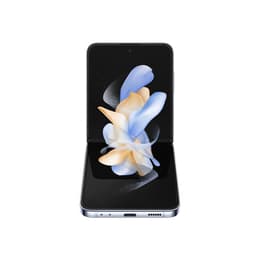
Galaxy Z Flip4 • Unlocked
Starting at

Refurbished price:$206.99

Versus $899.99 new

See options
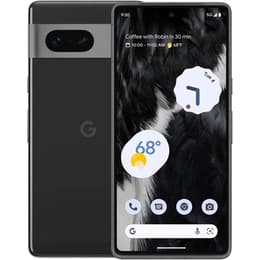
Google Pixel 7 • Unlocked
Starting at

Refurbished price:$185.99

Versus $599.99 new

See options

Ratings

The Samsung Galaxy Z Flip4, released in August 2022, is a foldable smartphone known for its compact, clamshell design. In contrast, the Google Pixel 7, launched in October 2022, offers a more traditional smartphone experience. The primary distinctions between these two devices lie in their form factor and their respective approaches to camera technology and software integration. Both devices operate on the Android platform, providing users with a familiar ecosystem.

Scores

Durability

When considering the long-term usability of these devices, their release timelines and software support policies are key factors.

  • Software Support: The Galaxy Z Flip4 is eligible for four major Android OS updates and up to five years of security updates, meaning it is supported up to Android 16. The Pixel 7, having launched with Android 13, typically receives three major Android OS updates and five years of security updates, also extending its support to around Android 16.
  • Physical Durability: The Galaxy Z Flip4 features a unique foldable display, which, while innovative, is generally considered less durable than a traditional smartphone screen and lacks dust resistance. The Pixel 7, with its conventional design, incorporates Corning Gorilla Glass Victus for screen protection and an aluminum frame, offering a robust build with IP68 water and dust resistance.
  • Expected Lifespan: Both devices are designed to receive consistent software and security updates for several years, contributing to a practical lifespan where they remain functional and secure. However, the Z Flip4's folding mechanism and screen technology may require more careful handling compared to the Pixel 7's solid-slab construction.

Release Year

2022

2022

Last OS Compatibility

Yes

Yes

OS

Android

Android

Foldable

Yes

No

Performance

Both the Galaxy Z Flip4 and the Pixel 7 deliver capable performance for daily tasks, though they achieve this through different hardware optimizations.

  • Processing Power: The Galaxy Z Flip4 is equipped with a processor known for its efficiency and speed, allowing for smooth multitasking and responsive handling of demanding applications and games. The Pixel 7 features a processor optimized for artificial intelligence and machine learning tasks, which enhances features like photography and speech recognition, contributing to a fluid user experience.
  • Battery Performance: The Galaxy Z Flip4 houses a 3700 mAh battery, which generally provides a full day of use for moderate users and was an improvement over its predecessor. The Pixel 7 comes with a 4355 mAh battery, designed to last a full day, though some heavy users have reported varying experiences.
  • Storage and Memory: Both devices offer 8GB of RAM, ensuring efficient multitasking. The Galaxy Z Flip4 is available with 128GB, 256GB, or 512GB of internal storage, while the Pixel 7 offers 128GB or 256GB options. Neither device supports expandable storage via microSD cards.

Memory (GB)

8 GB

8 GB

Screen quality

The display experience on these two smartphones differs significantly due to their distinct form factors and display technologies.

  • Display Technology and Size: The Galaxy Z Flip4 features a 6.7-inch Foldable Dynamic AMOLED 2X main display when unfolded, offering vibrant colors and deep blacks. It also includes a 1.9-inch Super AMOLED cover screen for quick interactions when folded. The Pixel 7 has a 6.3-inch OLED display, providing a consistent viewing area.
  • Resolution and Clarity: The Z Flip4's main display has a resolution of 1080 x 2640 pixels, resulting in clear visuals. The Pixel 7 offers a resolution of 1080 x 2400 pixels, delivering sharp images and text.
  • Brightness and Refresh Rate: Both devices feature high refresh rates for smoother scrolling and animations; the Z Flip4's main display can reach 120Hz, while the Pixel 7 has a 90Hz refresh rate. Both displays offer high peak brightness levels, with the Z Flip4 reaching 1200 nits and the Pixel 7 up to 1400 nits, ensuring good visibility in various lighting conditions.

Resolution

1080 x 2640

1080 x 2400

Screen type

Foldable Dynamic AMOLED 2X

AMOLED

Audiovisual

The camera systems on the Galaxy Z Flip4 and Pixel 7 offer different strengths, catering to varied photography preferences.

  • Rear Camera Systems: The Galaxy Z Flip4 features a dual-camera setup on the rear, consisting of a 12-megapixel wide-angle lens with optical image stabilization and a 12-megapixel ultrawide lens. The Pixel 7 also has a dual-camera system, with a higher-resolution 50-megapixel main sensor with optical image stabilization and a 12-megapixel ultrawide lens.
  • Photography Performance: The Z Flip4's main camera performs well in most lighting conditions, with improved low-light capabilities compared to its predecessor. The Pixel 7 is renowned for its computational photography, delivering excellent image processing, particularly in challenging low-light scenarios, and producing detailed and well-exposed photos. Neither device includes a dedicated telephoto lens, relying on digital zoom.
  • Front Camera and Video: The Z Flip4 has a 10-megapixel selfie camera, but its foldable design allows users to utilize the higher-quality main rear cameras for selfies via the cover screen, offering unique versatility. The Pixel 7 features a 10.8-megapixel ultrawide front camera. Both phones are capable of recording video at up to 4K resolution at 60 frames per second, with the Pixel 7 offering notable video stabilization.

Main camera

12 megapixels

50 megapixels

Front camera

10 megapixels

10.8 megapixels

Miscellaneous

Beyond core specifications, several practical elements contribute to the overall user experience of these smartphones.

  • Connectivity and Ports: Both the Galaxy Z Flip4 and Pixel 7 support 5G connectivity, Wi-Fi 6 (the Z Flip4 also supports Wi-Fi 6E), and Bluetooth 5.2, ensuring fast and reliable wireless connections. Both devices utilize a USB-C port for charging and data transfer, but neither includes a traditional 3.5mm headphone jack.
  • Biometric Security: The Galaxy Z Flip4 incorporates a side-mounted fingerprint sensor for secure unlocking, alongside face recognition. The Pixel 7 features an under-display fingerprint sensor and also offers face unlock capabilities.
  • Design and Handling: The Z Flip4's defining characteristic is its foldable design, allowing it to fold into a compact form (84.9 x 71.9 x 15.9-17.1 mm) for enhanced portability, while unfolding to a standard smartphone size (165.2 x 71.9 x 6.9 mm). It weighs 187 grams. The Pixel 7 has a conventional slab design, measuring 155.6 x 73.2 x 8.7 mm and weighing 197 grams, offering a familiar in-hand feel.

Weight

7 oz

6 oz

Screen size (inches)

6.7

6.3

Network

5G

5G

SIM card

Physical SIM + eSIM

Physical SIM + eSIM

Carrier compatibility

Unlocked

Unlocked

The Samsung Galaxy Z Flip4 and Google Pixel 7 cater to different user preferences, each excelling in distinct areas. Users often praise the Galaxy Z Flip4 for its unique, compact foldable design, which offers exceptional portability and a fresh user experience. Its ability to use the main camera for high-quality selfies via the cover screen is also a frequently highlighted advantage. However, some users note concerns about the screen's durability and the visibility of the crease, as well as battery life that, while improved, may not satisfy the heaviest users.

The Google Pixel 7 is widely lauded for its outstanding camera system, particularly its computational photography capabilities that deliver impressive results in various conditions, especially low light. Its clean Android software experience and consistent performance are also strong points. Conversely, common criticisms include inconsistent battery life for very demanding usage and the absence of a dedicated telephoto or macro lens.

Users prioritizing a highly portable and distinctive device with a versatile main camera for creative shots may find the Galaxy Z Flip4 well-suited to their needs. Those who value a top-tier point-and-shoot camera, a streamlined software experience, and reliable performance for everyday tasks will likely lean towards the Google Pixel 7. Both devices offer compelling features, and considering a quality-assured refurbished option can be an eco-friendly alternative for either model.
See all articles

Our recent comparisons