Compare models
Galaxy Z Flip4 • Unlocked vs Google Pixel 9 Pro • Unlocked
- 1-year warranty
- Free standard shipping
- Free 30-day returns
Differences at a glance
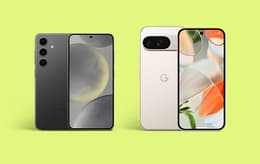
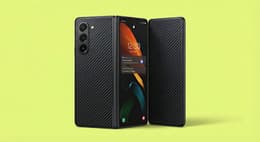
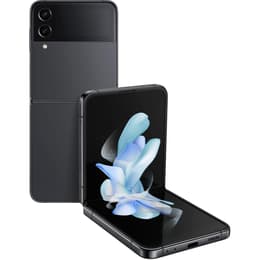
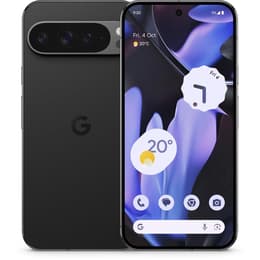
The Samsung Galaxy Z Flip4, released in August 2022, and the Google Pixel 9 Pro, launched in August 2024, represent distinct approaches to the modern smartphone experience. While both operate on the Android platform, the Z Flip4 offers a unique foldable clamshell design, prioritizing portability and a compact form factor. In contrast, the Pixel 9 Pro adheres to a traditional slab design, focusing on advanced computational photography and a long-term software commitment.
Available Models
Color
Storage (GB)
Scores
Durability
The expected practical lifespan of a smartphone is significantly influenced by its release timeline and the manufacturer's software support policy.
- Release Timeline: The Galaxy Z Flip4 was released in August 2022, making it an older device compared to the Pixel 9 Pro, which launched in August 2024. This two-year difference impacts the remaining period of official software and security updates.
- OS Support Duration: Samsung typically provides four major Android OS updates and five years of security updates for its flagship devices, including the Z Flip4. The Z Flip4 shipped with Android 12 and was expected to receive updates up to Android 16. Google, for its Pixel 9 Pro, offers a more extended commitment of seven years of OS and security updates from its release date. This means the Pixel 9 Pro will receive updates for a considerably longer period, potentially until Android 22.
- Repairability: The Z Flip4 features an IPX8 water resistance rating, indicating protection against submersion, but lacks official dust resistance, which can be a concern for the hinge mechanism over time. The Pixel 9 Pro, with its traditional design, typically offers an IP68 rating for both water and dust resistance, suggesting a more robust seal against environmental elements. Users often report that foldable phones require more careful handling than traditional slab phones.
Release Year
2022
2024
Last OS Compatibility
Yes
Yes
OS
Android
Android
Foldable
Yes
No
Performance
Both devices are equipped to handle daily tasks efficiently, but their underlying architectures and performance focuses differ.
- Processor Capabilities: The Galaxy Z Flip4 is powered by a processor designed for strong general performance, ensuring smooth operation for demanding applications and multitasking. Users generally find it snappy and responsive for everyday use and gaming. The Pixel 9 Pro features a processor developed by Google, which is optimized for artificial intelligence and machine learning tasks, contributing to enhanced on-device AI features and overall system responsiveness.
- Multitasking and Responsiveness: The Z Flip4 comes with 8 GB of RAM, which is sufficient for managing multiple applications simultaneously. The Pixel 9 Pro typically offers 16 GB of RAM, providing more headroom for intensive multitasking and ensuring a consistently fluid user experience, even with numerous apps open.
- Storage Options: The Galaxy Z Flip4 is available with 128 GB, 256 GB, or 512 GB of internal storage, without the option for expansion via microSD cards. The Pixel 9 Pro also offers various storage configurations, including 128 GB, 256 GB, 512 GB, and a 1 TB option, catering to users with extensive storage needs.
Screen quality
The display experience on these two smartphones varies significantly due to their fundamental design differences and display technologies.
- Display Technology and Size: The Galaxy Z Flip4 features a 6.7-inch foldable Dynamic AMOLED 2X main display with a 120 Hz variable refresh rate, offering vibrant colors and deep blacks. When folded, it utilizes a 1.9-inch Super AMOLED cover screen for quick interactions. The Pixel 9 Pro comes with a 6.3-inch LTPO OLED display, also featuring a 120 Hz adaptive refresh rate, known for its vibrant colors and high clarity.
- Brightness and Clarity: The Z Flip4's main display offers good brightness levels, suitable for various lighting conditions. The Pixel 9 Pro's display is designed for high peak brightness, making it particularly effective for outdoor viewing and maintaining readability even in direct sunlight. Both displays provide sharp visuals, with the Pixel 9 Pro offering a slightly higher resolution for its size.
- Viewing Experience: The Z Flip4's foldable nature allows for a compact device that unfolds into a standard smartphone screen, offering a unique viewing experience with its ability to be propped open at various angles. The Pixel 9 Pro provides a consistently flat, high-quality display experience, with users praising its vibrant colors and smoothness.
Resolution
1080 x 2640
1280 x 2856
Screen type
Foldable Dynamic AMOLED 2X
LTPO OLED
Audiovisual
The camera systems on the Galaxy Z Flip4 and the Pixel 9 Pro cater to different photographic priorities, with distinct strengths in hardware and software processing.
- Camera System Capabilities: The Galaxy Z Flip4 features a dual-camera setup on the rear, consisting of a 12 MP wide-angle camera and a 12 MP ultra-wide camera. The Pixel 9 Pro boasts a more comprehensive triple-camera system, typically including a 50 MP main camera, a 48 MP ultra-wide camera, and a 48 MP telephoto camera with optical zoom capabilities.
- Photography Performance: The Z Flip4's cameras are capable of producing good images in most lighting conditions, with a slight improvement in low-light performance compared to its predecessor due to a larger sensor. Users appreciate the ability to use the main cameras for selfies via the cover screen, which can yield higher quality results than the dedicated front camera. The Pixel 9 Pro is renowned for its advanced computational photography, delivering excellent image quality with true-to-life colors and impressive detail retention across various conditions, including challenging low-light scenarios. Its telephoto lens provides significant zoom capabilities without substantial loss of quality.
- Video Recording and Audio: Both devices offer good video recording capabilities, with the Z Flip4 supporting 4K 60fps on all its cameras. The Pixel 9 Pro also offers high-quality video recording, with features like Night Sight Video for improved low-light footage and Video Boost for enhanced resolution and stabilization. The Pixel 9 Pro's microphone quality and speaker output are generally well-regarded for media consumption and calls.
Main camera
12 megapixels
50 megapixels
Front camera
10 megapixels
42 megapixels
Miscellaneous
Beyond core features, several practical elements contribute to the overall user experience and differentiate these two devices.
- Connectivity Options: Both smartphones support 5G connectivity, ensuring fast mobile data speeds. The Galaxy Z Flip4 includes Wi-Fi 6 and Bluetooth 5.2. The Pixel 9 Pro is expected to feature newer standards like Wi-Fi 7 and Bluetooth 5.4, offering potentially faster and more stable wireless connections.
- Port Types and Sensors: Both devices utilize a USB-C port for charging and data transfer. The Z Flip4 incorporates a side-mounted fingerprint sensor for biometric authentication. The Pixel 9 Pro features an under-display fingerprint sensor and also offers face recognition for unlocking the device.
- Weight, Dimensions, and Build: The Galaxy Z Flip4 weighs 187 grams and, when folded, becomes very compact, making it highly pocketable. Its build includes an aluminum frame and Gorilla Glass Victus+ on the cover screen and back. The Pixel 9 Pro, with its traditional slab design, weighs 199 grams and has dimensions typical of a modern flagship smartphone. It features a matte glass back and a polished metal frame, contributing to a premium feel.
Weight
7 oz
7 oz
Screen size (inches)
6.7
6.3
Network
5G
5G
SIM card
Physical SIM + eSIM
Physical SIM + eSIM
Carrier compatibility
Unlocked
Unlocked
What the community thinks
The Samsung Galaxy Z Flip4 and the Google Pixel 9 Pro cater to different user preferences, each excelling in distinct areas. Users frequently praise the Z Flip4 for its unique foldable design, which offers exceptional portability and a sense of novelty. Its ability to stand independently for photos and videos is also a noted advantage. However, some users have expressed concerns about its battery life, often finding it to be average, and its camera system, while good, is not considered top-tier compared to other flagships. The durability of the foldable screen and hinge over extended use is also a point of discussion among users.
The Pixel 9 Pro consistently receives high marks for its advanced camera capabilities, particularly its computational photography which delivers impressive results in various lighting conditions. Users also highlight its strong performance for everyday tasks and AI-driven features, along with a generally reliable battery life that can last through a full day of use. The extended software support offered by Google is another significant advantage, ensuring the device remains current for many years. Criticisms are less frequent but sometimes touch upon the design being less innovative than foldable alternatives.
Users prioritizing a compact, stylish device with a unique form factor that easily fits into smaller pockets may find the Galaxy Z Flip4 well-suited to their needs. Its ability to act as its own tripod for content creation is also a compelling feature for some. Conversely, users who prioritize a consistently excellent camera experience, long-term software support, and robust overall performance in a traditional smartphone design will likely lean towards the Google Pixel 9 Pro. Both devices offer a quality-assured refurbished option, providing an eco-friendly alternative for consumers looking to make informed and sustainable choices.