
Galaxy Z Flip4 • Unlocked vs iPhone 11 Pro Max • Unlocked

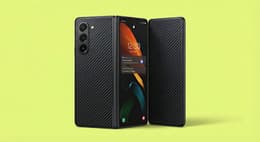
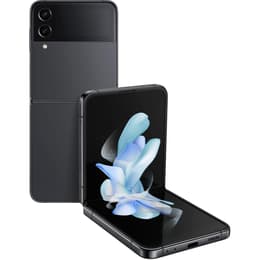
Galaxy Z Flip4 • Unlocked
Starting at

Refurbished price:$206.00

Versus $899.99 new

See options
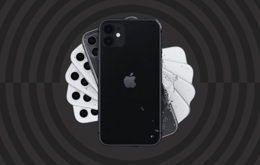
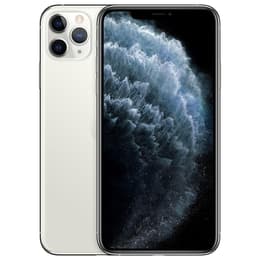
iPhone 11 Pro Max • Unlocked
Starting at

Refurbished price:$214.00

Versus $849.00 new

See options

Ratings

The Samsung Galaxy Z Flip4, released in August 2022, and the Apple iPhone 11 Pro Max, launched in September 2019, represent distinct approaches to smartphone design and functionality. While the Z Flip4 introduces a unique foldable form factor running on Android, the iPhone 11 Pro Max offers a traditional slab design powered by iOS. These devices cater to different user preferences, with the Z Flip4 focusing on portability and a novel user experience, and the iPhone 11 Pro Max emphasizing a robust, conventional smartphone experience with a strong ecosystem.

Scores

Durability

The practical lifespan of a smartphone is influenced by its release date, software support, and physical resilience. The Galaxy Z Flip4, being a newer device, generally benefits from a longer expected period of software updates compared to the iPhone 11 Pro Max.

  • Release Timeline: The Galaxy Z Flip4 was released in August 2022, making it a more recent device than the iPhone 11 Pro Max, which debuted in September 2019. This three-year difference impacts the duration of future software support.
  • OS Support Duration: The iPhone 11 Pro Max launched with iOS 13 and is expected to receive updates for several years, potentially up to iOS 18.1, ensuring continued access to new features and security patches. The Galaxy Z Flip4 launched with Android 12L and has received updates up to Android 16 with One UI 8, which was its last major OS update.
  • Physical Durability: The iPhone 11 Pro Max features a textured matte glass back and is rated IP68 for water and dust resistance, allowing submersion up to 4 meters for 30 minutes. The Z Flip4, with its foldable design, introduces different considerations for screen protection and hinge longevity, though it also carries an IPX8 water resistance rating.

Release Year

2022

2019

Last OS Compatibility

Yes

Yes

OS

Android

iOS

Foldable

Yes

No

Performance

Performance in both devices is designed to handle everyday tasks efficiently, though their underlying architectures and release years lead to differences in raw processing power and battery optimization.

  • Storage Options: Both devices offer multiple storage configurations. The Galaxy Z Flip4 is available with 128 GB, 256 GB, or 512 GB of internal storage. The iPhone 11 Pro Max also comes in 64 GB, 256 GB, and 512 GB variants.
  • Battery Behavior: The iPhone 11 Pro Max is recognized for its extended battery life, with users reporting it can last through a full day of heavy use and sometimes up to two days with moderate usage. The Galaxy Z Flip4 has a 3700 mAh battery, and while it supports fast charging, its battery life is generally considered sufficient for a day of typical use, though heavy usage might require more frequent charging.
  • System Responsiveness: The iPhone 11 Pro Max, powered by its A13 Bionic chip, delivers smooth performance for demanding applications and multitasking. The Galaxy Z Flip4, featuring a more recent current-generation processor, also handles demanding apps and multitasking smoothly, providing a responsive user experience.

Memory (GB)

8 GB

4 GB

Screen quality

The display experience on these two devices differs significantly due to their form factors and display technologies, impacting viewing and interaction.

  • Display Technology and Clarity: The iPhone 11 Pro Max features a 6.5-inch Super Retina XDR OLED display with a resolution of 2688 x 1242 pixels at 458 ppi, offering deep blacks and vibrant colors. The Galaxy Z Flip4 has a 6.7-inch foldable Dynamic AMOLED 2X main display with a resolution of 1080 x 2640 pixels. It also includes a 1.9-inch Super AMOLED cover display for quick interactions when folded.
  • Brightness Levels: The iPhone 11 Pro Max's display can reach up to 800 nits typical brightness and 1200 nits peak brightness for HDR content, enhancing outdoor visibility. The Galaxy Z Flip4's main display also offers high brightness, with a peak of 1200 nits, ensuring good visibility in various lighting conditions.
  • Refresh Rate: The iPhone 11 Pro Max has a standard 60 Hz refresh rate. The Galaxy Z Flip4's main display features a 120 Hz adaptive refresh rate, providing smoother scrolling and more fluid animations.

Resolution

1080 x 2640

1242 x 2688

Screen type

Foldable Dynamic AMOLED 2X

Super Retina XDR OLED

Audiovisual

Both devices offer capable camera systems, but their configurations and software processing reflect their respective generations and manufacturer philosophies.

  • Camera System Capabilities: The iPhone 11 Pro Max features a triple 12 MP camera system, including ultra-wide, wide, and telephoto lenses, with 2x optical zoom in and 2x optical zoom out. The Galaxy Z Flip4 has a dual-camera setup on the rear, consisting of a 12 MP wide-angle camera and a 12 MP ultra-wide camera.
  • Photography Performance: The iPhone 11 Pro Max introduced Night mode for improved low-light photography and Deep Fusion for enhanced detail and texture. The Galaxy Z Flip4 also features an improved auto night mode and benefits from a larger sensor size on its main camera for better low-light performance. Both offer Portrait mode with advanced bokeh effects.
  • Video Recording Quality: Both phones support 4K video recording at various frame rates. The iPhone 11 Pro Max offers 4K video recording at 24 fps, 30 fps, or 60 fps, with extended dynamic range and cinematic video stabilization. The Galaxy Z Flip4 also records 4K video at 30 fps and 60 fps.

Main camera

12 megapixels

12 megapixels

Front camera

10 megapixels

12 megapixels

Miscellaneous

Beyond core features, several practical elements contribute to the overall user experience, from connectivity to physical design.

  • Connectivity Options: The iPhone 11 Pro Max supports Gigabit-class LTE with 4x4 MIMO and Wi-Fi 6 (802.11ax), along with Bluetooth 5.0. It does not support 5G connectivity. The Galaxy Z Flip4 supports 5G NR, 5G UW, Wi-Fi 6, and Bluetooth 5.2.
  • Port Types and Sensors: The iPhone 11 Pro Max uses a Lightning port for charging and data transfer and features Face ID for secure authentication. The Galaxy Z Flip4 uses a USB-C port and includes a side-mounted fingerprint sensor for biometric security.
  • Weight and Dimensions: The iPhone 11 Pro Max weighs 226 grams and has dimensions of 158 x 77.8 x 8.1 mm. The Galaxy Z Flip4 is lighter at 187 grams. When unfolded, its dimensions are 165.2 x 71.9 x 6.9 mm, and when folded, it measures 84.9 x 71.9 x 15.9-17.1 mm.

Weight

7 oz

8 oz

Screen size (inches)

6.7

6.5

Network

5G

LTE

SIM card

Physical SIM + eSIM

Physical SIM + eSIM

Carrier compatibility

Unlocked

Unlocked

The Samsung Galaxy Z Flip4 and the iPhone 11 Pro Max offer distinct smartphone experiences, each with its own set of advantages. User feedback for the iPhone 11 Pro Max often praises its exceptional battery life, robust performance, and the quality of its triple-camera system, particularly its Night mode capabilities. Some users, however, found its size and weight to be substantial.

The Galaxy Z Flip4 is frequently lauded for its innovative foldable design, which enhances portability and offers unique usage modes, such as Flex Mode for photography. Its vibrant display and improved low-light camera performance are also common points of appreciation. Some discussions around foldable phones, in general, sometimes touch upon long-term durability concerns related to the folding mechanism, though advancements are continuously being made.

Users prioritizing a compact, innovative design with a modern Android experience and a high refresh rate display may find the Galaxy Z Flip4 well-suited to their needs. Its unique form factor makes it a conversation starter and a practical choice for those who value pocketability. Conversely, users who prefer a traditional, highly polished smartphone experience with a focus on consistent performance, a long-lasting battery, and a well-established camera system will likely lean towards the iPhone 11 Pro Max. Its extended software support and robust ecosystem continue to appeal to many.

Both devices, whether new or as quality-assured refurbished options, provide reliable performance and features that cater to different user lifestyles, from students needing a portable device to professionals seeking a dependable daily driver.


See all articles

Our recent comparisons