
Galaxy Z Flip4 • Unlocked vs iPhone 12 • Unlocked

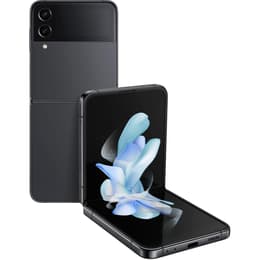
Galaxy Z Flip4 • Unlocked
Starting at

Refurbished price:$206.00

Versus $899.99 new

See options
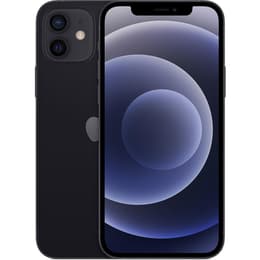
iPhone 12 • Unlocked
Starting at

Refurbished price:$172.00

Versus $629.00 new

See options

Ratings

The Samsung Galaxy Z Flip4, released in August 2022, and the Apple iPhone 12, launched in October 2020, represent distinct approaches to smartphone design and functionality. While the Z Flip4 offers a unique foldable form factor running on Android, the iPhone 12 provides a traditional slab design within Apple's iOS ecosystem. This comparison will explore their core differences in design, performance, and user experience to help consumers make an informed decision.

Scores

Durability

When considering the long-term usability of a smartphone, factors like release timeline, software support, and repairability are key. The Galaxy Z Flip4 and iPhone 12 offer different longevity prospects.

  • Release Timeline: The iPhone 12, released in October 2020, is an older device compared to the Galaxy Z Flip4, which launched in August 2022. This two-year difference impacts their remaining software support cycles.
  • Software Longevity: The Galaxy Z Flip4 is expected to receive four major Android OS updates and five years of security updates, with support extending until August 2027. It has already received Android 16 with One UI 8 as of October 2025. The iPhone 12, having launched with iOS 14, has received updates up to iOS 26.4 as of March 2026 and is expected to continue receiving major iOS updates for a total of 5-6 years from its release.
  • Repairability: The iPhone 12 received an iFixit repairability score of 6 out of 10, indicating that many parts are replaceable. However, Apple's policies can complicate independent repairs, as certain component replacements may require proprietary software configuration to function fully. The Galaxy Z Flip4, with its foldable design, generally presents a more complex repair scenario, though specific repairability scores are less commonly cited for foldable devices.

Release Year

2022

2020

Last OS Compatibility

Yes

Yes

OS

Android

iOS

Foldable

Yes

No

Performance

The performance of a smartphone is crucial for daily tasks, from browsing to demanding applications. Both devices are equipped with capable processors, but their architectures and real-world implications differ.

  • Processor Capabilities: The Galaxy Z Flip4 is powered by a modern, efficient octa-core processor, enabling smooth multitasking and responsive handling of graphics-intensive applications. The iPhone 12 features a powerful chip designed for high performance and energy efficiency, ensuring fluid navigation and efficient execution of demanding apps and games.
  • System Responsiveness: Users of the Galaxy Z Flip4 generally experience quick app loading and seamless transitions, benefiting from its ample RAM and optimized software. The iPhone 12 also offers a highly responsive user experience, with its integrated hardware and software working in tandem to provide consistent performance.
  • Battery Behavior: The Galaxy Z Flip4 features a 3700 mAh battery, which was an improvement over its predecessor, offering extended screen-on time for video streaming and Wi-Fi/LTE usage. The iPhone 12 has a 2815 mAh battery. Despite a smaller capacity compared to some Android counterparts, its efficient processor and iOS optimization contribute to a full day of typical use for many users.

Memory (GB)

8 GB

4 GB

Screen quality

The display is a primary interface for any smartphone, and both the Galaxy Z Flip4 and iPhone 12 offer vibrant viewing experiences, albeit with distinct characteristics.

  • Display Technology and Size: The Galaxy Z Flip4 features a 6.7-inch Foldable Dynamic AMOLED 2X main display, which can fold in half for portability, alongside a 1.9-inch Super AMOLED cover display for quick interactions. The iPhone 12 sports a 6.1-inch Super Retina XDR OLED display, offering a traditional, expansive viewing area.
  • Resolution and Clarity: The Z Flip4's main display provides a resolution of 1080 x 2640 pixels, delivering sharp and detailed visuals. The iPhone 12 offers a resolution of 1170 x 2532 pixels, resulting in a clear and crisp image quality.
  • Brightness and Refresh Rate: The Galaxy Z Flip4's main display boasts a 120Hz refresh rate for smoother scrolling and animations, with a peak brightness of 1200 nits. The iPhone 12 features a 60Hz refresh rate and offers a typical maximum brightness of 625 nits, with a peak HDR brightness of 1200 nits for compatible content.

Resolution

1080 x 2640

1170 x 2532

Screen type

Foldable Dynamic AMOLED 2X

Super Retina XDR OLED

Audiovisual

For many users, the camera system is a critical component of a smartphone. Both devices are equipped with dual camera setups capable of capturing high-quality photos and videos.

  • Rear Camera System: The Galaxy Z Flip4 includes a dual 12 MP camera system, featuring a wide-angle lens with optical image stabilization and a larger sensor for improved light capture, alongside an ultrawide lens. The iPhone 12 also has a dual 12 MP camera system, comprising a wide-angle lens with a wide aperture and optical image stabilization, and an ultrawide lens with a 120-degree field of view.
  • Photography Performance: The Z Flip4 offers enhanced low-light photography capabilities, referred to as Nightography, and benefits from its unique Flex Mode for creative shooting angles. The iPhone 12 excels in various lighting conditions with features like Night mode, Deep Fusion, and Smart HDR 3, which optimize image quality across different scenes.
  • Video Recording and Front Camera: Both devices support 4K video recording. The Z Flip4 has a 10 MP front-facing camera, while the iPhone 12 features a 12 MP TrueDepth front camera that supports advanced features like Portrait mode and HDR video recording.

Main camera

12 megapixels

12 megapixels

Front camera

10 megapixels

12 megapixels

Miscellaneous

Beyond the core specifications, several practical elements contribute to the overall user experience and daily convenience of these smartphones.

  • Connectivity and Ports: Both the Galaxy Z Flip4 and iPhone 12 support 5G connectivity and Wi-Fi 6 for fast wireless data. The Z Flip4 uses a USB-C port for charging and data transfer, while the iPhone 12 utilizes Apple's proprietary Lightning port.
  • Biometric Security and Design: The Galaxy Z Flip4 incorporates a side-mounted fingerprint sensor for secure unlocking. The iPhone 12 relies on Face ID, Apple's facial recognition system. The Z Flip4's foldable design allows it to be more compact when closed, while the iPhone 12 maintains a traditional, flat-edged slab form factor.
  • Build Materials and Durability: The Z Flip4 features an aluminum frame and Gorilla Glass Victus+ on its cover screen and back, with a foldable glass main screen. The iPhone 12 uses an aluminum frame with a Ceramic Shield front cover, which offers enhanced drop performance, and a glass back. Both devices offer IP68 water and dust resistance.

Weight

7 oz

7 oz

Screen size (inches)

6.7

6.1

Network

5G

5G

SIM card

Physical SIM + eSIM

Physical SIM + eSIM

Carrier compatibility

Unlocked

Unlocked

The Galaxy Z Flip4 and iPhone 12 cater to different user preferences, each offering a distinct set of advantages. Users often praise the Z Flip4 for its innovative foldable design, which provides a compact form factor when closed and a large screen when unfolded. Its vibrant 120Hz display and improved battery life over its predecessor are also frequently highlighted. Some common concerns for the Z Flip4 include the visibility of the screen crease and the perceived durability of the foldable display over time.

The iPhone 12 is generally lauded for its consistent and reliable performance, the robust iOS ecosystem, and its capable camera system that delivers excellent results in various conditions. Its Ceramic Shield front cover is often noted for its durability. However, some users express a desire for a higher refresh rate display and a larger battery capacity.

Users prioritizing a unique, compact design and a high refresh rate display for media consumption and multitasking may find the Galaxy Z Flip4 well-suited to their needs. Conversely, those who value a consistently smooth software experience, a strong camera for everyday photography, and a traditional, durable build will likely lean towards the iPhone 12. Both devices are available as quality-assured refurbished options, providing a sustainable choice for consumers looking to extend the life cycle of electronic products.

See all articles

Our recent comparisons