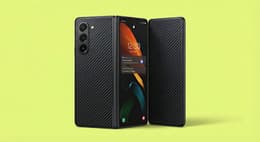

Galaxy Z Flip6 • Unlocked vs Google Pixel 8a • Unlocked

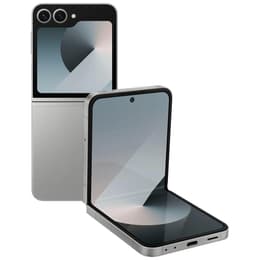
Galaxy Z Flip6 • Unlocked
Starting at

Refurbished price:$339.99

Versus $1,099.00 new

See options
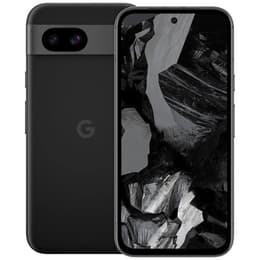
Google Pixel 8a • Unlocked
Starting at

Refurbished price:$229.00

Versus $899.99 new

See options

Ratings

The Samsung Galaxy Z Flip6 and the Google Pixel 8A, both released in 2024, offer distinct approaches to the modern smartphone experience. The Galaxy Z Flip6 presents a clamshell foldable design, emphasizing portability and a unique interaction, while the Google Pixel 8A maintains a traditional slab form factor, focusing on a streamlined software experience and advanced computational photography. These devices cater to different user preferences, with key differences in their physical design, display technology, and camera philosophies.

Scores

Durability

Both devices launched in 2024 and are designed for extended use, with strong commitments to software longevity from their respective manufacturers.

  • Software Support: The Samsung Galaxy Z Flip6 is set to receive seven years of Android operating system upgrades and security updates, extending its support until 2031. This commitment ensures the device remains current with the latest features and security protocols for a considerable period. Similarly, the Google Pixel 8A also offers an impressive seven years of Android updates, security upgrades, and Pixel Feature Drops, ensuring its software remains up-to-date until at least May 2031.
  • Physical Durability: The Galaxy Z Flip6 features an enhanced Armor Aluminum frame and Corning Gorilla Glass Victus 2 on its cover screen and back panel, with an ultra-thin glass for its inner foldable display. Its hinge has been improved for better resistance to shocks and pressure. The Pixel 8A utilizes a glass front protected by Corning Gorilla Glass 3, an aluminum frame, and a plastic back. Both devices offer water resistance, with the Z Flip6 having an IPX8 rating for water immersion and the Pixel 8A featuring an IP67 rating for dust and water resistance.
  • Practical Lifespan: With both devices receiving extensive software support, their practical lifespan is largely determined by physical wear and battery degradation. The Z Flip6's foldable nature introduces a mechanical element (the hinge) that requires careful handling, while the Pixel 8A's traditional design offers a more rigid structure.

Release Year

2024

2024

Last OS Compatibility

Yes

Yes

OS

Android

Android

Foldable

Yes

No

Performance

The performance of both the Galaxy Z Flip6 and the Google Pixel 8A is robust, handling daily tasks and demanding applications efficiently, though they achieve this with different underlying architectures.

  • Processing Power: The Galaxy Z Flip6 is equipped with a current-generation processor that delivers strong performance for multitasking, gaming, and intensive applications. It also incorporates a vapor chamber cooling system to help maintain performance during extended use. The Pixel 8A features Google's in-house processor, which is optimized for artificial intelligence and machine learning tasks, contributing to a smooth user experience and efficient handling of Google's software features.
  • Memory and Storage: The Galaxy Z Flip6 typically comes with 12 GB of RAM, providing ample capacity for seamless multitasking and running numerous applications simultaneously. It offers storage options of 256 GB or 512 GB. The Pixel 8A includes 8 GB of RAM, which is sufficient for most users' multitasking needs, and is available with either 128 GB or 256 GB of internal storage.
  • Battery Performance: The Galaxy Z Flip6 houses a 4,000 mAh battery, which generally provides all-day power for many users, with some tests indicating over 16 hours of usage on a single charge. The Pixel 8A is powered by a 4,492 mAh battery, also designed to last a full day under typical usage, with some reports noting around 16 hours of use. Charging speeds on both devices are not the fastest available, but they support wireless charging.

Memory (GB)

12 GB

8 GB

Screen quality

The display experience on these two smartphones differs significantly due to their form factors, offering distinct advantages for different user preferences.

  • Display Technology and Size: The Galaxy Z Flip6 features a 6.7-inch Dynamic AMOLED 2X main foldable display, offering vibrant colors and deep blacks, with a resolution of 1080 x 2640 pixels. When folded, it reveals a 3.4-inch Super AMOLED cover display with a resolution of 720x748 pixels, which can be used for quick interactions and notifications. The Pixel 8A has a 6.1-inch OLED display with a resolution of 1080 x 2400 pixels, providing a clear and colorful viewing experience in a traditional form factor.
  • Brightness and Smoothness: Both devices offer high refresh rates for smooth scrolling and responsiveness. The Galaxy Z Flip6's main display has a variable refresh rate of up to 120 Hz and can reach a peak brightness of 2600 nits, making it highly visible even in bright outdoor conditions. The Pixel 8A's display also supports a 120 Hz refresh rate and achieves a peak brightness of 2000 nits, ensuring good visibility outdoors.
  • Viewing Experience: The Z Flip6's foldable screen offers a large display in a compact form factor when closed, ideal for portability. The cover screen provides quick access to information without unfolding the device. The Pixel 8A provides a consistent, flat screen experience, which some users may prefer for media consumption and general navigation.

Resolution

1080 x 2640

1080 x 2400

Screen type

Foldable Dynamic LTPO AMOLED 2X

OLED

Audiovisual

Both the Galaxy Z Flip6 and the Google Pixel 8A offer capable camera systems, though they approach image processing and feature sets from different perspectives.

  • Rear Camera System: The Galaxy Z Flip6 features a dual-camera setup on the rear, including a 50 MP wide-angle main sensor with optical image stabilization (OIS) and a 12 MP ultra-wide-angle lens. This main sensor is an upgrade from its predecessor and is designed to capture detailed photos with good dynamic range in well-lit conditions. The Pixel 8A also has a dual-camera system, comprising a 64 MP wide-angle main camera with OIS and a 13 MP ultra-wide-angle lens. The Pixel's strength lies in its computational photography, which enhances image quality across various scenarios.
  • Photography Performance: In everyday lighting, both phones produce clear and vibrant images. The Z Flip6 shows improvements in its main camera, with good video stabilization, but some users note weaknesses in challenging low-light conditions, portrait mode consistency, and autofocus. The Pixel 8A is praised for its reliable point-and-shoot capabilities, producing vivid and detailed images even in challenging scenes, thanks to its advanced image processing. Its Night Sight mode is particularly effective in very low light.
  • Video and Selfies: Both devices are capable of recording 4K video at up to 60 frames per second. The Z Flip6's video quality is strong from its main camera, especially in good lighting. The Pixel 8A also delivers excellent 4K video in brightly lit environments. For selfies, the Z Flip6 allows users to utilize its higher-quality main rear cameras with the cover screen as a viewfinder, offering a versatile option. The Pixel 8A has a 13 MP front-facing camera.

Main camera

50 megapixels

64 megapixels

Front camera

10 megapixels

13 megapixels

Miscellaneous

Beyond core performance and display, several practical elements differentiate the user experience of these two smartphones.

  • Connectivity and Ports: Both the Galaxy Z Flip6 and the Google Pixel 8A support 5G cellular connectivity, along with modern Wi-Fi standards (Wi-Fi 6 for Flip6, Wi-Fi 6e for Pixel 8A) and Bluetooth 5.3 for wireless accessories. Both devices feature a USB-C port for charging and data transfer, but neither includes a traditional 3.5mm headphone jack.
  • Biometric Security and Design: The Galaxy Z Flip6 incorporates a side-mounted fingerprint sensor for secure unlocking, alongside face recognition. Its unique clamshell design allows it to fold into a compact form, making it highly portable. When unfolded, it measures approximately 165.1 x 71.9 x 6.9 mm and weighs 187 grams. The Pixel 8A features an in-display fingerprint sensor and face unlock. Its traditional slab design measures 152.1 x 72.7 x 8.9 mm and weighs 188 grams, offering a comfortable one-handed grip.
  • Additional Features: The Galaxy Z Flip6 comes with Samsung's Galaxy AI features, including tools like Generative Edit and Chat Assist, which are integrated into the software experience. The Pixel 8A also leverages its processor for AI-powered features, including advanced photo editing tools like Magic Eraser and Magic Editor, enhancing the user's ability to manipulate images.

Weight

7 oz

7 oz

Screen size (inches)

6.7

6.1

Network

5G

5G

SIM card

Physical SIM + eSIM

Physical SIM + eSIM

Carrier compatibility

Unlocked

Unlocked

Connector

USB-C

USB-C

User feedback for the Samsung Galaxy Z Flip6 often highlights its improved battery life and strong overall performance, with many appreciating the refined design and the extended software support. However, some users note that while the camera is good, it may not match the performance of non-foldable flagship devices in all challenging conditions, and that the upgrades from its predecessor are incremental rather than revolutionary.

The Google Pixel 8A receives consistent praise for its exceptional camera capabilities, often described as punching above its weight, and its clean Android software experience. Its long-term software update commitment is also a significant positive. Some users have expressed concerns regarding battery life and potential heating during intensive use, though overall battery performance is generally considered sufficient for a full day.

Users prioritizing a compact, stylish device with a unique foldable form factor and a large internal display for media and productivity, coupled with a strong software support commitment, may find the Galaxy Z Flip6 appealing. Its ability to use the main camera for high-quality selfies is also a distinct advantage. Conversely, individuals who value a consistent, traditional smartphone experience with a focus on computational photography, a streamlined software interface, and robust AI features will likely lean towards the Google Pixel 8A. Both devices offer an eco-friendly, quality-assured refurbished option for those seeking sustainable choices.
See all articles

Our recent comparisons